516 posters, 59 topics, 63 sessions, 1,127 authors, 353 institutions
ePostersLive by SciGen Technologies S.A. All rights reserved.
2026 SOAP Annual Meeting
April 29 - May 3, 2026 | Montreal, Quebec Canada

2338796
Bilateral continuous rectus sheath blocks for post-operative pain management after caesarean section in a parturient with osteochondrodysplastic dwarfism: a case report
Poster Presenter
Part of Topic
Challenging Blocks
BACKGROUND:
•Osteochondrodysplastic dwarfism is a genetic disorder that is marked by abnormal development of bone and cartilage (1).
•Leads to short stature, skeletal deformities, and spinal column disturbances (1).
•Complexities related to anesthesiology:
§Increases difficulty of airway management (1, 2).
§Decreases predictability of inserting and achieving a reliable anesthetic level in neuraxial techniques, especially in obstetric patients (1-3).
•When this condition is combined with other comorbidities, such as a pulmonary hypertension and high BMI, the complexity of anesthetic and analgesia management can increase significantly.
CASE REPORT:
•G4P1 25-year old parturient with a PMHx of:
§Osteochondrodysplastic dwarfism
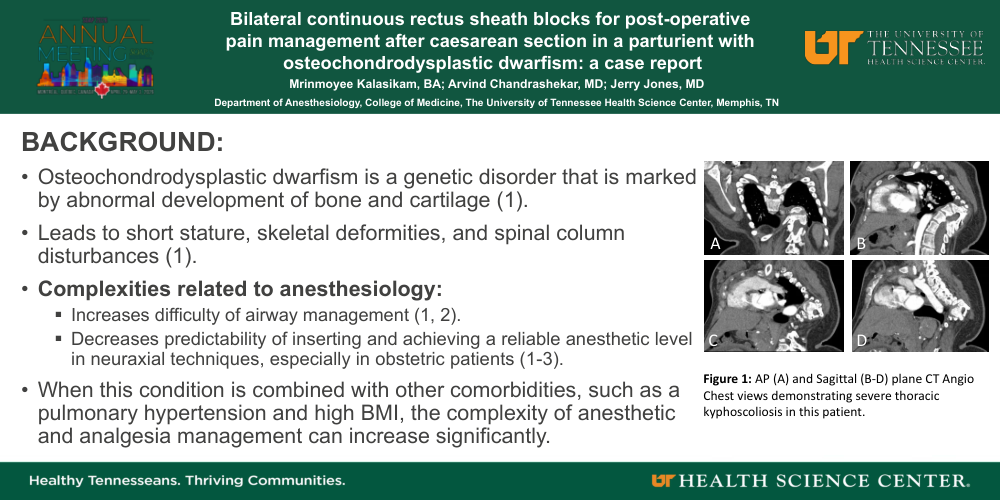
§Severe scoliosis (Cobb >100º)
§Pulmonary hypertension
§Moderate persistent asthma
§Spina bifida occulta
§Wheelchair bound
§Morbid obesity (BMI 63)
§Previous difficult intubation
§Cervical disease and
§Previous C-section*2
•APS was consulted to manage post-C-section pain after midline sub-umbilical vertical incision.
Anesthetic Management of C-section: A combined spinal epidural anesthetic was performed with 90 mg of 0.5% bupivacaine (BPV) in the epidural space and 100mcg of intrathecal morphine and 20 mcg of intrathecal fentanyl.
Post-operative incisional pain: managed by continuous bilateral rectus sheath nerve blocks (16cc q180 min of 0.125% bupivacaine) for 4 days. Patient reported well controlled incisional pain (0 pain at rest; mild with some activities).
Additional pain management: only 15 mg of IV ketorolac and 5 mg oxycodone twice a day was required for additional analgesia.
Before discharge: the catheters were bolused with 15 cc of 0.5% bupivacaine and removed. The mother and her newborn were discharged with no other adverse events.
LEARNING POINTS:
1.Contraindications for post-operative opioid use:
Due to this patient’s PMHx of asthma, pulmonary HTN, and severe scoliosis, opioids in this setting could hinder her pulmonary toilet and potentially precipitate right heart failure.
2. Complex anatomy yet easy continuous rectus sheath nerve block placement:
The combination of continuous rectus sheath nerve blocks for incisional pain and scheduled multi-modal analgesia for visceral pain was successful in providing comprehensive opioid-sparing analgesia post C-section for a patient with several unique anatomical and physiologic challenges.