516 posters, 59 topics, 63 sessions, 1,127 authors, 353 institutions
ePostersLive by SciGen Technologies S.A. All rights reserved.
2026 SOAP Annual Meeting
April 29 - May 3, 2026 | Montreal, Quebec Canada

2338206
Anesthetic Approach and Delivery Planning in Peripartum Aneurysmal Subarachnoid Hemorrhage
Poster Presenter
Authors
Affiliations
Part of Topic
CAN'T DO A NEURAXIAL?
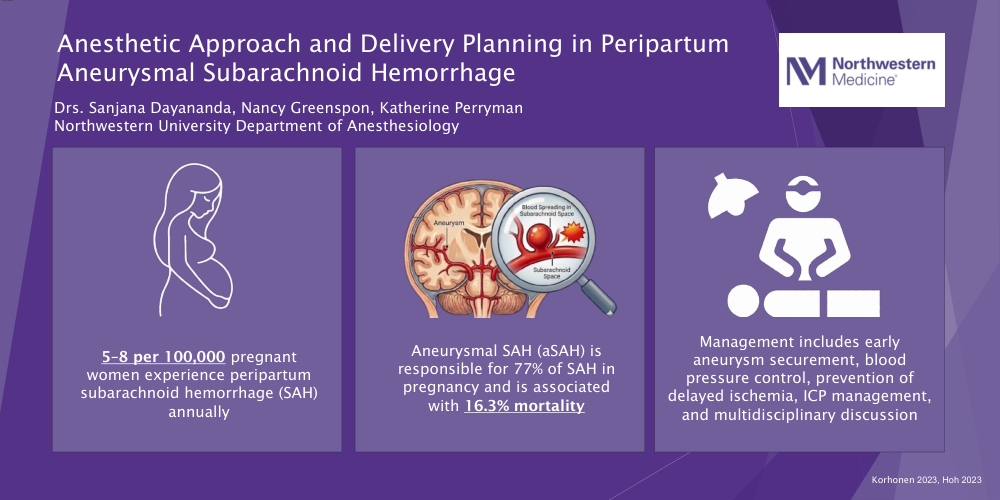
5–8 per 100,000pregnant women experience peripartum subarachnoid hemorrhage (SAH) annually.
Aneurysmal SAH (aSAH) is responsible for 77% of SAH in pregnancy and is associated with 16.3% mortality.
Management includes early aneurysm securement, blood pressure control, prevention of delayed ischemia, ICP management, and multidisciplinary discussion.
38-year-old G6P4205 female with chronic HTN at 23w4d gestation with di/di twins presented with lethargy and HTN emergency.
CTA Head revealed ruptured 3mm right PCOM aneurysm with diffuse intraventricular hemorrhage, SAH, and hydrocephalus.
Medical management included antihypertensives, anti-epileptics, antispasmodics, osmotic diuretics, and DDAVP, followed by EVD placement and endovascular aneurysm coiling.
Her ICU course was complicated by a new diagnosis of AIDS. On postoperative day 7, she developed preterm labor and underwent cesarean delivery. General anesthesia was indicated due to elevated maternal HIV viral load and concerns for ongoing ICP/hydrocephalus.
There were no complications during surgery. The patient was extubated and brought back to the ICU for blood pressure control and ICP monitoring. Both neonates were admitted to the NICU. Twin B ultimately died from neonatal respiratory distress syndrome. Following several weeks, twin A was safely discharged. On postpartum day 12, the patient was discharged on antihypertensive and antiretroviral therapies.
Pregnancy and vaginal delivery DO NOT increase secured aneurysm rebleeding risk. Delivery mode should be based on completeness of aneurysmal securement, blood pressure control, ICP status, herniation risk, and obstetric indications, rather than the presence of recent SAH alone. Delivery timing following SAH should prioritize maternal neurologic stabilization and fetal development. Neuraxial anesthesia is NOT contraindicated in patients with secured aSAHunless there is an ongoing risk of herniation. Neuraxial anesthesia may be beneficialby reducing labor catecholamine surge and allowing superior blood pressure and ICP control.