875 posters, 25 topics, 3,440 authors, 1,061 institutions
ePostersLive by SciGen Technologies S.A. All rights reserved.
SAGES 2026 Annual Meeting Emerging Technology Session
March 25-28, 2026 | Tampa, FL, USA

P194
Recent Robotic-Assisted Bariatric Surgery Trends Using NSQIP Data
Poster Presenter
Part of Topic
Bariatric
RECENT ROBOTIC-ASSISTED BARIATRIC SURGERY TRENDS USING NSQIP DATA
Brian A Campos, MD1; Theodore Bolas, MHS2; Sivamainthan Vithiananthan, MD2,3
1Beth Israel Deaconess Medical Center; 2Harvard Medical School; 3Cambridge Health Alliance
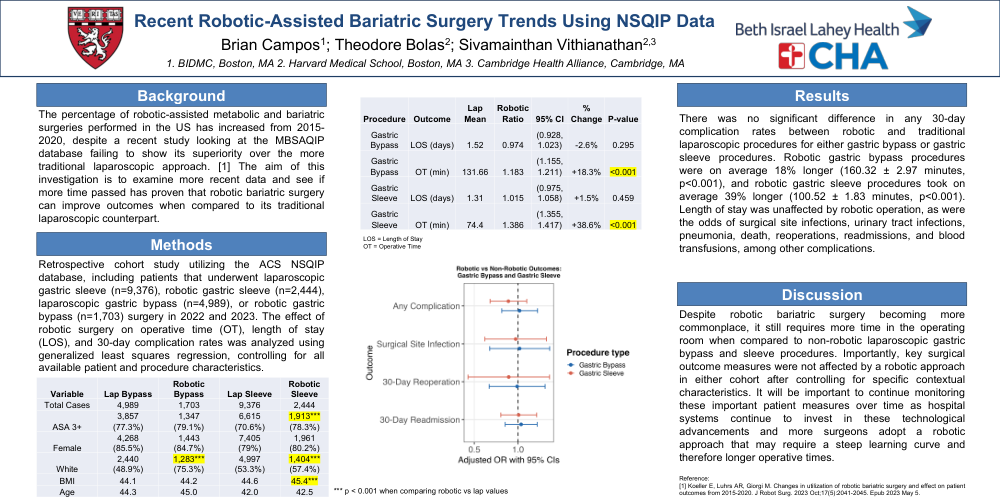
Introduction: The percentage of robotic-assisted metabolic and bariatric surgeries performed in the US has increased from 2015-2020, despite a recent study during this time period looking at the MBSAQIP database failing to show its superiority over the more traditional laparoscopic approach. [1] The aim of this investigation is to examine more recent data and see if more time passed has proven that robotic bariatric surgery can improve outcomes when compared to its traditional laparoscopic counterpart.
Methods: Retrospective cohort study utilizing the ACS NSQIP database, including patients that underwent laparoscopic gastric sleeve (n=9,376), robotic gastric sleeve (n=2,444), laparoscopic gastric bypass (n=4,989), or robotic gastric bypass (n=1,703) surgery in 2022 and 2023. The effect of robotic surgery on operative time, length of stay (LOS), and 30-day complication rates was analyzed using generalized least squares regression, controlling for all available patient and procedure characteristics.
Results: There was no significant difference in any 30-day complication rates between robotic and traditional laparoscopic procedures for either gastric bypass or gastric sleeve procedures. Robotic gastric bypass procedures were on average 18% longer (160.32 ± 2.97 minutes, p<0.001), and robotic gastric sleeve procedures took on average 39% longer (100.52 ± 1.83 minutes, p<0.001). Length of stay was unaffected by robotic operation, as were the odds of surgical site infections, urinary tract infections, pneumonia, death, reoperations, readmissions, and blood transfusions, among other complications.
Conclusions: Despite robotic bariatric surgery becoming more commonplace, it still requires more time in the operating room when compared to non-robotic laparoscopic gastric bypass and sleeve procedures. Importantly, key surgical outcome measures were not affected by a robotic approach in either cohort after controlling for specific contextual characteristics. It will be important to continue monitoring these important patient measures over time as hospital systems continue to invest in these technological advancements and more surgeons adopt a robotic approach that may require a steep learning curve and therefore longer operative times.