816 posters, 24 topics, 3,314 authors, 1,012 institutions
ePostersLive by SciGen Technologies S.A. All rights reserved.
SAGES 2026 Annual Meeting Emerging Technology Session
March 25-28, 2026 | Tampa, FL, USA

P187
Weight Stigma, Trust, and Decisions for Surgery: Untangling Barriers to Bariatric Care
Poster Presenter
Authors
Rama O'Dwyer, Nori Pham, Salma Hassan, Paul Kolm, Kristen Miller, Ana Leon, Sameer Alrefai, Ivanesa Pardo, Yewande Alimi
Affiliations
Georgetown University School of Medicine, Medstar Health Georgetown University, Center for Biostatistics, Informatics and Data Science, National Center for Human Factors in Healthcare, MedStar St. Mary's Hospital, Medstar Washington Hospital Center, Medstar Georgetown University Hospital/Washington Hospital Center
Part of Topic
Bariatric
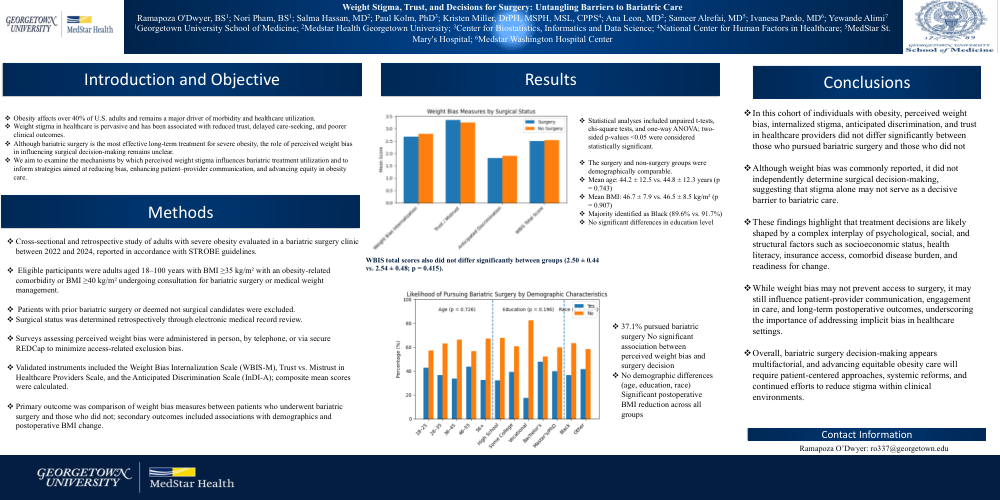
Weight Stigma, Trust, and Decisions for Surgery: Untangling Barriers to Bariatric Care.
Primary outcome was comparison of weight bias measures between patients who underwent bariatric surgery and those who did not; secondary outcomes included associations with demographics and postoperative BMI change.
Conclusion
In this cohort of individuals with obesity, perceived weight bias, internalized stigma, anticipated discrimination, and trust in healthcare providers did not differ significantly between those who pursued bariatric surgery and those who did not
Although weight bias was commonly reported, it did not independently determine surgical decision-making, suggesting that stigma alone may not serve as a decisive barrier to bariatric care.