2,281 posters, 63 videos, 56 audios, 43 topics, 18 sessions, 6,174 authors, 2,323 institutions
ePostersLive by SciGen Technologies S.A. All rights reserved.
RCOG World Congress 2025
June 23 - 25, 2025 | ExCeL London, UK
EP.0363
Medical management of Endometriosis on the basis of clinical presentation.
Poster Presenter
Part of Topic
Endometriosis & uterine disorders
S. Malick FRCOG , S.T. Amber MRCGP, A Abdul-Razak MRCGP King Faisal Specialist Hospital & Research Centre, Family Medicine, Riyadh, Saudi Arabia.
Objective:
The objective of this study was to test the hypothesis that women experiencing severe dysmenorrhea with pain radiating either anteriorly or posteriorly are likely suffering from endometriosis. These women were initiated on medical management with Tablet Dienogest 2mg daily for three months.
Design:
This was a retrospective analysis of women presenting with severe period pain radiating towards the bladder or bowel. Based on these two symptoms, the hypothesis was that all these women were suffering from endometriosis. Medical management was initiated with Tablet Dienogest 2mg daily for three months. A pelvic MRI was performed for all participants to confirm the clinical diagnosis after the medical management had started.
Methods:
Women presenting with severe dysmenorrhea (pain intensity >8/10) and pain radiating either anteriorly or posteriorly were included in the study. All were clinically diagnosed with endometriosis based on these symptoms. Treatment with Tablet Dienogest 2mg daily was initiated for three months. A pelvic MRI was conducted to confirm the diagnosis.
Results:
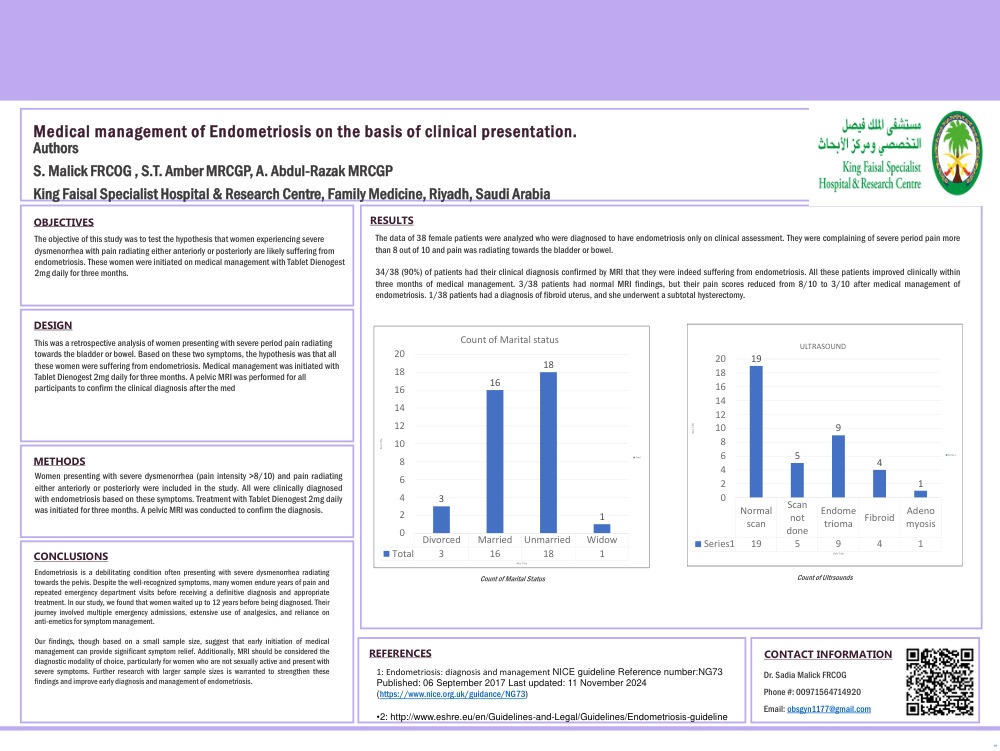
The data of 38 female patients were analyzed who were diagnosed to have endometriosis only on clinical assessment. They were complaining of severe period pain more than 8 out of 10 and pain was radiating towards the bladder or bowel.
34/38 (90%) of patients had their clinical diagnosis confirmed by MRI that they were indeed suffering from endometriosis. All these patients improved clinically within three months of medical management. 3/38 patients had normal MRI findings, but their pain scores reduced from 8/10 to 3/10 after medical management of endometriosis. 1/38 patients had a diagnosis of fibroid uterus, and she underwent a subtotal hysterectomy.
Conclusions:
Endometriosis is a debilitating condition often presenting with severe dysmenorrhea radiating towards the pelvis. Despite the well-recognized symptoms, many women endure years of pain and repeated emergency department visits before receiving a definitive diagnosis and appropriate treatment. In our study, we found that women waited up to 12 years before being diagnosed. Their journey involved multiple emergency admissions, extensive use of analgesics, and reliance on anti-emetics for symptom management.
Our findings, though based on a small sample size, suggest that early initiation of medical management can provide significant symptom relief. Additionally, MRI should be considered the diagnostic modality of choice, particularly for women who are not sexually active and present with severe symptoms. Further research with larger sample sizes is warranted to strengthen these findings and improve early diagnosis and management of endometriosis.