2,281 posters, 63 videos, 56 audios, 43 topics, 18 sessions, 6,174 authors, 2,323 institutions
ePostersLive by SciGen Technologies S.A. All rights reserved.
RCOG World Congress 2025
June 23 - 25, 2025 | ExCeL London, UK
EP.2055
Unexpected return to theatre in gynaecology: a retrospective audit
Poster Presenter
Authors
Affiliations
Part of Topic
Risk management
Unexpected return to theatre in gynaecology: a retrospective audit
Jennifer Townsend, Dong Li, Gul Fatima, Arvind Mittal
West Hertfordshire Teaching Hospitals NHS Trust, Obstetrics and Gynaecology, Watford, United Kingdom.
Objective
Unexpected return to theatre (URTT)is associated with prolonged hospital stay and increased mortality rates, which also impose additional burdens on the healthcare system. It is therefore considered a significant adverse event that should be monitored across all surgical departmentsincluding gynaecology to improve patient outcomes, optimize resource utilisation, and enhance surgical safety.
Design
This was a retrospective,single-centre auditconducted withinthe gynaecology department of a district general hospital.
Methods
All patients who underwent gynaecological surgery over a 12-month period (November 2023 to October 2024) were included in this audit.Those who had two surgical procedures within 30 days were identified, and their clinical notes were reviewed.URTT was defined as a return to theatre caused by complications or adverse outcomes related to the primary surgery. Demographic characteristics, surgical details, post-operative careinformation werecollected from electronic clinical records. A standardised proforma was developed to record these details and data analysis was performed using Microsoft Excel (V16.0).
Results
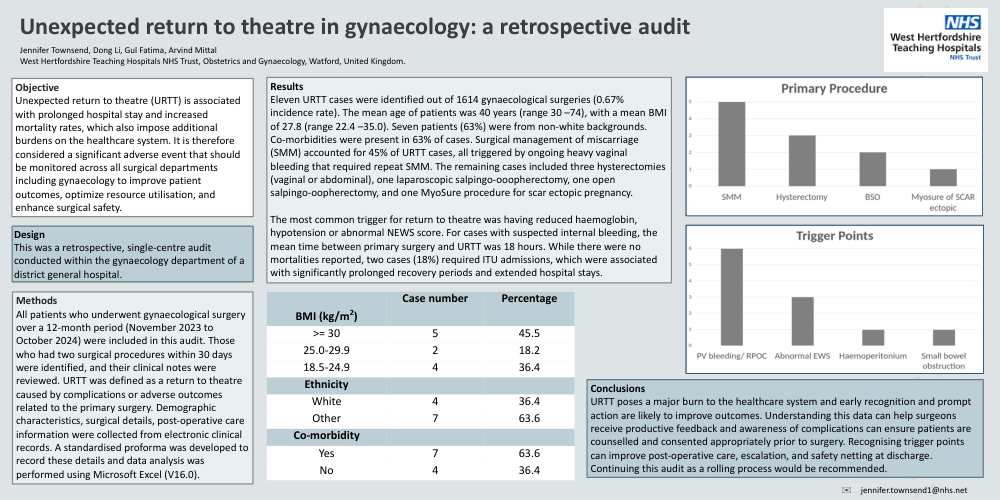
Eleven URTT cases were identified out of1614 gynaecological surgeries (0.67% incidence rate). The mean age of patients was 40 years (range 30–74), with a mean BMI of 27.8 (range 22.4–35.0). Seven patients (63%) were from non-white backgrounds. Co-morbidities were present in 63% of cases. Surgical management of miscarriage (SMM) accounted for 45% of URTT cases, all triggered by ongoingheavy vaginal bleeding that required repeat SMM.The remaining cases includedthree hysterectomies (vaginal or abdominal), one laparoscopic salpingo-ooopherectomy, one open salpingo-oopherectomy, and one MyoSureprocedure for scar ectopic pregnancy.
The most common trigger for return to theatre washaving reduced haemoglobin, hypotension or abnormal NEWS score. For cases with suspected internal bleeding,the mean time between primary surgery and URTTwas 18 hours.While there were no mortalities reported, two cases (18%) required ITU admissions, which were associated with significantly prolonged recovery periods and extended hospital stays.
Conclusions
URTT poses a major burn to the healthcare system and early recognition and prompt action are likely to improve outcomes.Understanding this data can help surgeons receive productive feedback and awareness of complications can ensure patients are counselled and consented appropriately prior to surgery. Recognising trigger points can improve post-operative care, escalation, and safety netting at discharge. Continuing this audit as a rolling process would be recommended.