2,281 posters, 63 videos, 56 audios, 43 topics, 18 sessions, 6,174 authors, 2,323 institutions
ePostersLive by SciGen Technologies S.A. All rights reserved.
RCOG World Congress 2025
June 23 - 25, 2025 | ExCeL London, UK
EP.1699
Refractory Hyperemesis Gravidarum with PICC Line-Associated Fungemia: A Management Challenge
Poster Presenter
Authors
Affiliations
Part of Topic
Maternal medicine
Introduction
Hyperemesis gravidarum (HG) is a severe form of nausea and vomiting in pregnancy, leading to maternal and fetal morbidity. Refractory cases requiring parenteral nutrition increase the risk of complications, including catheter-associated infections. This case highlights a patient with steroid-resistant HG who developed PICC line-associated fungemia while on total parenteral nutrition (TPN).
Case Presentation
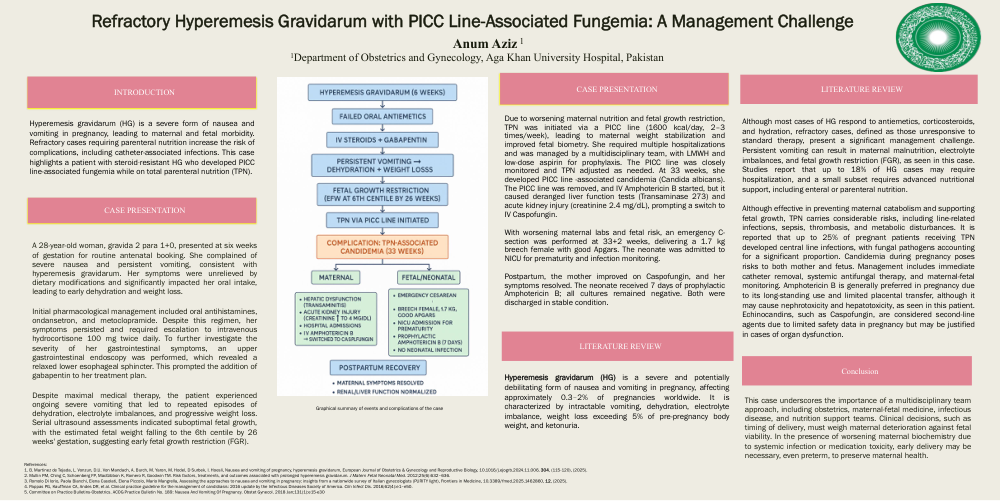
A 28-year-old gravida 2 para 1+0 presented at six weeks gestation for antenatal booking with severe nausea and vomiting. Initial management included antihistamines, ondansetron, and metoclopramide, later escalated to hydrocortisone 100 mg twice daily. Gastrointestinal endoscopy revealed a relaxed lower esophageal sphincter, prompting gabapentin therapy. Despite treatment, persistent symptoms led to electrolyte imbalances, weight loss, and fetal growth restriction, with the fetal growth centile dropping to the 6th centile at 26 weeks. TPN via a PICC line was initiated with 1600 kcal/day administered 2–3 times weekly, stabilizing maternal weight and improving fetal growth.
She experienced multiple hospital admissions and was maintained on low molecular weight heparin and aspirin. TPN administration was closely monitored by a multidisciplinary team. The PICC line site was regularly checked for infection or dislodgement, and adjustments were made to optimize her nutritional intake.
At 33 weeks, the patient developed a fever, prompting blood cultures from the PICC line. Microbiology confirmed Candida albicans growth. The PICC line was immediately removed, and intravenous Amphotericin B was started. However, after two days, liver enzymes were elevated, and creatinine levels rose to 4 mg/dL, necessitating a switch to IV Caspofungin.
Emergency cesarean section was performed in view of worsening maternal biochemistry and an alive baby girl was born weighing 1.7 kg via breech extraction.
Postnatally, the patient remained on IV Caspofungin, leading to gradual improvement in renal and hepatic function. Her nausea resolved postpartum. The neonate, admitted to the NICU, received a seven-day course of Amphotericin B. Both mother and baby demonstrated progressive recovery before discharge.
Conclusion
This case underscores the complexities of managing refractory HG and the risks associated with prolonged TPN. Vigilance for catheter-associated infections, particularly fungemia, is crucial. A multidisciplinary approach involving obstetricians, nutritionists, and infectious disease specialists is essential to optimize maternal and fetal outcomes.