2,281 posters, 63 videos, 56 audios, 43 topics, 18 sessions, 6,174 authors, 2,323 institutions
ePostersLive by SciGen Technologies S.A. All rights reserved.
RCOG World Congress 2025
June 23 - 25, 2025 | ExCeL London, UK
PP.0082
Hidden in Plain Sight: Missed Diabetic Ketoacidosis in a patient with Hyperemesis
Poster Presenter
Authors
Affiliations
Part of Topic
Maternal medicine
Hidden in Plain Sight: Missed Diabetic Ketoacidosis in a patient with Hyperemesis
Dr S Khalid (ST7 Obstetrics and gynaecology), Miss A Tirlapur (Consultant Obstetrician and gynaecologist) and Mrs M Mcdonagh (Senior Sister)
Royal Derby Hospitals, Derby, United Kingdom
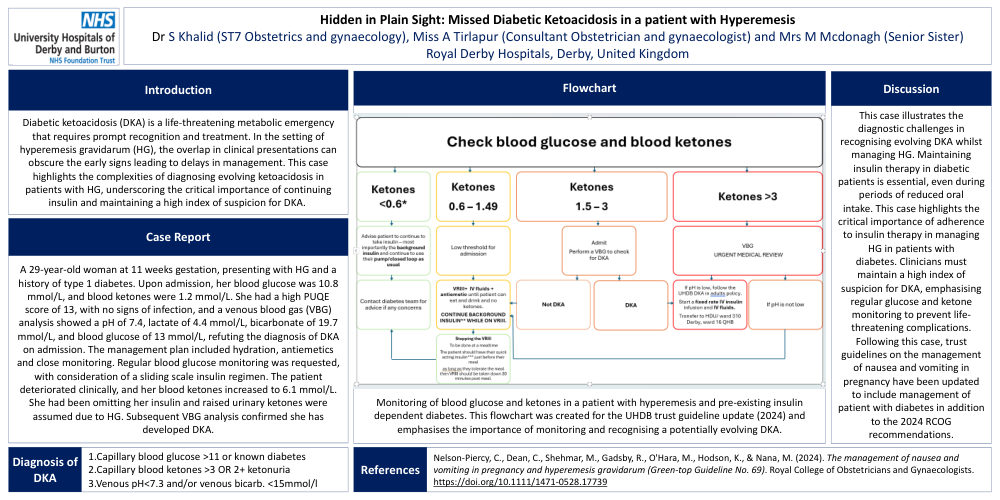
Diabetic ketoacidosis (DKA) is a life-threatening metabolic emergency that requires prompt recognition and treatment. In the setting of hyperemesis gravidarum (HG), the overlap in clinical presentations can obscure the early signs leading to delays in management. This case highlights the complexities of diagnosing evolving ketoacidosis in patients with HG, underscoring the critical importance of continuing insulin and maintaining a high index of suspicion for DKA.
A 29-year-old woman at 11 weeks gestation, presenting with HG and a history of type 1 diabetes. Upon admission, her blood glucose was 10.8 mmol/L, and blood ketones were 1.2 mmol/L. She had a high PUQE score of 13, with no signs of infection, and a venous blood gas (VBG) analysis showed a pH of 7.4, lactate of 4.4 mmol/L, bicarbonate of 19.7 mmol/L, and blood glucose of 13 mmol/L, refuting the diagnosis of DKA on admission. The management plan included hydration, antiemetics and close monitoring. Regular blood glucose monitoring was requested, with consideration of a sliding scale insulin regimen. The patient deteriorated clinically, and her blood ketones increased to 6.1 mmol/L. She had been omitting her insulin and raised urinary ketones were assumed due to HG. Subsequent VBG analysis confirmed she has developed DKA.
Diagnosis of DKA:
1.Capillary blood glucose >11 or known diabetes
2.Capillary blood ketones >3 OR 2+ ketonuria
3.Venous pH<7.3 and/or venous bicarb. <15mmol/l
Monitoring of blood glucose and ketones in a patient with hyperemesis and pre-existing insulin dependent diabetes. This flowchart was created for the UHDB trust guideline update (2024) and emphasises the importance of monitoring and recognising a potentially evolving DKA.
This case illustrates the diagnostic challenges in recognising evolving DKA whilst managing HG. Maintaining insulin therapy in diabetic patients is essential, even during periods of reduced oral intake. This case highlights the critical importance of adherence to insulin therapy in managing HG in patients with diabetes. Clinicians must maintain a high index of suspicion for DKA, emphasising regular glucose and ketone monitoring to prevent life-threatening complications.
Following this case, trust guidelines on the management of nausea and vomiting in pregnancy have been updated to include management of patient with diabetes in addition to the 2024 RCOG recommendations.
Nelson-Piercy, C., Dean, C., Shehmar, M., Gadsby, R., O'Hara, M., Hodson, K., & Nana, M. (2024). The management of nausea and vomiting in pregnancy and hyperemesis gravidarum (Green-top Guideline No. 69). Royal College of Obstetricians and Gynaecologists. https://doi.org/10.1111/1471-0528.17739