2,281 posters, 63 videos, 56 audios, 43 topics, 18 sessions, 6,174 authors, 2,323 institutions
ePostersLive by SciGen Technologies S.A. All rights reserved.
RCOG World Congress 2025
June 23 - 25, 2025 | ExCeL London, UK
EP.1649
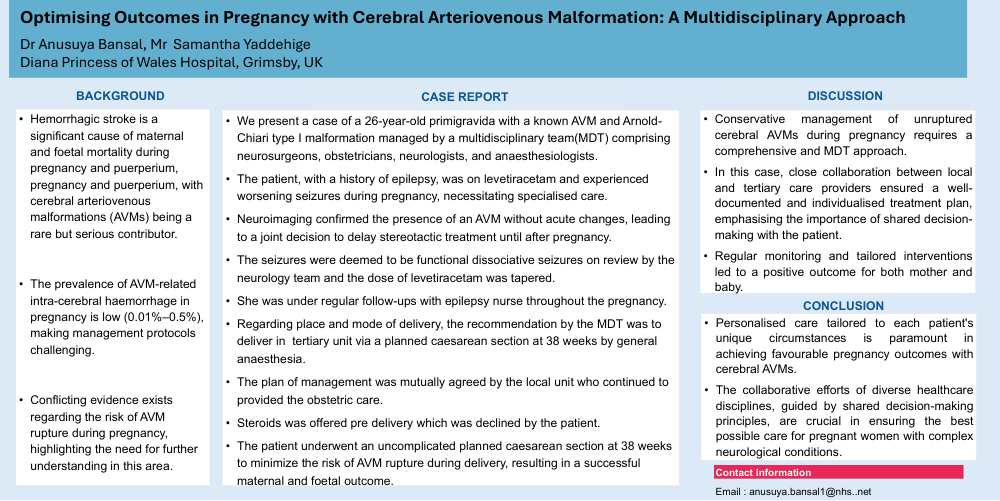
Optimising Outcomes in Pregnancy with Cerebral Arteriovenous Malformation: A Multidisciplinary Approach
Poster Presenter
Authors
Affiliations
Part of Topic
Maternal medicine
Optimising Outcomes in Pregnancy with Cerebral Arteriovenous Malformation: A Multidisciplinary Approach
Dr Anusuya Bansal, Mr Samantha Yaddehige
Diana Princess of Wales Hospital, Grimsby, UK
Objective:
Hemorrhagic stroke is a signiFcant cause of maternal and foetal mortality during pregnancy and puerperium, with cerebral arteriovenous malformations (AVMs) being
a rare but serious contributor. The prevalence of AVM-related intra-cerebral haemorrhage in pregnancy is low (0.01%–0.5%), making management protocols challenging. Conflicting evidence exists regarding the risk of AVM rupture during pregnancy, highlighting the need for further understanding in this area.
Case report :
We present a case of a 26-year-old primigravida with a known arteriovenous malformation and Arnold-Chiari type I malformation managed by a multidisciplinary
team comprising neurosurgeons, obstetricians, neurologists, and anaesthesiologists. The patient, with a history of epilepsy, was on levetiracetam and experienced worsening seizures during pregnancy, necessitating specialised care. Neuroimaging confirmed the presence of an AVM without acute changes, leading to
a joint decision to delay stereotactic treatment until after pregnancy. The seizures were deemed to be functional dissociative seizures on review by the neurology team and the dose of levetiracetam was tapered .She was under regular follow-ups with epilepsy nurse throughout the pregnancy. Regarding place and mode of delivery, the recommendation by the multidisciplinary team was to deliver in the tertiary unit via a planned caesarean section at 38 weeks by general anaesthesia. The plan of management was mutually agreed by the local unit who continued to provided the obstetric care. Steroids was offered pre delivery which was declined by the patient. The patient underwent an uncomplicated planned caesarean section at 38 weeks to minimize the risk of AVM rupture during delivery, resulting in a successful maternal and foetal outcome.
Discussion:
Conservative management of unruptured cerebral AVMs during pregnancy requires a comprehensive and multidisciplinary approach. In this case, close collaboration
between local and tertiary care providers ensured a well-documented and individualised treatment plan, emphasising the importance of shared decision-making with the patient. Regular monitoring and tailored interventions led to a positive outcome for both mother and baby.
Conclusions:
Personalised care tailored to each patient's unique circumstances is paramount in achieving favourable pregnancy outcomes with cerebral AVMs. The collaborative
efforts of diverse healthcare disciplines, guided by shared decision-making principles, are crucial in ensuring the best possible care for pregnant women with
complex neurological conditions.