2,281 posters, 63 videos, 56 audios, 43 topics, 18 sessions, 6,174 authors, 2,323 institutions
ePostersLive by SciGen Technologies S.A. All rights reserved.
RCOG World Congress 2025
June 23 - 25, 2025 | ExCeL London, UK
EP.1642
Gitelman syndrome in pregnancy
Poster Presenter
Authors
Affiliations
Part of Topic
Maternal medicine
Gitelman syndrome in pregnancy
Dr. Khalid Alloush, Dr. Tabitha Oosterhouse
Ysbyty Gwynedd, Betsi Cadwaladr University Health Board (BCUHB)
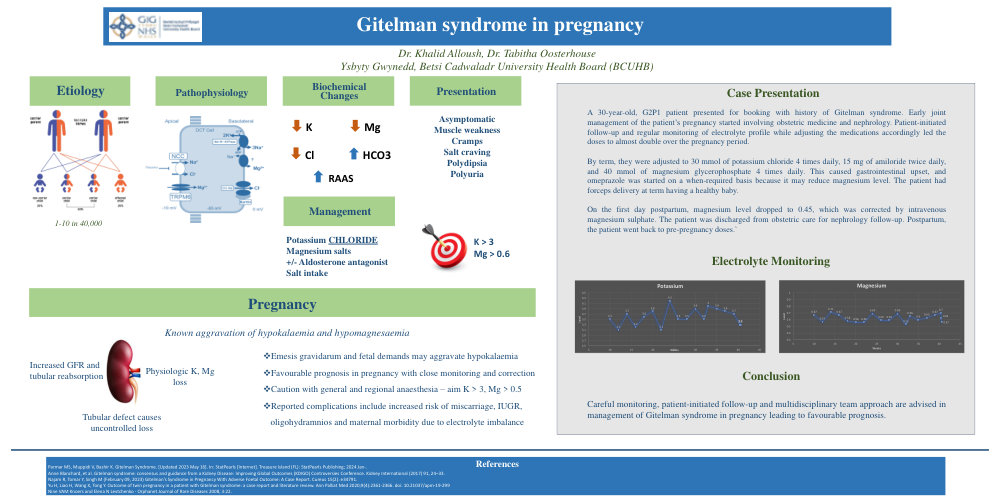
Pregnancy
Emesis gravidarum and fetal demands may aggravate hypokalaemia
❖Favourable prognosis in pregnancy with close monitoring and correction
❖Caution with general and regional anaesthesia – aim K > 3, Mg > 0.5
❖Reported complications include increased risk of miscarriage, IUGR, oligohydramnios and maternal morbidity due to electrolyte imbalance
Case Presentation
A 30-year-old, G2P1 patient presented for booking with history of Gitelman syndrome. Early joint management of the patient’s pregnancy started involving obstetric medicine and nephrology. Patient-initiated follow-up and regular monitoring of electrolyte profile while adjusting the medications accordingly led the
doses to almost double over the pregnancy period.
By term, they were adjusted to 30 mmol of potassium chloride 4 times daily, 15 mg of amiloride twice daily, and 40 mmol of magnesium glycerophosphate 4 times daily. This caused gastrointestinal upset, and omeprazole was started on a when-required basis because it may reduce magnesium level. The patient had forceps delivery at term having a healthy baby.
On the first day postpartum, magnesium level dropped to 0.45, which was corrected by intravenous magnesium sulphate. The patient was discharged from obstetric care for nephrology follow-up. Postpartum, the patient went back to pre-pregnancy doses.
Conclusions
Careful monitoring, patient-initiated follow-up and multidisciplinary team approach are advised in management of Gitelman syndrome in pregnancy leading to favourable prognosis