2,281 posters, 63 videos, 56 audios, 43 topics, 18 sessions, 6,174 authors, 2,323 institutions
ePostersLive by SciGen Technologies S.A. All rights reserved.
RCOG World Congress 2025
June 23 - 25, 2025 | ExCeL London, UK
EP.1641
First presentation of acute intermittent porphyria in Pregnancy
Poster Presenter
Authors
Samriddhi Juneja, Anqa Khan, Jayaprabha Jayakumar, Tabitha Oosterhouse
Affiliations
Part of Topic
Maternal medicine
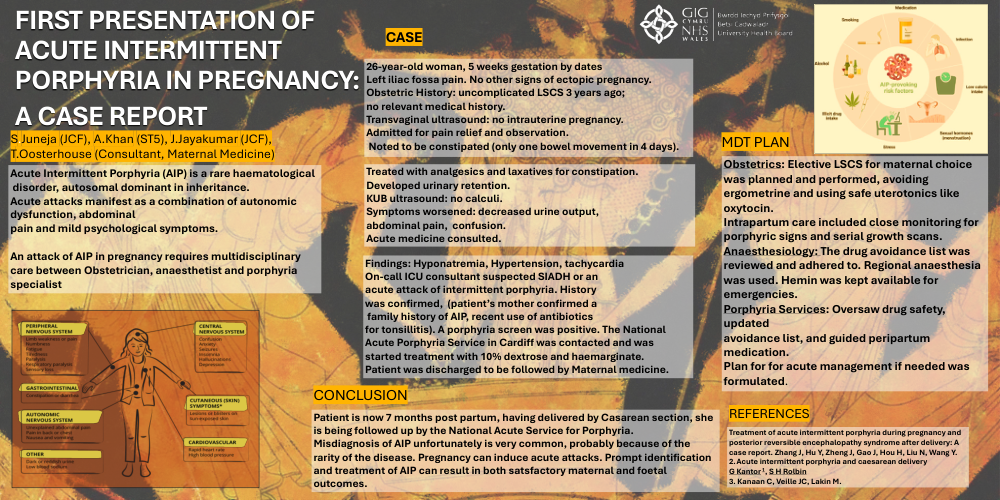
Acute Intermittent Porphyria (AIP) is a rare haematological disorder, autosomal dominant in inheritance.
Acute attacks manifest as a combination of autonomic dysfunction, abdominal pain and mild psychological symptoms.
An attack of AIP in pregnancy requires multidisciplinary care between Obstetrician, anaesthetist and porphyria specialist.
CASE: 26-year-old woman, 5 weeks gestation by dates
Left iliac fossa pain. No other signs of ectopic pregnancy.
Obstetric History: uncomplicated LSCS 3 years ago;
no relevant medical history.
Transvaginal ultrasound: no intrauterine pregnancy.
Admitted for pain relief and observation.
Noted to be constipated (only one bowel movement in 4 days).
Treated with analgesics and laxatives for constipation.
Developed urinary retention.
KUB ultrasound: no calculi.
Symptoms worsened: decreased urine output,
abdominal pain, confusion.
Acute medicine consulted.
Findings: Hyponatremia, Hypertension, tachycardia
On-call ICU consultant suspected SIADH or an
acute attack of intermittent porphyria. History
was confirmed, (patient’s mother confirmed a
family history of AIP, recent use of antibiotics
for tonsillitis). A porphyria screen was positive. The National
Acute Porphyria Service in Cardiff was contacted and was started treatment with 10% dextrose and haemarginate.
Patient was discharged to be followed by Maternal medicine.
MDT:
Obstetrics: Elective LSCS for maternal choice was planned and performed, avoiding ergometrine and using safe uterotonics like oxytocin.
Intrapartum care included close monitoring for porphyric signs and serial growth scans.
Anaesthesiology: The drug avoidance list was reviewed and adhered to. Regional anaesthesia was used. Hemin was kept available for emergencies.
Porphyria Services: Oversaw drug safety, updated
avoidance list, and guided peripartum medication.
Plan for for acute management if needed was formulated.
CONCLUSION:
Patient is now 7 months post partum, having delivered by Casarean section, she is being followed up by the National Acute Service for Porphyria.
Misdiagnosis of AIP unfortunately is very common, probably because of the rarity of the disease. Pregnancy can induce acute attacks. Prompt identification and treatment of AIP can result in both satsfactory maternal and foetal outcomes.