2,281 posters, 63 videos, 56 audios, 43 topics, 18 sessions, 6,174 authors, 2,323 institutions
ePostersLive by SciGen Technologies S.A. All rights reserved.
RCOG World Congress 2025
June 23 - 25, 2025 | ExCeL London, UK
EP.1616
Decoding Obstetric Cholestasis : From diagnosis to delivery!
Poster Presenter
Part of Topic
Maternal medicine
Decoding Obstetric Cholestasis : From diagnosis to delivery!
Objective:
Obstetric cholestasis (OC) is a pregnancy-specific liver disorder characterized by pruritus, elevated bile acids, and abnormal liver function tests (LFTs). OC poses risks for both maternal and fetal health, including preterm labor, postpartum hemorrhage (PPH), and meconium-stained liquor. Early diagnosis and treatment are vital for improving outcomes.
This study aimed to assess the clinical presentation, management with ursodeoxycholic acid (URSO), and maternal and fetal outcomes of obstetric cholestasis, including postpartum recovery.
Design: Retrospective study
Method:
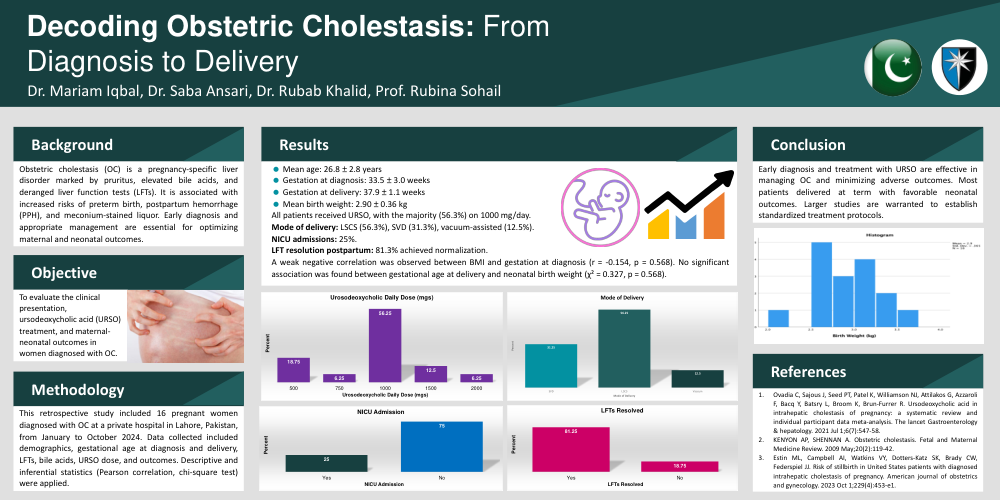
A retrospective analysis of 16 pregnant women diagnosed with OC was conducted at a private hospital in Lahore, Pakistan, from January to October 2024. Data were collected on maternal demographics, gestational age at booking and diagnosis, liver function tests (LFTs), bile acid levels, Ursodeoxycholic acid dosage, and maternal and neonatal outcomes. Statistical analyses, including Pearson correlation and chi-square tests, were applied to examine relationships between variables.
Results:
The mean gestational age at diagnosis was 33.36 ± 2.93 weeks (range: 28-38 weeks). All patients were treated with Ursodeoxycholic acid (250–500 mg/day). The mean gestational age at delivery was 38 weeks, with 56% delivering vaginally and 31.25% via cesarean section. Neonatal outcomes included a mean birth weight of 2.8 kg, with 12.5% requiring NICU admission. Postpartum LFT normalization was achieved in 87.5% of patients within 10 days. A weak negative correlation between BMI and gestation at diagnosis (r = -0.154, p = 0.568) and no significant association between gestational age at delivery and neonatal weight (χ² = 0.327, p = 0.568) were observed.
Conclusion:
Obstetric cholestasis can be effectively managed with early diagnosis and Ursodeoxycholic acidtreatment, improving both maternal and neonatal outcomes. Further research is needed to refine management protocols.