2,281 posters, 63 videos, 56 audios, 43 topics, 18 sessions, 6,174 authors, 2,323 institutions
ePostersLive by SciGen Technologies S.A. All rights reserved.
RCOG World Congress 2025
June 23 - 25, 2025 | ExCeL London, UK
EP.1592
Gestational Diabetes Mellitus and Stillbirth: A Systematic Review and Meta-analysis
Poster Presenter
Authors
Livia Samara, Victoria Bradley, Miriam Toolam, Amelia Atkinson, Katie Barnard, Deborah Caldwell, Abigail Fraser, Shakila Thangaratinam, Gemma Clayton, Abi Merriel
Affiliations
University Hospitals Bristol and Weston NHS Foundation Trust, Centre for Women’s Health Research, Department of Women’s and Children’s Health, Institute of Life Course and Medical Sciences, University of Liverpool, Population Health Sciences, University of Bristol
Part of Topic
Maternal medicine
Gestational Diabetes Mellitus and Stillbirth: A Systematic Review and Meta-Analysis
Livia Samara1, Victoria Bradley2, Miriam Toolan3, Amelia Atkinson3, Katie Barnard3, Deborah Caldwell3, Abigail Fraser3, Shakila Thangaratinam2, Gemma Clayton3, Abi Merriel2
1University Hospitals Bristol and Weston NHS Foundation Trust, 2Centre for Women’s Health Research, Department of Women’s and Children’s Health, Institute of Life Course and Medical Sciences, University of Liverpool, 3Population Health Sciences, University of Bristol
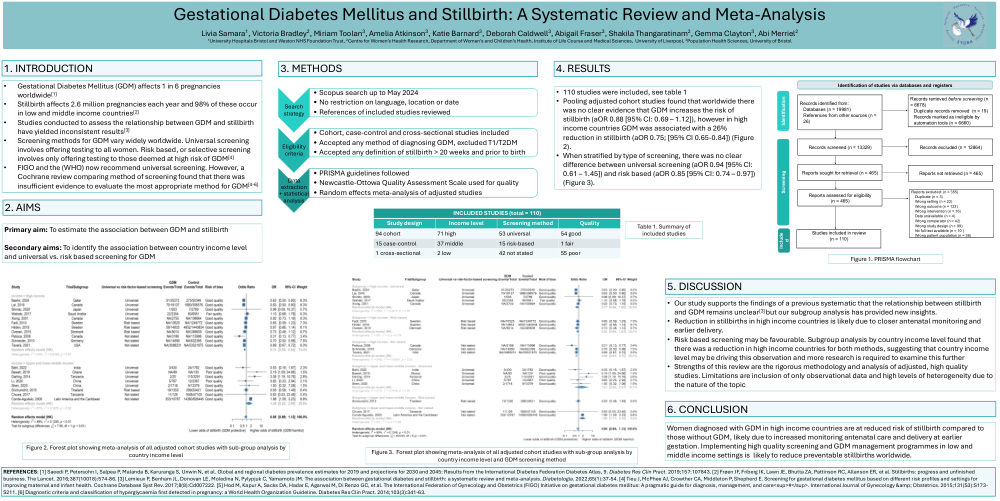
FIGO and the (WHO) now recommend universal screening. However, a Cochrane review comparing method of screening found that there was insufficient evidence to evaluate the most appropriate method for GDM[
Primary aim: To estimate the association between GDM and stillbirth
Secondary aims: To identify the association between country income level and universal vs. risk based screening for GDM
Women diagnosed with GDM in high income countries are at reduced risk of stillbirth compared to those without GDM, likely due to increased monitoring antenatal care and delivery at earlier gestation. Implementing high quality screening and GDM management programmes in low and middle income settings is likely to reduce preventable stillbirths worldwide.