2,281 posters, 63 videos, 56 audios, 43 topics, 18 sessions, 6,174 authors, 2,323 institutions
ePostersLive by SciGen Technologies S.A. All rights reserved.
RCOG World Congress 2025
June 23 - 25, 2025 | ExCeL London, UK
EP.1588
Learning from cases of Acute Fatty Liver of Pregnancy and HELLP syndrome.
Poster Presenter
Part of Topic
Maternal medicine
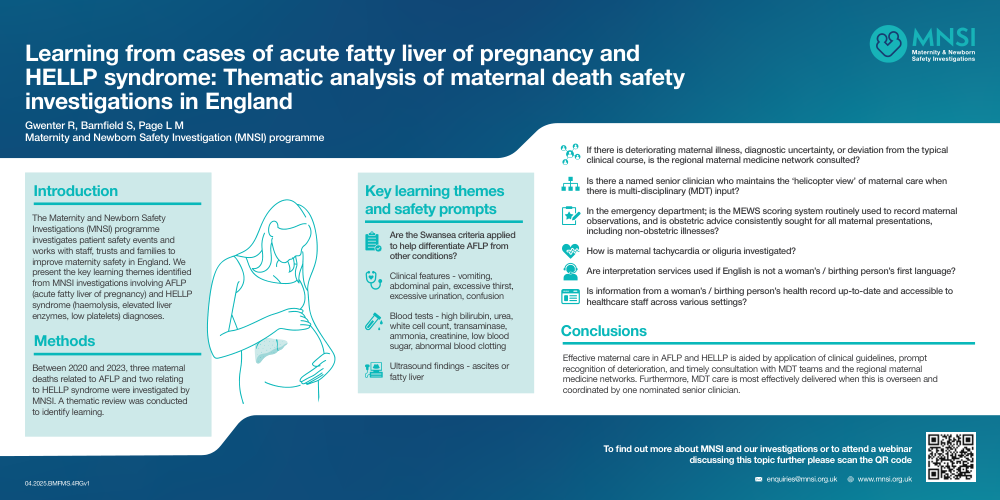
Learning from cases of acute fatty liver of pregnancy and HELLP syndrome: Thematic analysis of maternal death safety investigations in England
Gwenter R, Barnfield S, Page L M
Maternity and Newborn Safety Investigation (MNSI) programme
Introduction
The Maternity and Newborn Safety Investigations (MNSI) programme investigates patient safety events and works with staff, trusts and families to improve maternity safety in England. We present the key learning themes identified from MNSI investigations involving AFLP (acute fatty liver of pregnancy) and HELLP syndrome (haemolysis, elevated liver enzymes, low platelets) diagnoses.
Methods
Between 2020 and 2023, three maternal deaths related to AFLP and two relating to HELLP syndrome were investigated by MNSI. A thematic review was conducted to identify learning.
Key learning themes and safety prompts
- Are the Swansea criteria applied to help differentiate AFLP from other conditions?
- Clinical features - vomiting, abdominal pain, excessive thirst, excessive urination, confusion
- Blood tests - high bilirubin, urea, white cell count, transaminase, ammonia, creatinine, low blood sugar, abnormal blood clotting
- Ultrasound findings - ascites or fatty liver
- If there is deteriorating maternal illness, diagnostic uncertainty, or deviation from the typical clinical course, is the regional maternal medicine network consulted?
- Is there a named senior clinician who maintains the ‘helicopter view’ of maternal care when there is multi-disciplinary (MDT) input?
- In the emergency department; is the MEWS scoring system routinely used to record maternal observations, and is obstetric advice consistently sought for all maternal presentations, including non-obstetric illnesses?
- How is maternal tachycardia or oliguria investigated?
- Are interpretation services used if English is not a woman’s / birthing person’s first language?
- Is information from a woman’s / birthing person’s health record up-to-date and accessible to healthcare staff across various settings?
Conclusions
Effective maternal care in AFLP and HELLP is aided by application of clinical guidelines, prompt recognition of deterioration, and timely consultation with MDT teams and the regional maternal medicine networks. Furthermore, MDT care is most effectively delivered when this is overseen and coordinated by one nominated senior clinician.