2,281 posters, 63 videos, 56 audios, 43 topics, 18 sessions, 6,174 authors, 2,323 institutions
ePostersLive by SciGen Technologies S.A. All rights reserved.
RCOG World Congress 2025
June 23 - 25, 2025 | ExCeL London, UK
EP.1584
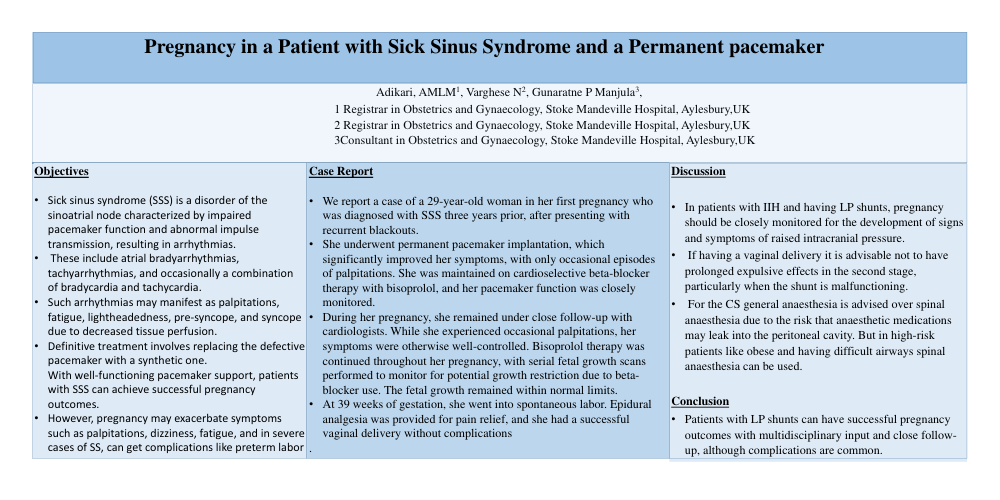
Pregnancy in a Patient with Sick Sinus Syndrome and a Permanent pacemaker
Poster Presenter
Authors
Affiliations
Part of Topic
Maternal medicine
Pregnancy in a Patient with Sick Sinus Syndrome and a Permanent pacemaker
Objectives
•Sick sinus syndrome (SSS) is a disorder of the sinoatrial node characterized by impaired pacemaker function and abnormal impulse transmission, resulting in arrhythmias.
• These include atrial bradyarrhythmias, tachyarrhythmias, and occasionally a combination of bradycardia and tachycardia.
•Such arrhythmias may manifest as palpitations, fatigue, lightheadedness, pre-syncope, and syncope due to decreased tissue perfusion.
•Definitive treatment involves replacing the defective pacemaker with a synthetic one.
With well-functioning pacemaker support, patients with SSS can achieve successful pregnancy outcomes.
With well-functioning pacemaker support, patients with SSS can achieve successful pregnancy outcomes.
•However, pregnancy may exacerbate symptoms such as palpitations, dizziness, fatigue, and in severe cases of SS, can get complications like preterm labor
Case Report
•We report a case of a 29-year-old woman in her first pregnancy who was diagnosed with SSS three years prior, after presenting with recurrent blackouts.
•She underwent permanent pacemaker implantation, which significantly improved her symptoms, with only occasional episodes of palpitations. She was maintained on cardioselective beta-blocker therapy with bisoprolol, and her pacemaker function was closely monitored.
•During her pregnancy, she remained under close follow-up with cardiologists. While she experienced occasional palpitations, her symptoms were otherwise well-controlled. Bisoprolol therapy was continued throughout her pregnancy, with serial fetal growth scans performed to monitor for potential growth restriction due to beta-blocker use. The fetal growth remained within normal limits.
•At 39 weeks of gestation, she went into spontaneous labor. Epidural analgesia was provided for pain relief, and she had a successful vaginal delivery without complications
.
Discussion
•In patients with IIH and having LP shunts, pregnancy should be closely monitored for the development of signs and symptoms of raised intracranial pressure.
• If having a vaginal delivery it is advisable not to have prolonged expulsive effects in the second stage, particularly when the shunt is malfunctioning.
• For the CS general anaesthesia is advised over spinal anaesthesia due to the risk that anaesthetic medications may leak into the peritoneal cavity. But in high-risk patients like obese and having difficult airways spinal anaesthesia can be used.
Conclusion
Patients with LP shunts can have successful pregnancy outcomes with multidisciplinary input and close follow-up, although complications are common