2,281 posters, 63 videos, 56 audios, 43 topics, 18 sessions, 6,174 authors, 2,323 institutions
ePostersLive by SciGen Technologies S.A. All rights reserved.
RCOG World Congress 2025
June 23 - 25, 2025 | ExCeL London, UK
EP.1581
Successful Pregnancy Outcome in a patient with a Lumbar Peritoneal Shunt
Poster Presenter
Authors
Affiliations
Part of Topic
Maternal medicine
Successful Pregnancy Outcome in a patient with a Lumbar Peritoneal Shunt
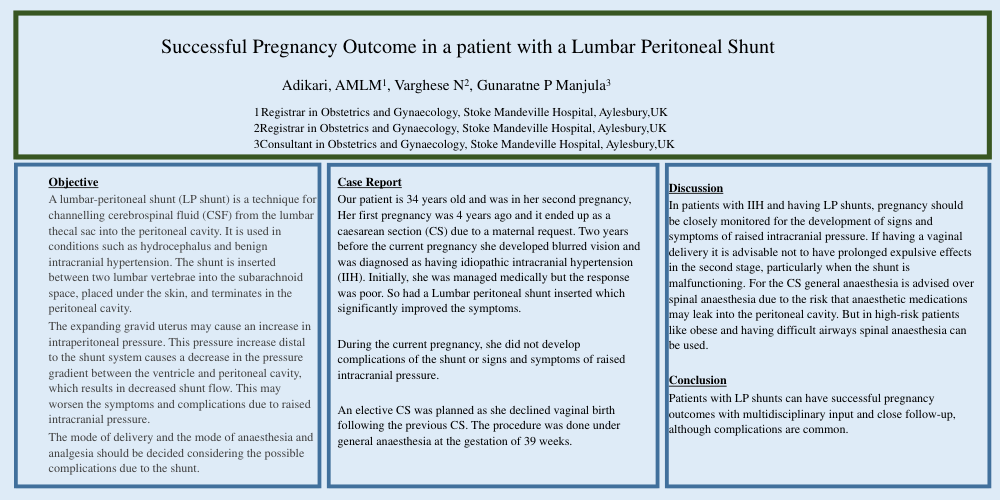
Objective
A lumbar-peritoneal shunt (LP shunt) is a technique for channelling cerebrospinal fluid (CSF) from the lumbar thecal sac into the peritoneal cavity. It is used in conditions such as hydrocephalus and benign intracranial hypertension. The shunt is inserted between two lumbar vertebrae into the subarachnoid space, placed under the skin, and terminates in the peritoneal cavity.
The expanding gravid uterus may cause an increase in intraperitoneal pressure. This pressure increase distal to the shunt system causes a decrease in the pressure gradient between the ventricle and peritoneal cavity, which results in decreased shunt flow. This may worsen the symptoms and complications due to raised intracranial pressure.
The mode of delivery and the mode of anaesthesia and analgesia should be decided considering the possible complications due to the shunt.
Case Report
Our patient is 34 years old and was in her second pregnancy, Her first pregnancy was 4 years ago and it ended up as a caesarean section (CS) due to a maternal request. Two years before the current pregnancy she developed blurred vision and was diagnosed as having idiopathic intracranial hypertension (IIH). Initially, she was managed medically but the response was poor. So had a Lumbar peritoneal shunt inserted which significantly improved the symptoms.
During the current pregnancy, she did not develop complications of the shunt or signs and symptoms of raised intracranial pressure.
An elective CS was planned as she declined vaginal birth following the previous CS. The procedure was done under general anaesthesia at the gestation of 39 weeks.
Discussion
In patients with IIH and having LP shunts, pregnancy should be closely monitored for the development of signs and symptoms of raised intracranial pressure. If having a vaginal delivery it is advisable not to have prolonged expulsive effects in the second stage, particularly when the shunt is malfunctioning. For the CS general anaesthesia is advised over spinal anaesthesia due to the risk that anaesthetic medications may leak into the peritoneal cavity. But in high-risk patients like obese and having difficult airways spinal anaesthesia can be used.
Conclusion
Patients with LP shunts can have successful pregnancy outcomes with multidisciplinary input and close follow-up, although complications are common.