2,281 posters, 63 videos, 56 audios, 43 topics, 18 sessions, 6,174 authors, 2,323 institutions
ePostersLive by SciGen Technologies S.A. All rights reserved.
RCOG World Congress 2025
June 23 - 25, 2025 | ExCeL London, UK
EP.1533
Placental Contribution to Adverse Pregnancy Outcomes in Asian Women with PCOS
Poster Presenter
Authors
Affiliations
Barts Health NHS Trust, Queen Mary University, Newham Hospital
Part of Topic
Maternal medicine
Placental Contribution to Adverse Pregnancy Outcomes in Asian Women with Polycystic Ovary Syndrome
Objective:
This study investigates the relationship between placental histopathological abnormalities and polycystic ovary syndrome (PCOS) in pregnant women. PCOS, affecting 5–15% of reproductive-aged women, is associated with a 2–4 times increased risk of adverse pregnancy outcomes such as gestational diabetes, preeclampsia, preterm labour, and caesarean delivery. These pregnancies are marked by significant maternal and fetal morbidity.
Design:
A retrospective cross-sectional study was conducted between January 2023 and January 2024 including pregnant women who were admitted to Newham University Hospital with an adverse obstetric outcome and whose placentas were sent for histopathological examination.
Method:
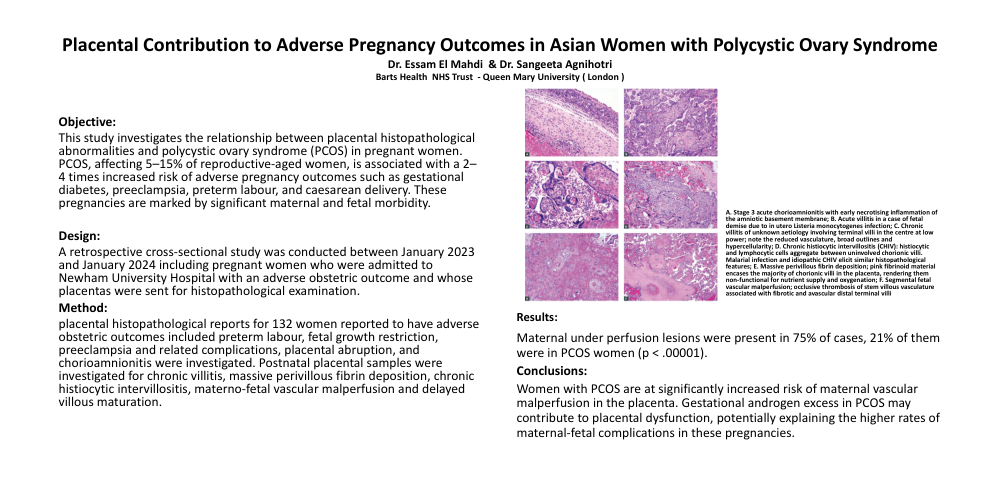
placental histopathological reports for 132 women reported to have adverse obstetric outcomes included preterm labour, fetal growth restriction, preeclampsia and related complications, placental abruption, and chorioamnionitis were investigated. Postnatal placental samples were investigated for chronic villitis, massive perivillous fibrin deposition, chronic histiocytic intervillositis, materno-fetal vascular malperfusion and delayed villous maturation.
Results:
Maternal under perfusion lesions were present in 75% of cases, 21% of them were in PCOS women (p < .00001).
Conclusions:
Women with PCOS are at significantly increased risk of maternal vascular malperfusion in the placenta. Gestational androgen excess in PCOS may contribute to placental dysfunction, potentially explaining the higher rates of maternal-fetal complications in these pregnancies