2,281 posters, 63 videos, 56 audios, 43 topics, 18 sessions, 6,174 authors, 2,323 institutions
ePostersLive by SciGen Technologies S.A. All rights reserved.
RCOG World Congress 2025
June 23 - 25, 2025 | ExCeL London, UK
EP.1516
Maternal and neonatal outcomes in women with epilepsy; 20-year Tertiary-care hospital study
Poster Presenter
Part of Topic
Maternal medicine
Background: Epilepsy is the most common neurological disorder, affecting 40% women of reproductive age. While it has an impact on maternal outcomes, it can affect perinatal outcomes, particularly due to the effects of anti-epileptic drugs (AEDs).
Objective:
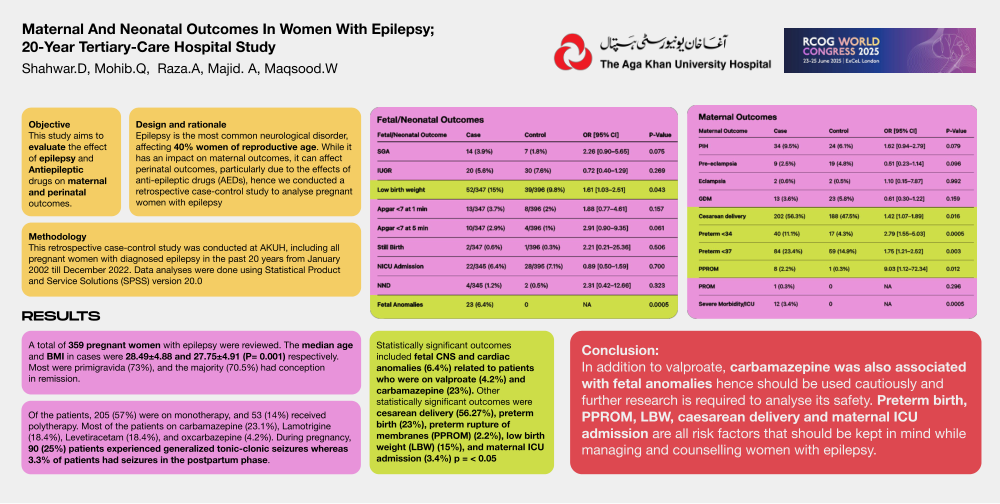
This study aims to evaluate the effect of epilepsy and Antiepileptic drugs on maternal and perinatal outcomes.
Methodology: This retrospective case-control study was conducted at AKUH, including all pregnant women with diagnosed epilepsy in the past 20 years from January 2002 till December 2022 . Data analyses were done using Statistical Product and Service Solutions (SPSS) version 20.0.
Results:
A total of 359 pregnant women with epilepsy were reviewed. The median age and BMI in cases were 28.49±4.88 and 27.75±4.91 (P= 0.001) respectively. Most were primigravida (73%), and the majority (70.5%) had conception in remission. Of the patients, 205 (57%) were on monotherapy, and 53 (14%) received polytherapy. Most of the patients on carbamazepine (23.1%), Lamotrigine (18.4%), Levetiracetam (18.4%), and oxcarbazepine (4.2%). During pregnancy, 90 (25%) patients experienced generalized tonic-clonic seizures. Whereas 3.3% of patients had seizures in the postpartum phase. Statistically significant outcomes included fetal CNS and cardiac anomalies (6.4%) related to patients who were on valproate (4.2%) and carbamazepine (23%). Other statistically significant outcomes were cesarean delivery (56.27%), preterm birth (23%), preterm rupture of membranes (PPROM) (2.2%), low birth weight (LBW) (15%), and maternal ICU admission (3.4%) p = < 0.05.
Conclusion:
These findings highlight the importance of careful management and monitoring of epilepsy in pregnancy to minimize risks to maternal and fetal health.