1,830 posters, 67 videos, 75 audios, 29 topics, 22 sessions, 4,727 authors, 1,697 institutions
ePostersLive by SciGen Technologies S.A. All rights reserved.
RCOG World Congress 2023
June 12 - 14, 2023 | London, UK

EP.0719
PNEUMOMEDISTINUM IN PREGNANCY
Poster Presenter
Authors
Affiliations
Part of Topic
Imaging in Obstetrics
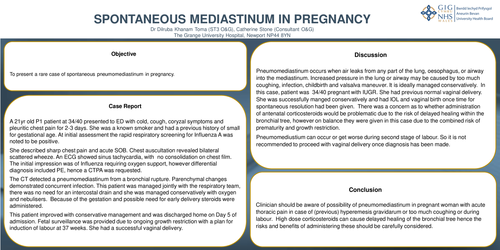
Objective- To present a rare case of spontaneous pneumomediastinum in pregnancy
Case Report- A 21yr old P1 patient at 34/40 presented to ED with cold, cough, coryzal symptoms and pleuritic chest pain for 2-3 days. She was a known smoker and had a previous history of small for gestational age. At initial assessment the rapid respiratory screening for Influenza A was noted to be positive.
She described sharp chest pain and acute SOB. Chest auscultation revealed bilateral scattered wheeze. An ECG showed sinus tachycardia, with no consolidation on chest film. The initial impression was of Influenza requiring oxygen support, however differential diagnosis included PE, hence a CTPA was requested.
The CT detected a pneumomediastinum from a bronchial rupture. Parenchymal changes demonstrated concurrent infection. This patient was managed jointly with the respiratory team, there was no need for an intercostal drain and she was managed conservatively with oxygen and nebulisers. Because of the gestation and possible need for early delivery steroids were administered.
This patient improved with conservative management and was discharged home on Day 5 of admission. Fetal surveillance was provided due to ongoing growth restriction with a plan for induction of labour at 37 weeks. She had a successful vaginal delivery.
Discussion- Pneumomediastinum occurs when air leaks from any part of the lung, oesophagus, or airway into the mediastinum. Increased pressure in the lung or airway may be caused by too much coughing, infection, childbirth and valsalva maneuver. It is ideally managed conservatively. In this case, patient was 34/40 pregnant with IUGR. She had previous normal vaginal delivery. She was successfully manged conservatively and had IOL and vaginal birth once time for spontaneous resolution had been given. There was a concern as to whether administration of antenatal corticosteroids would be problematic due to the risk of delayed healing within the bronchial tree, however on balance they
were given in this case due to the combined risk of prematurity and growth restriction.
Pneumomediustium can occur or get worse during second stage of labour. So it is not recommended to proceed with vaginal delivery once diagnosis has been made.
Conclusion- Clinician should be aware of possibility of pneumomediastinum in pregnant woman with acute thoracic pain in case of (previous) hyperemesis gravidarum or too much coughing or during labour. High dose corticosteroids can cause delayed healing of the bronchial tree hence the risks and benefits of administering these should be carefully considered.