1,830 posters, 67 videos, 75 audios, 29 topics, 22 sessions, 4,727 authors, 1,697 institutions
ePostersLive by SciGen Technologies S.A. All rights reserved.
RCOG World Congress 2023
June 12 - 14, 2023 | London, UK

PP.0151
Acceptability of a digital health intervention to inform women about postpartum contraception
Poster Presenter
Part of Topic
Innovation
Video
Acceptability of an audio-visual animation to inform women about postpartum contraception during pregnancy
Background
•Postpartum period is a high-risk time for unintended pregnancy and short inter-pregnancy intervals are associated with higher risk of obstetric complications
•Accessing appointments to discuss and initiate contraception can be difficult for new mothers after leaving the birth unit
•The antenatal period provides an opportunity to provide information about fertility and contraceptive choices after childbirth and facilitate postpartum provision
•Contraceptive discussion during the antenatal period is not routinely offered and the quality and consistency of information can be highly variable
•Audio-visual animation can increase engagement, consistency and recall of health information compared to in-person consultation alone
Aim
Our aim was to evaluate the feasibility and acceptability of delivering a short audio-visual animation to provide information about postpartum contraception during the antenatal period
Methods
•50 pregnant women (between 20-24 weeks) recruited across NHS Lothian maternity
•Randomised 3:1 to either the intervention or standard care alone
oStandard care = routine discussion with maternity care provider
oIntervention = specially-designed two minute audio-visual animation delivered via mobile device (in addition to standard care)
•Both groups completed a satisfaction survey about the information they received (5-point Likert scale) and self-rated knowledge recall of six ‘key facts’
•Participants in intervention group completed an additional survey relating to specific features of the animation (content, length, overall impression)
•Further subset (n=10) invited to participate in a qualitative interview exploring their views and experience of the intervention in more detail
Results
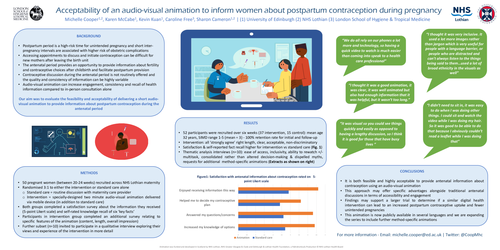
•52 participants were recruited over six weeks (37 intervention, 15 control): mean age 32 years, SIMD range 1-5 (mean = 3) - 100% retention rate for initial and follow-up
•Intervention: all ‘strongly agree’ right length, clear, acceptable, non-discriminatory
•Satisfaction & self-reported fact recall higher for intervention vs standard care (Fig. 1)
•Thematic analysis interviews (n=10): ease of access, inclusivity, ability to rewatch +/- multitask, consolidated rather than altered decision-making & dispelled myths, requests for additional method-specific animations (Extracts as shown on right)
Conclusions
•It is both feasible and highly acceptable to provide antenatal information about contraception using an audio-visual animation
•This approach may offer specific advantages alongside traditional antenatal discussions in terms of accessibility and engagement
•Findings may support a larger trial to determine if a similar digital health intervention can lead to an increased postpartum contraceptive uptake and fewer unintended pregnancies
•This animation is now publicly available in several languages and we are expanding the series to include further method-specific animations as requested
