1,830 posters, 67 videos, 75 audios, 29 topics, 22 sessions, 4,727 authors, 1,697 institutions
ePostersLive by SciGen Technologies S.A. All rights reserved.
RCOG World Congress 2023
June 12 - 14, 2023 | London, UK

PP.0090
A Complete Molar Pregnancy with Ballantyne’s Syndrome and Gestational Trophoblastic Neoplasia
Poster Presenter
Part of Topic
Early Pregnancy Complications and Gynaecology
A Complete Hydatidiform Molar Pregnancy with Ballantyne’s Syndrome and Gestational Trophoblastic Neoplasia
Dr. Sumaira Tariq, Dr. Parijot Kumar, Professor Amanda Cotter
Introduction
We present a case of a complete hydatidiform molar pregnancy that was complicated by Ballantyne’s syndrome, with development of congestive heart failure and choriocarcinoma in the post pregnancy termination period.
Objective
This is a rare case, with a paucity of published evidence. We detail the clinical, sonographic features of the pregnancy, salient considerations for management, and a review of the current evidence base.
Patient Background
Case History
7 + 0 weeks gestation: Presented with Hyperemesis Gravidarum (HEG) and deranged thyroid function tests (TFTs).
9 + 1weeks gestation: Viable intrauterine pregnancy (VIUP) with an echogenic mass with multiple cystic areas adjacent to the sac was seen on ultrasound scan. A working diagnosis of a hydatidiform molar pregnancy was made.
12 + 0 weeks gestation: Worsening dyspnoea and hypertension with hypoalbuminemia and worsening TFTs and LFTs. NIPT was normal with karyotype XX, however, showing high fetal fraction of 58%. Between 7-13 weeks the fetus measured appropriate for dates so the working diagnosis went from partial mole with a Triploid fetus to a twin gestation of a normal pregnancy with a choriocarcinoma in the second sac.
13 + 0weeks gestation: Severe hyperemesis and significant peripheral oedema. Ultrasound scan showed a placental mass that was 4 times the size of the fetus and evidence of fetal hydrops. This prompted a decision in conjunction with the patient, for a compassionate termination of pregnancy (TOP). The fetus after delivery was noted to have Gastrochiasis. The fetal karyotype from the placental tissue was 46 XX.
Post TOP: Unstable hypertension, management with 2 different anti-hypertensives. Developed radiologically proven congestive heart failure (cardiomyopathy), managed with ACE-Inhibitors and diuretics. B-HCG levels had risen sharpy from 64,512 to 89,023. Referred to national gestational trophoblastic disease centre.
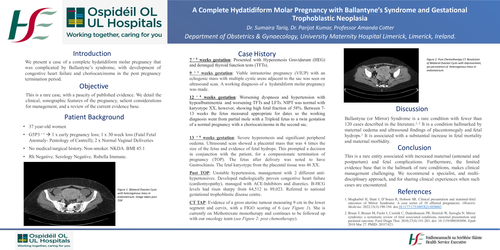
CT TAP: Evidence of a gross uterine tumour measuring 9 cm in the lower segment and cervix, with a FIGO scoring of 6 (see Figure 1). She is currently on Methotrexate monotherapy and continues to be followed up with our oncology team (see Figure 2- post chemotherapy).
Discussion
Ballantyne (or Mirror) Syndrome is a rare condition with fewer than 120 cases described in the literature.1, 2 It is a condition hallmarked by maternal oedema and ultrasound findings of placentomegaly and fetal hydrops.1 It is associated with a substantial increase in fetal mortality and maternal morbidity.
Conclusion
This is a rare entity associated with increased maternal (antenatal and postpartum) and fetal complications. Furthermore, the limited evidence base that is the hallmark of rare conditions, makes clinical management challenging. We recommend a specialist, and multi-disciplinary approach, and for sharing clinical experiences when such cases are encountered.
References