58 posters, 14 topics, 4 sessions, 188 authors, 62 institutions
ePostersLive by SciGen Technologies S.A. All rights reserved.
PSRC 69th Annual Meeting 2024
May 16-19, 2024 | The Westin Copley Place, Boston, MA

EP09
Cranioplasty Approaches And Outcomes In Low-middle Income Countries: A Systematic Review
Poster Presenter
Authors
Santana Solomon, Haley Kenner, Robert Unger, Eujung Park, Courtney Deaver, Robert Bina, Vasif Sabeeh, Michel Saint-Cyr, Peter Nakaji
Affiliations
University of Arizona College of Medicine - Phoenix, Department of Neurosurgery, Banner - University Medical Center, Forma Plastic Surgery, Division of Plastic Surgery, Banner MD Anderson Cancer Center
Part of Topic
Craniofacial
CRANIOPLASTY APPROACHES AND OUTCOMES IN LOW-MIDDLE INCOME COUNTRIES: A SYSTEMATIC REVIEW
OBJECTIVE
• The majority of techniques to perform cranioplasty can be expensive, especially
for patients and surgeons in low and middle-income countries (LMIC)
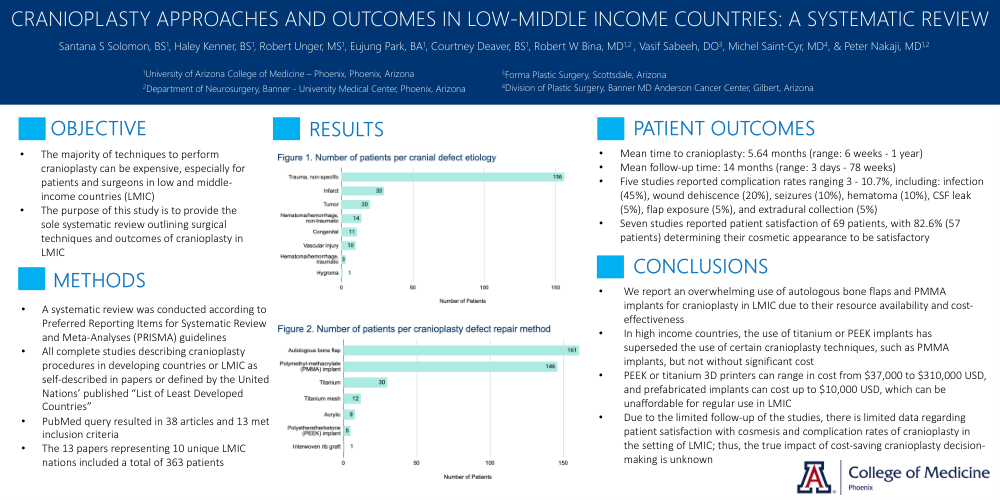
• The purpose of this study is to provide the sole systematic review outlining surgical techniques and outcomes of cranioplasty in LMIC
METHODS
• A systematic review was conducted according to Preferred Reporting Items for Systematic Review and Meta-Analyses (PRISMA) guidelines
• All complete studies describing cranioplasty procedures in developing countries or LMIC as self-described in papers or defined by the United Nations' published "List of Least Developed Countries"
• PubMed query resulted in 38 articles and 13 met inclusion criteria
• The 13 papers representing 10 unique LMIC nations included a total of 363 patients
PATIENT OUTCOMES
• Mean time to cranioplasty: 5.64 months (range: 6 weeks - 1 year)
• Mean follow-up time: 14 months (range: 3 days - 78 weeks)
• Five studies reported complication rates ranging 3 - 10.7%, including: infection (45%), wound dehiscence (20%), seizures (10%), hematoma (10%), CSF leak (5%), flap exposure (5%), and extradural collection (5%)
• Seven studies reported patient satisfaction of 69 patients, with 82.6% (57 patients) determining their cosmetic appearance to be satisfactory
CONCLUSIONS
• We report an overwhelming use of autologous bone flaps and PMMA implants for cranioplasty in LMIC due to their resource availability and cost-effectiveness
• In high income countries, the use of titanium or PEEK implants has superseded the use of certain cranioplasty techniques, such as PMMA implants, but not without significant cost
• PEEK or titanium 3D printers can range in cost from $37,000 to $310,000 USD, and prefabricated implants can cost up to $10,000 USD, which can be unaffordable for regular use in LMIC
• Due to the limited follow-up of the studies, there is limited data regarding patient satisfaction with cosmesis and complication rates of cranioplasty in the setting of LMIC; thus, the true impact of cost- saving cranioplasty decision-making is unknown