358 posters, 97 topics, 122 sessions, 958 authors, 239 institutions
ePostersLive by SciGen Technologies S.A. All rights reserved.
79th PostGraduate Assembly in Anesthesiology 2025
December 12 - 15, 2025 | New York City

2185
Postextubation Apnea After Radical Vulvectomy due to Residual Remifentanil Effect: When consciousness returns, spontaneous breathing may not be imminent!
Poster Presenter
Authors
Affiliations
Part of Topic
Airway - Perioperative Management
Postextubation Apnea After Radical Vulvectomy due to Residual Remifentanil Effect:
When consciousness returns, spontaneous breathing may not be imminent!
Ryan H. Archer, MD 1, Mehmet Ozcan, MD 1, Robert Gaiser, MD 1
1 Department of Anesthesiology, Yale School of Medicine, New Haven CT
Learning Objectives
Identify risk of post-extubation apnea in patients
Understand opioid PK/PD and its effect on patients with obstructive sleep apnea (OSA) and morbid obesity
Case Description
A 70-year-old woman with CPAP-dependent obstructive sleep apnea, morbid obesity (BMI 51.9), and hypertension underwent radical vulvectomy with local flap closure.
General anesthesia was maintained with sevoflurane and fentanyl until cumulative fentanyl reached 600 µg, prompting initiation of a remifentanil infusion (0.08–0.15 µg/kg/min) for hemodynamic control.
A propofol infusion (80-20 µg/kg/min) was started during the final 30 minutes of the case as sevoflurane was washed out.
At the end of operation (prior to extubation) the patient demonstrated return of consciousness, followed commands, was breathing spontaneously, although the remifentanil infusion was still running at 0.10 µg/kg/min. She was extubated based on these clinical findings.
Immediately after extubation, she became apneic and unresponsive, requiring airway adjuncts and positive-pressure ventilation. Oxygen saturation dropped to below 10% but recovered rapidly with assisted ventilation.
Spontaneous ventilation, airway patency, and consciousness resumed six minutes post-extubation. She was transferred to post-anesthesia care unit (PACU) with her home CPAP machine. She transferred to a step-down unit once PACU discharge criteria were met.
For analysis after the case, remifentanil, fentanyl, and propofol doses were entered in a pharmacokinetic remodeling program (1) as they were administered during the case, along with the demographic data of the patient.
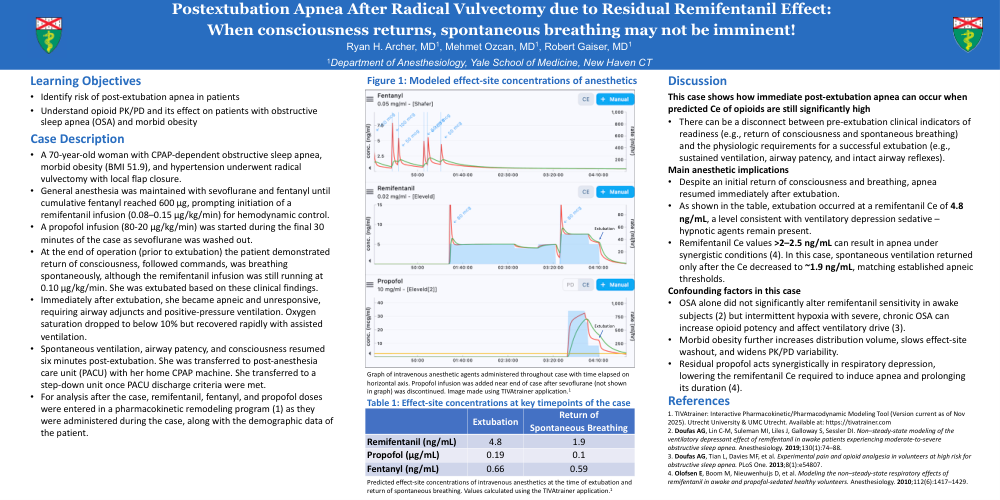
Figure 1: Modeled effect-site concentrations of anesthetics
Graph of intravenous anesthetic agents administered throughout case with time elapsed on horizontal axis. Propofol infusion was added near end of case after sevoflurane (not shown in graph) was discontinued. Image made using TIVAtrainer application.1
Table 1: Effect-site concentrations at key timepoints of the case
Predicted effect-site concentrations of intravenous anesthetics at the time of extubation and return of spontaneous breathing. Values calculated using the TIVAtrainer application.1
Discussion
This case shows how immediate post-extubation apnea can occur when predicted Ce of opioids are still significantly high
There can be a disconnect between pre-extubation clinical indicators of readiness (e.g., return of consciousness and spontaneous breathing) and the physiologic requirements for a successful extubation (e.g., sustained ventilation, airway patency, and intact airway reflexes).
Main anesthetic implications
Despite an initial return of consciousness and breathing, apnea resumed immediately after extubation.
As shown in the table, extubation occurred at a remifentanil Ce of 4.8 ng/mL, a level consistent with ventilatory depression sedative –hypnotic agents remain present.
Remifentanil Ce values >2–2.5 ng/mL can result in apnea under synergistic conditions (4). In this case, spontaneous ventilation returned only after the Ce decreased to ~1.9 ng/mL, matching established apneic thresholds.
Confounding factors in this case
OSA alone did not significantly alter remifentanil sensitivity in awake subjects (2) but intermittent hypoxia with severe, chronic OSA can increase opioid potency and affect ventilatory drive (3).
Morbid obesity further increases distribution volume, slows effect-site washout, and widens PK/PD variability.
Residual propofol acts synergistically in respiratory depression, lowering the remifentanil Ce required to induce apnea and prolonging its duration (4).
References
1. TIVAtrainer: Interactive Pharmacokinetic/Pharmacodynamic Modeling Tool (Version current as of Nov 2025). Utrecht University & UMC Utrecht. Available at: https://tivatrainer.com
2. Doufas AG, Lin C-M, Suleman MI, Liles J, Galloway S, Sessler DI. Non–steady-state modeling of the ventilatory depressant effect of remifentanil in awake patients experiencing moderate-to-severe obstructive sleep apnea. Anesthesiology. 2019;130(1):74–88.
3. Doufas AG, Tian L, Davies MF, et al. Experimental pain and opioid analgesia in volunteers at high risk for obstructive sleep apnea. PLoS One. 2013;8(1):e54807.
4. Olofsen E, Boom M, Nieuwenhuijs D, et al. Modeling the non–steady-state respiratory effects of remifentanil in awake and propofol-sedated healthy volunteers. Anesthesiology. 2010;112(6):1417–1429.