215 posters, 5 topics, 22 sessions, 596 authors, 283 institutions
ePostersLive by SciGen Technologies S.A. All rights reserved.
Obstetric Anaesthesia Annual Scientific Meeting 2025
May 15 - 16, 2025 | ICC, 2 Lanyon Place, Belfast BT1 3WH

6781243
Evaluating the use of pain relief comparison cards on labour ward
Poster Presenter
Part of Topic
Surveys
Evaluating the use of pain relief comparison cards on labour ward
Introduction
Labouring mothers often face uncertainty when choosing the most suitable
analgesic options for pain relief. Many are not fully informed about the available options and
rely on healthcare professionals for guidance. The decision-making process is complicated by
the overwhelming amount of information provided in clinical settings. Websites like Labour
Pains(1) aim to inform expectant mothers with clear, accessible details on pain relief methods.
However, a concise, visual comparison tool is needed to aid discussions between patients and
the perinatal team. This study assessed the perceived value of a newly developed analgesic
comparison card, designed to help healthcare professionals present pain relief options to
mothers during labour. The card offers a side-by-side comparison of analgesics; including their
benefits, risks, and side effects, helping patients make informed decisions.
Methods
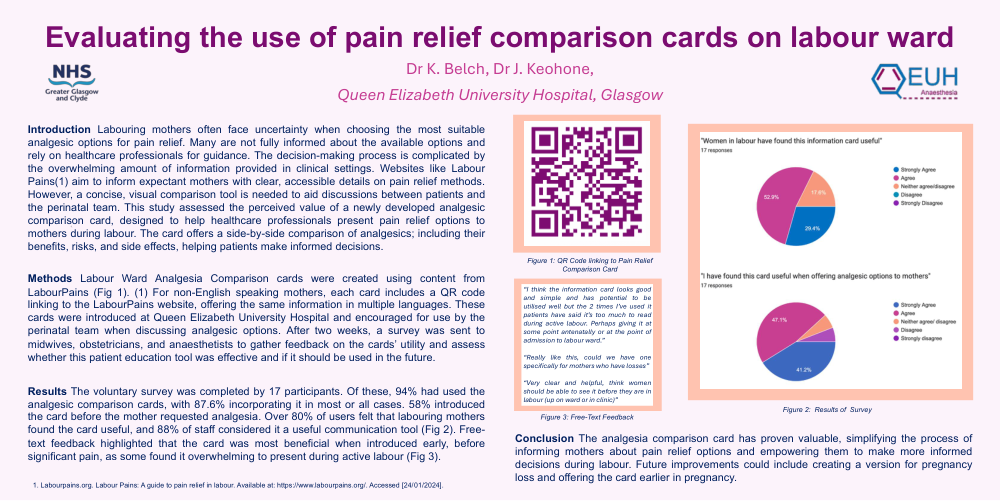
Labour Ward Analgesia Comparison cards were created using content from
LabourPains (Fig 1). (1) For non-English speaking mothers, each card includes a QR code
linking to the LabourPains website, offering the same information in multiple languages. These
cards were introduced at Queen Elizabeth University Hospital and encouraged for use by the
perinatal team when discussing analgesic options. After two weeks, a survey was sent to
midwives, obstetricians, and anaesthetists to gather feedback on the cards’ utility and assess
whether this patient education tool was effective and if it should be used in the future.
Results
The voluntary survey was completed by 17 participants. Of these, 94% had used the
analgesic comparison cards, with 87.6% incorporating it in most or all cases. 58% introduced
the card before the mother requested analgesia. Over 80% of users felt that labouring mothers
found the card useful, and 88% of staff considered it a useful communication tool (Fig 2). Freetext
feedback highlighted that the card was most beneficial when introduced early, before
significant pain, as some found it overwhelming to present during active labour (Fig 3).
Conclusion
The analgesia comparison card has proven valuable, simplifying the process of
informing mothers about pain relief options and empowering them to make more informed
decisions during labour. Future improvements could include creating a version for pregnancy
loss and offering the card earlier in pregnancy.