215 posters, 5 topics, 22 sessions, 596 authors, 283 institutions
ePostersLive by SciGen Technologies S.A. All rights reserved.
Obstetric Anaesthesia Annual Scientific Meeting 2025
May 15 - 16, 2025 | ICC, 2 Lanyon Place, Belfast BT1 3WH

6778916
Implementing Ockenden: A survey on provision of outpatient post-natal anaesthetic follow up service
Poster Presenter
Authors
Affiliations
Part of Topic
Surveys
Implementing Ockenden: A survey on provision of outpatient post-natal anaesthetic follow up service
INTRODUCTION
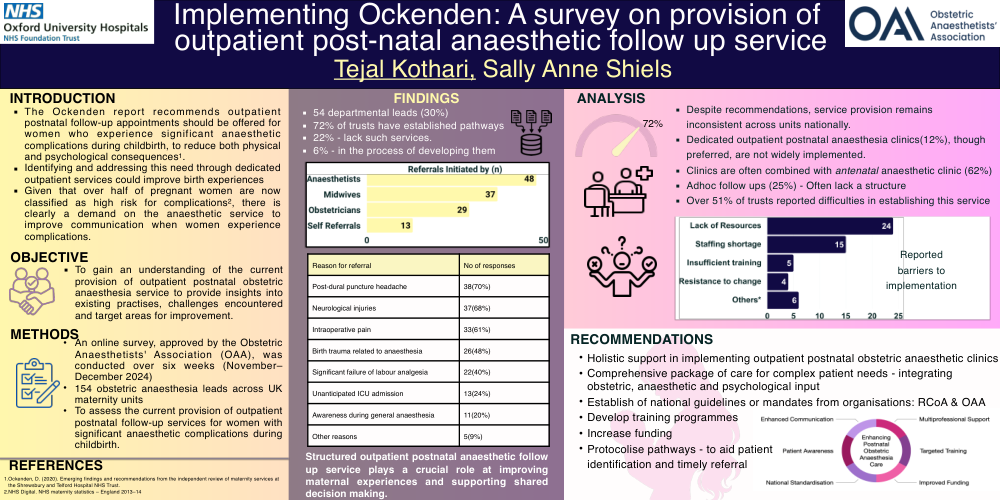
▪ The Ockenden report recommends outpatientpostnatal follow-up appointments should be offered forwomen who experience significant anaesthetic complications during childbirth, to reduce both physical and psychological consequences1
▪ Identifying and addressing this need through dedicated outpatient services could improve birth experiences
▪ Given that over half of pregnant women are now classified as high risk for complications2, there is clearly a demand on the anaesthetic service to improve communication when women experience complications.
OBJECTIVE
▪ To gain an understanding of the current provision of outpatient postnatal obstetric anaesthesia service to provide insights into existing practises, challenges encountered and target areas for improvement.
METHODS
• An online survey, approved by the Obstetric Anaesthetists' Association (OAA), was conducted over six weeks (November– December 2024)
• 154 obstetric anaesthesia leads across UK maternity units
• To assess the current provision of outpatient postnatal follow-up services for women with significant anaesthetic complications during childbirth.
FINDINGS
▪ 54 departmental leads (30%)
▪ 72% of trusts have established pathways
▪ 22% - lack such services.
▪ 6% - in the process of developing them
ANALYSIS
▪ Despite recommendations, service provision remains inconsistent across units nationally.
▪ Dedicated outpatient postnatal anaesthesia clinics(12%), though preferred, are not widely implemented.
▪ Clinics are often combined with antenatalanaesthetic clinic (62%)
▪ Adhoc follow ups (25%) - Often lack a structure
▪ Over 51% of trusts reported difficulties in establishing this service
Reason for referral
Post-dural puncture headache 38(70%)
Neurological injuries 37(68%)
Intraoperative pain 33(61%)
Birth trauma related to anaesthesia 26(48%)
Significant failure of labour analgesia 22(40%)
Unanticipated ICU admission 13(24%)
Awareness during general anaesthesia 11(20%)
Other reasons 5(9%)
RECOMMENDATIONS
• Holistic support in implementing outpatient postnatal obstetric anaesthetic clinics
• Comprehensive package of care for complex patient needs - integrating obstetric, anaesthetic and psychological input
• Establish of national guidelines or mandates from organisations: RCoA & OAA
• Develop training programmes
• Increase funding
• Protocolise pathways - to aid patient identification and timely referral
REFERENCES
1.Ockenden, D. (2020). Emerging findings and recommendations from the independent review of maternity services at the Shrewsbury and Telford Hospital NHS Trust.
2.NHS Digital. NHS maternity statistics – England 2013–14