215 posters, 5 topics, 22 sessions, 596 authors, 283 institutions
ePostersLive by SciGen Technologies S.A. All rights reserved.
Obstetric Anaesthesia Annual Scientific Meeting 2025
May 15 - 16, 2025 | ICC, 2 Lanyon Place, Belfast BT1 3WH

6781151
Multi-disciplinary management of acute Stamford type A aortic dissection in a pregnant patient at term.
Poster Presenter
Authors
Affiliations
Part of Topic
Case report
Multi-disciplinary management of acute Stamford type A aortic dissection in a pregnant patient at term. W. Long, K. Flatman, S, Mathew, C Rainey University Hospital Crosshouse, Kilmarnock.
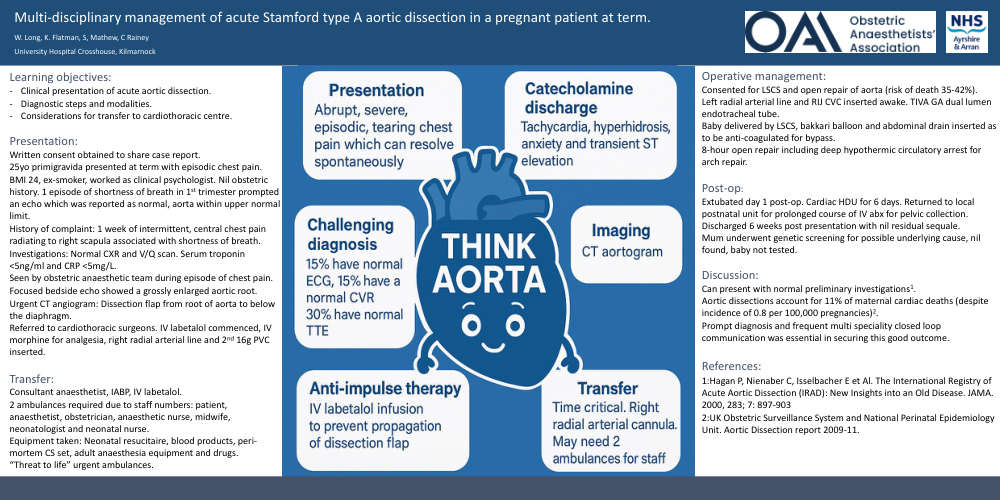
Learning objectives:-Clinical presentation of acute aortic dissection.-Diagnostic steps and modalities.-Considerations for transfer to cardiothoracic centre. Presentation: Written consent obtained to share case report. 25yo primigravida presented at term with episodic chest pain. BMI 24, ex-smoker, worked as clinical psychologist. Nil obstetric history. 1 episode of shortness of breath in 1st trimester prompted an echo which was reported as normal, aorta within upper normal limit. History of complaint: 1 week of intermittent, central chest pain radiating to right scapula associated with shortness of breath. Investigations: Normal CXR and V/Q scan. Serum troponin <5ng/ml and CRP <5mg/L. Seen by obstetric anaesthetic team during episode of chest pain. Focused bedside echo showed a grossly enlarged aortic root. Urgent CT angiogram: Dissection flap from root of aorta to below the diaphragm. Referred to cardiothoracic surgeons. IV labetalol commenced, IV morphine for analgesia, right radial arterial line and 2nd 16g PVC inserted. Transfer: Consultant anaesthetist, IABP, IV labetalol. 2 ambulances required due to staff numbers: patient, anaesthetist, obstetrician, anaesthetic nurse, midwife, neonatologist and neonatal nurse. Equipment taken: Neonatal resucitaire, blood products, peri mortem CS set, adult anaesthesia equipment and drugs. “Threat to life” urgent ambulances.
Operative management: Consented for LSCS and open repair of aorta (risk of death 35-42%). Left radial arterial line and RIJ CVC inserted awake. TIVA GA dual lumen endotracheal tube. Baby delivered by LSCS, bakkari balloon and abdominal drain inserted as to be anti-coagulated for bypass. 8-hour open repair including deep hypothermic circulatory arrest for arch repair. Post-op: Extubated day 1 post-op. Cardiac HDU for 6 days. Returned to local postnatal unit for prolonged course of IV abx for pelvic collection. Discharged 6 weeks post presentation with nil residual sequale. Mum underwent genetic screening for possible underlying cause, nil found, baby not tested. Discussion: Can present with normal preliminary investigations1. Aortic dissections account for 11% of maternal cardiac deaths (despite incidence of 0.8 per 100,000 pregnancies)2. Prompt diagnosis and frequent multi speciality closed loop communication was essential in securing this good outcome. References: 1:Hagan P, Nienaber C, Isselbacher E et Al. The International Registry of Acute Aortic Dissection (IRAD): New Insights into an Old Disease. JAMA. 2000, 283; 7: 897-903 2:UK Obstetric Surveillance System and National Perinatal Epidemiology Unit. Aortic Dissection report 2009-11.