215 posters, 5 topics, 22 sessions, 596 authors, 283 institutions
ePostersLive by SciGen Technologies S.A. All rights reserved.
Obstetric Anaesthesia Annual Scientific Meeting 2025
May 15 - 16, 2025 | ICC, 2 Lanyon Place, Belfast BT1 3WH

6780454
The multidisciplinary management of aneurysmal subarachnoid haemorrhage at term.
Poster Presenter
Authors
Affiliations
Part of Topic
Case report
The multidisciplinary management of aneurysmal subarachnoid haemorrhage at term
Tom Grant, Sally Anne Shiels
John Radcliffe Hospital, Oxford, UK
41/40 transfer to tertiary centre from DGH, for Immediate Caesarean delivery + EVD
§ 1 day ago sudden onset severe headache
§ Normal MRV at that time, Δ migraine
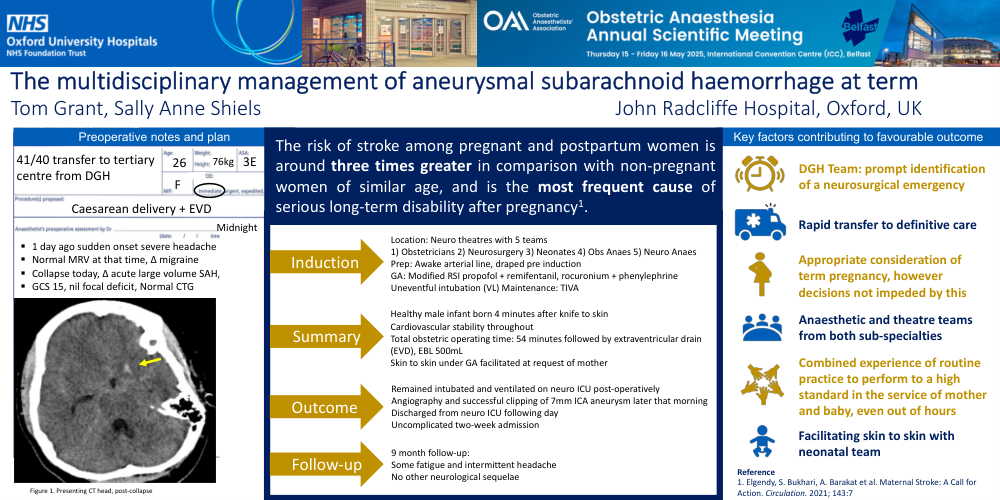
§ Collapse today, Δ acute large volume SAH,
§ GCS 15, nil focal deficit, Normal CTG
Location: Neuro theatres with 5 teams
1) Obstetricians 2) Neurosurgery 3) Neonates 4) Obs Anaes 5) Neuro Anaes
Prep: Awake arterial line, draped pre induction
GA: Modified RSI propofol + remifentanil, rocuronium + phenylephrine
Uneventful intubation (VL) Maintenance: TIVA
Healthy male infant born 4 minutes after knife to skin
Cardiovascular stability throughout
Total obstetric operating time: 54 minutes followed by extraventricular drain
(EVD), EBL 500mL
Skin to skin under GA facilitated at request of mother
Remained intubated and ventilated on neuro ICU post-operatively
Angiography and successful clipping of 7mm ICA aneurysm later that morning
Discharged from neuro ICU following day
Uncomplicated two-week admission
Follow-up 9 month follow-up:
Some fatigue and intermittent headache
No other neurological sequelae
Key factors contributing to favourable outcome:
DGH Team: prompt identification of a neurosurgical emergency
Appropriate consideration of term pregnancy, however decisions not impeded by this
Rapid transfer to definitive care
Anaesthetic and theatre teams from both sub-specialties
Combined experience of routine practice to perform to a high standard in the service of mother and baby, even out of hours
Facilitating skin to skin with neonatal team
The risk of stroke among pregnant and postpartum women is to favourable outcome
around three times greater in comparison with non-pregnant
women of similar age, and is the most frequent cause of
serious long-term disability after pregnancy1.
Reference
1. Elgendy, S. Bukhari, A. Barakat et al. Maternal Stroke: A Call for
Action. Circulation. 2021; 143:7