215 posters, 5 topics, 22 sessions, 596 authors, 283 institutions
ePostersLive by SciGen Technologies S.A. All rights reserved.
Obstetric Anaesthesia Annual Scientific Meeting 2025
May 15 - 16, 2025 | ICC, 2 Lanyon Place, Belfast BT1 3WH

6780410
Spontaneous Pneumomediastinum and Subcutaneous Emphysema of the Face and Neck during Labour.
Poster Presenter
Part of Topic
Case report
Spontaneous Pneumomediastinum and Subcutaneous Emphysema of the Face and Neck during Labour.
Introduction
Spontaneous pneumomediastinum during labour is rare and typically benign but can pose risks such as airway compromise or pneumopericardium. Obstetric anaesthetists should understand this condition and its management.
Case Presentation
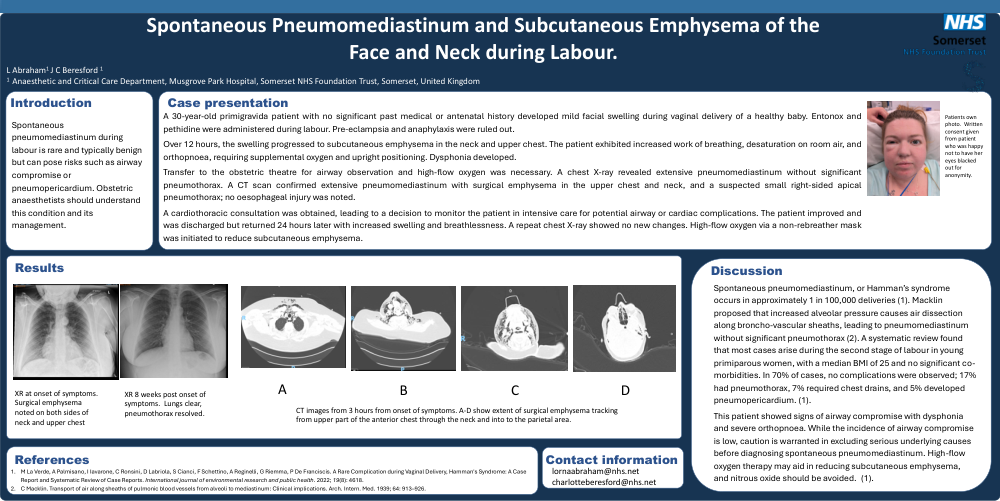
A 30-year-old primigravida patient with no significant past medical or antenatal history developed mild facial swelling during vaginal delivery of a healthy baby. Entonox and pethidine were administered during labour. Pre-eclampsia and anaphylaxis were ruled out.
Over 12 hours, the swelling progressed to subcutaneous emphysema in the neck and upper chest. The patient exhibited increased work of breathing, desaturation on room air, and orthopnoea, requiring supplemental oxygen and upright positioning. Dysphonia developed.
Transfer to the obstetric theatre for airway observation and high-flow oxygen was necessary. A chest X-ray revealed extensive pneumomediastinum without significant pneumothorax. A CT scan confirmed extensive pneumomediastinum with surgical emphysema in the upper chest and neck, and a suspected small right-sided apical pneumothorax; no oesophageal injury was noted.
A cardiothoracic consultation was obtained, leading to a decision to monitor the patient in intensive care for potential airway or cardiac complications. The patient improved and was discharged but returned 24 hours later with increased swelling and breathlessness. A repeat chest X-ray showed no new changes. High-flow oxygen via a non-rebreather mask was initiated to reduce subcutaneous emphysema.
Discussion
Spontaneous pneumomediastinum, or Hamman’s syndrome occurs in approximately 1 in 100,000 deliveries (1). Macklin proposed that increased alveolar pressure causes air dissection along broncho-vascular sheaths, leading to pneumomediastinum without significant pneumothorax (2). A systematic review found that most cases arise during the second stage of labour in young primiparous women, with a median BMI of 25 and no significant co-morbidities. In 70% of cases, no complications were observed; 17% had pneumothorax, 7% required chest drains, and 5% developed pneumopericardium. (1).
This patient showed signs of airway compromise with dysphonia and severe orthopnoea. While the incidence of airway compromise is low, caution is warranted in excluding serious underlying causes before diagnosing spontaneous pneumomediastinum. High-flow oxygen therapy may aid in reducing subcutaneous emphysema, and nitrous oxide should be avoided. (1).