215 posters, 5 topics, 22 sessions, 596 authors, 283 institutions
ePostersLive by SciGen Technologies S.A. All rights reserved.
Obstetric Anaesthesia Annual Scientific Meeting 2025
May 15 - 16, 2025 | ICC, 2 Lanyon Place, Belfast BT1 3WH

6779713
Barrier precautions for obstetric spinal anaesthesia in the UK: An OAA national survey
Poster Presenter
Authors
Affiliations
Part of Topic
Surveys
Barrier Precautions for Obstetric Spinal Anaesthesia in the UK:
An OAA National Survey
Dr Matthew Peacock1, Dr Claire Abeysekera1, Dr Chris Marsh2
Introduction
The use of sterile gowns for spinal anaesthesia is standard practice in the UK however gowns are not worn routinely in many other countries.
Ongoing efforts to decrease the environmental impact of anaesthesia have prompted re-evaluation of the role of gowns for single-shot spinal anaesthesia (1).
This survey aimed to assess current practice in obstetric anaesthesia in the UK and the acceptability of any potential change in guidance.
Methods
A ten-question survey was distributed electronically to all active UK OAA members and responses were collected over a two-week period in November 2024.
The survey assessed the:
Data was analysed using Microsoft Excel.
Results
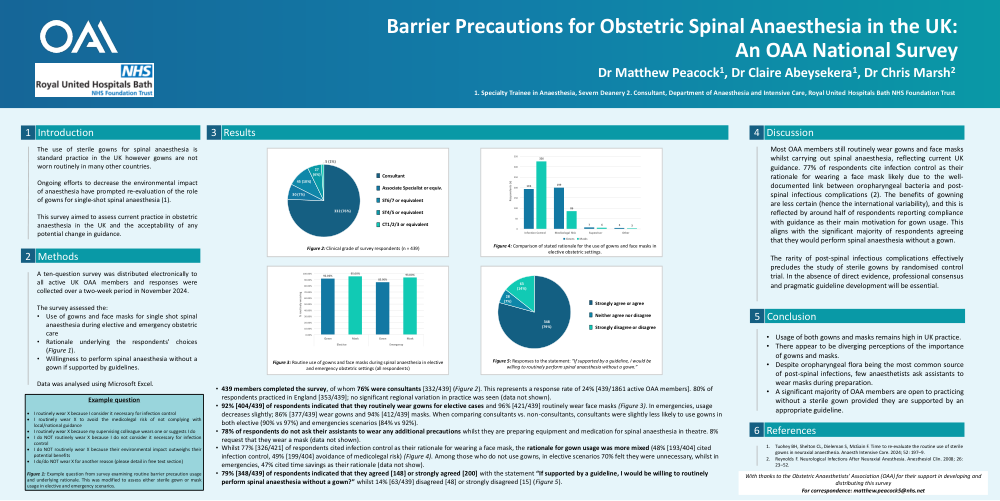
Most OAA members still routinely wear gowns and face masks whilst carrying out spinal anaesthesia, reflecting current UK guidance. 77% of respondents cite infection control as their rationale for wearing a face mask likely due to the well-documented link between oropharyngeal bacteria and post-spinal infectious complications (2). The benefits of gowning are less certain (hence the international variability), and this is reflected by around half of respondents reporting compliance with guidance as their main motivation for gown usage. This aligns with the significant majority of respondents agreeing that they would perform spinal anaesthesia without a gown.
The rarity of post-spinal infectious complications effectively precludes the study of sterile gowns by randomised control trial. In the absence of direct evidence, professional consensus and pragmatic guideline development will be essential.
Conclusion