215 posters, 5 topics, 22 sessions, 596 authors, 283 institutions
ePostersLive by SciGen Technologies S.A. All rights reserved.
Obstetric Anaesthesia Annual Scientific Meeting 2025
May 15 - 16, 2025 | ICC, 2 Lanyon Place, Belfast BT1 3WH

6779481
Beyond the 4 T's -- An unusual cause of major haemorrhage in the obstetric patient
Part of Topic
Case report
Beyond the 4 T’s - An unusual cause of major haemorrhage in the obstetric patient
Background
Splenic artery aneurysm (SAA) rupture during pregnancy is a rare but life-threatening event.
The incidence is approximately 0.01% in the general population, and is more frequent and dangerous during pregnancy.
Maternal mortality can reach up to 75%, while fetal mortality may be as high as 95% without timely intervention.1
Anaesthetic goals include rapid maternal stabilisation, facilitating urgent delivery, activating massive transfusion protocol, and coordinating multidisciplinary care with postoperative intensive care.2
Case presentation
A 27-year-old G2P1 woman at 36 weeks presented with acute chest pain, abdominal pain, and breathlessness.
She arrived critically unwell with hypotension (SBP 50 mmHg), reduced GCS, and signs of Grade IV hypovolaemic shock.
Bedside ultrasound showed intrauterine foetal death and free intra-abdominal fluid, suggesting uterine rupture.
Emergency laparotomy and hysterectomy were performed under RSI (ketamine, propofol, fentanyl, rocuronium).
Arterial and central access were secured; cell salvage was used.
Investigations revealed severe acidosis, anaemia (Hb 55 g/L) and raised lactate.
ROTEM guided transfusion of blood products and fibrinogen.
Surgical Findings and Course:
A midline laparotomy and emergency hysterotomy were performed, with delivery of a stillborn infant.
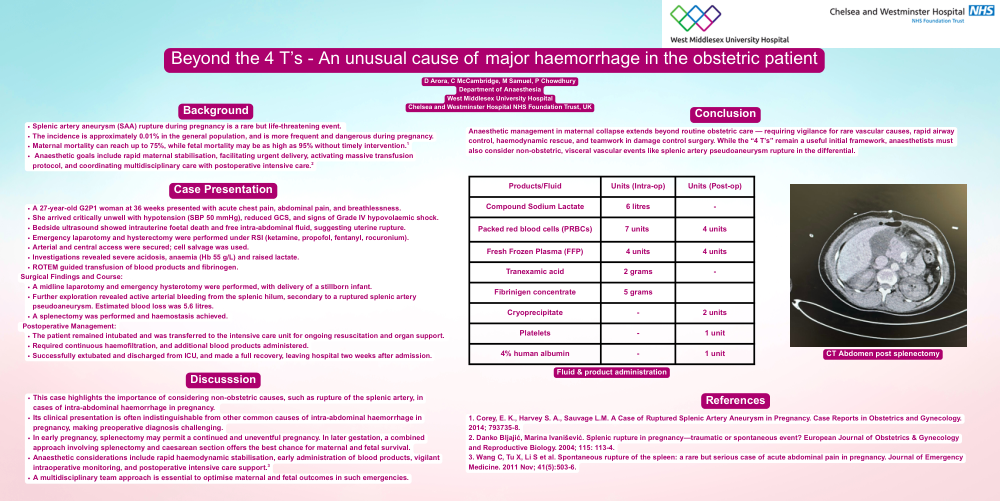
Further exploration revealed active arterial bleeding from the splenic hilum, secondary to a ruptured splenic artery pseudoaneurysm. Estimated blood loss was 5.6 litres.
A splenectomy was performed and haemostasis achieved.
Postoperative Management:
The patient remained intubated and was transferred to the intensive care unit for ongoing resuscitation and organ support. Required continuous haemofiltration, and additional blood products administered.
Successfully extubated and discharged from ICU, and made a full recovery, leaving hospital two weeks after admission.
Discussion
This case highlights the importance of considering non-obstetric causes, such as rupture of the splenic artery, in cases of intra-abdominal haemorrhage in pregnancy.
Its clinical presentation is often indistinguishable from other common causes of intra-abdominal haemorrhage in pregnancy, making preoperative diagnosis challenging.
In early pregnancy, splenectomy may permit a continued and uneventful pregnancy. In later gestation, a combined approach involving splenectomy and caesarean section offers the best chance for maternal and fetal survival.
Anaesthetic considerations include rapid haemodynamic stabilisation, early administration of blood products, vigilant intraoperative monitoring, and postoperative intensive care support.3
A multidisciplinary team approach is essential to optimise maternal and fetal outcomes in such emergencies.
Conclusion
Anaesthetic management in maternal collapse extends beyond routine obstetric care — requiring vigilance for rare vascular causes, rapid airway control, haemodynamic rescue, and teamwork in damage control surgery. While the “4 T’s” remain a useful initial framework, anaesthetists must also consider non-obstetric, visceral vascular events like splenic artery pseudoaneurysm rupture in the differential.
References
1. Corey, E. K., Harvey S. A., Sauvage L.M. A Case of Ruptured Splenic Artery Aneurysm in Pregnancy. Case Reports in Obstetrics and Gynecology. 2014; 793735-8.
2. Danko Bljajić, Marina Ivanišević. Splenic rupture in pregnancy—traumatic or spontaneous event? European Journal of Obstetrics & Gynecology and Reproductive Biology. 2004; 115: 113-4.
3. Wang C, Tu X, Li S et al. Spontaneous rupture of the spleen: a rare but serious case of acute abdominal pain in pregnancy. Journal of Emergency Medicine. 2011 Nov; 41(5):503-6.