191 posters, 5 topics, 20 sessions, 393 authors, 116 institutions
ePostersLive by SciGen Technologies S.A. All rights reserved.
Obstetric Anaesthesia Annual Scientific Meeting 2023
18 - 19 May, 2023 | EICC Edinburgh

5794060
Fastmix epidural top-up anaesthesia - fast, but too furious?
Poster Presenter
Authors
Affiliations
Part of Topic
Service Evaluation
Introduction
The use of "Fastmix" (lidocaine 2%, sodium bicarbonate 8.4%, adrenaline 1:200,000) epidural top up anaesthesia (EA) has become increasingly popular in the UK. Likely due to its speed of onset, there is anecdotal evidence of increased severity of associated side effects. Symptoms of shivering, nausea, pruritus and breakthrough pain [1] can negatively affect a patient's birth experience. We investigated how the clinician's perspective of the severity of these side effects correlated with that of the patients, and if we should change our practice to improve quality of care.
Methods
Approval was obtained from the local audit department. A two-part survey was developed for procedures requiring EA. Part one was completed by the anaesthetist and recorded: procedure performed, epidural drugs administered and a subjective assessment of the severity of nausea, shivering, pruritus and pain (0-none to 3-severe). Patients were then asked at their routine anaesthetic follow-up to rate the severity of their symptoms, and whether they felt they received enough information prior to the procedure.
Results
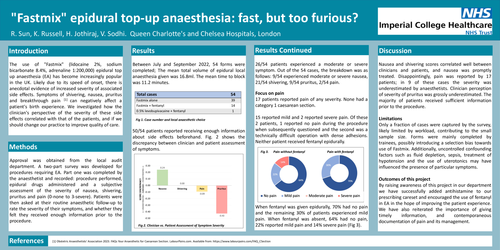
Between July and September 2022, 54 forms were completed; The mean total volume of epidural local anaesthesia given was 16.8ml. The mean time to block was 11.2 minutes. 50/54 patients reported receiving enough information about side effects beforehand. Fig. 2 shows the discrepancy between clinician and patient assessment of symptoms. 26/54 patients experienced a moderate or severe symptom. Out of the 54 cases, the breakdown was as follows: 9/54 experienced moderate or severe nausea, 21/54 shivering, 9/54 pruritus, 2/54 pain.
17 patients reported pain of any severity. None had a category 1 caesarean section.15 reported mild and 2 reported severe pain. Of these 2 patients, 1 reported no pain during the procedure when subsequently questioned and the second was a technically difficult operation with dense adhesions. Neither patient received fentanyl epidurally. When fentanyl was given epidurally, 70% had no pain and the remaining 30% of patients experienced mild pain. When fentanyl was absent, 64% had no pain, 22% reported mild pain and 14% severe pain (Fig 3).
Discussion
Nausea and shivering scores correlated well between clinicians and patients, and nausea was promptly treated. Disappointingly, pain was reported by 17 patients; in 9 of these cases the severity was underestimated by anaesthetists. Clinician perception of severity of pruritus was grossly underestimated. The majority of patients received sufficient information prior to the procedure.
Only a fraction of cases were captured by the survey, likely limited by workload, contributing to the small sample size. Forms were mainly completed by trainees, possibly introducing a selection bias towards use of Fastmix. Additionally, uncontrolled confounding factors such as fluid depletion, sepsis, treatment of hypotension and the use of uterotonics may have influenced the presence of particular symptoms.
By raising awareness of this project in our department we have successfully added antihistamine to our prescribing careset and encouraged the use of fentanyl in EA in the hope of improving the patient experience. We have also reiterated the importance of giving timely information, and contemporaneous documentation of pain and its management.