586 posters, 8 topics, 23 sessions, 1,077 authors, 622 institutions
ePostersLive by SciGen Technologies S.A. All rights reserved.
ISQua's 40th International Conference 2024
24th - 27th September 2024 | Istanbul, Türkiye

P293
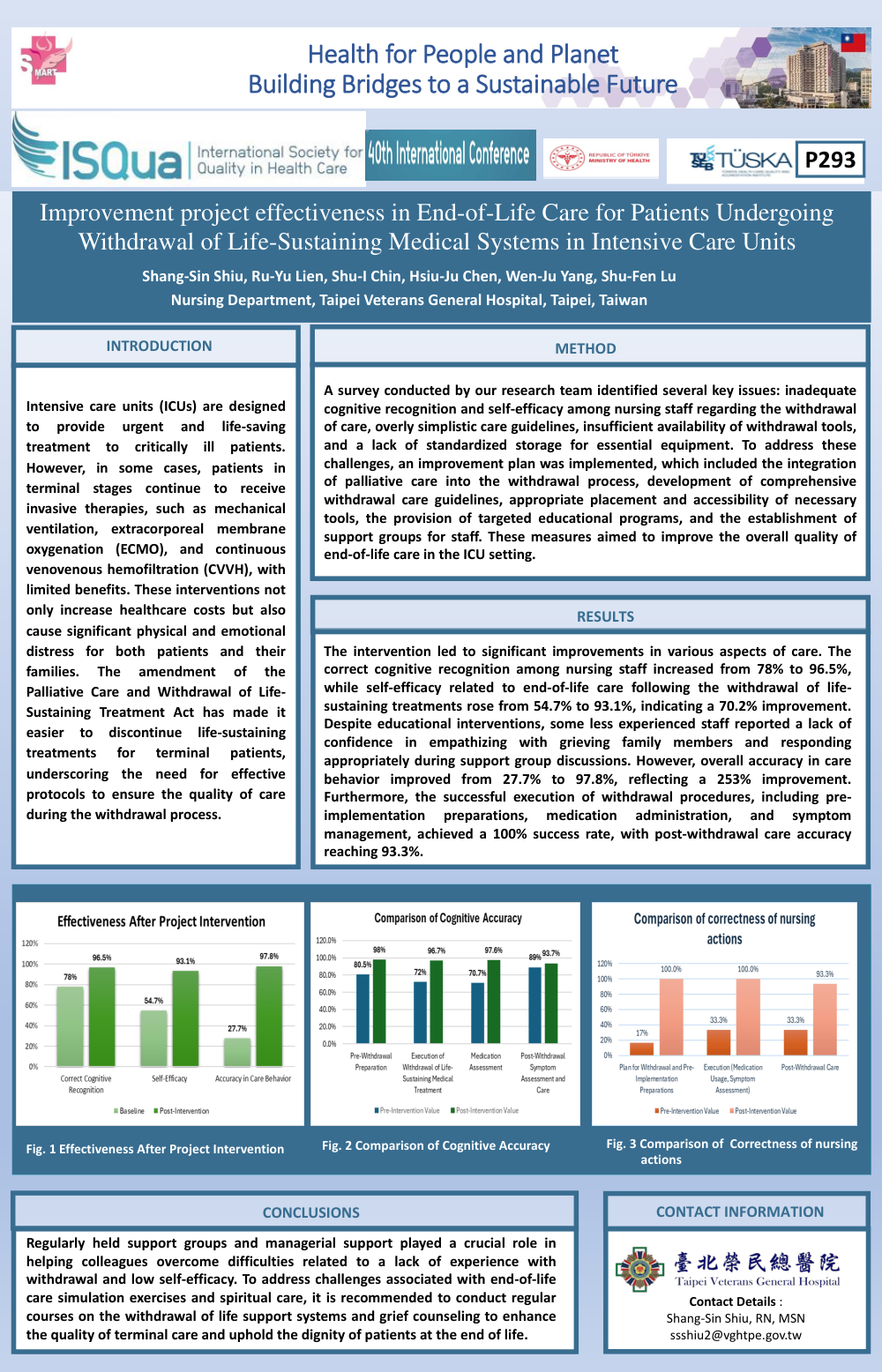
Improvement project effectiveness in End-of-Life Care for Patients Undergoing Withdrawal of Life-Sustaining Medical Systems in Intensive Care Units.
Poster Presenter
Authors
Part of Topic
Patient Safety & Quality Improvement
INTRODUCTION
Intensive care units (ICUs) are designed to provide urgent and life-saving treatment to critically ill patients. However, in some cases, patients in terminal stages continue to receive invasive therapies, such as mechanical ventilation, extracorporeal membrane oxygenation (ECMO), and continuous venovenous hemofiltration (CVVH), with limited benefits. These interventions not only increase healthcare costs but also cause significant physical and emotional distress for both patients and their families. The amendment of the Palliative Care and Withdrawal of Life-Sustaining Treatment Act has made it easier to discontinue life-sustaining treatments for terminal patients, underscoring the need for effective protocols to ensure the quality of care during the withdrawal process.
METHOD
A survey conducted by our research team identified several key issues: inadequate cognitive recognition and self-efficacy among nursing staff regarding the withdrawal of care, overly simplistic care guidelines, insufficient availability of withdrawal tools, and a lack of standardized storage for essential equipment. To address these challenges, an improvement plan was implemented, which included the integration of palliative care into the withdrawal process, development of comprehensive withdrawal care guidelines, appropriate placement and accessibility of necessary tools, the provision of targeted educational programs, and the establishment of support groups for staff. These measures aimed to improve the overall quality of end-of-life care in the ICU setting.
RESULTS
The intervention led to significant improvements in various aspects of care. The correct cognitive recognition among nursing staff increased from 78% to 96.5%, while self-efficacy related to end-of-life care following the withdrawal of life-sustaining treatments rose from 54.7% to 93.1%, indicating a 70.2% improvement. Despite educational interventions, some less experienced staff reported a lack of confidence in empathizing with grieving family members and responding appropriately during support group discussions. However, overall accuracy in care behavior improved from 27.7% to 97.8%, reflecting a 253% improvement. Furthermore, the successful execution of withdrawal procedures, including pre-implementation preparations, medication administration, and symptom management, achieved a 100% success rate, with post-withdrawal care accuracy reaching 93.3%.
CONCLUSIONS
Regularly held support groups and managerial support played a crucial role in helping colleagues overcome difficulties related to a lack of experience with withdrawal and low self-efficacy. To address challenges associated with end-of-life care simulation exercises and spiritual care, it is recommended to conduct regular courses on the withdrawal of life support systems and grief counseling to enhance the quality of terminal care and uphold the dignity of patients at the end of life.