586 posters, 8 topics, 23 sessions, 1,077 authors, 622 institutions
ePostersLive by SciGen Technologies S.A. All rights reserved.
ISQua's 40th International Conference 2024
24th - 27th September 2024 | Istanbul, Türkiye

P147
Utilizing a systematic care model to enhance the comprehensive guidance of cellulitis disease nursing
Poster Presenter
Authors
Affiliations
Part of Topic
Patient Safety & Quality Improvement
Utilizing a systematic care model to enhance the comprehensive guidance of cellulitis disease nursing.
H.M. Huang1. 2, M.C. Chou1 T.Y. Huang1
1 Nursing department, Chiayi Chang Gung Memorial Hospital, Chiayi, Taiwan
2 Master of Science Program in Health Care,Department of Nursing,Meiho university
OBJECTIVE
Cellulitis is a common bacterial infection of the skin, typically caused by damage to the epidermis, allowing pathogens to enter the body through the compromised skin, leading to infection. Patients are prone to disease recurrence and readmission after discharge, often experiencing limitations in activities due to pain during walking. Subsequent complications may include malnutrition, urinary or fecal incontinence, and depression. Lower limb muscle weakness may develop, increasing the risk of falls. Enhancing disease awareness and timely intervention in disease care guidance can reduce the likelihood of recurrent infections, thereby lowering healthcare costs, improving medical quality, and ensuring patient safety.
Background
1. Epidermis damage à skin bacterial infectionà cellulitis
2. Symptoms: activity limitations due to pain and muscle weakness, malnutrition, depression.
3. Low awareness and incompleteness of nursing education about cellulitis is noted.
METHOD
Implementing online self-learning
Designing systematic nursing guidance procedures
Creating multimedia
Checklist for cellulitis disease nursing guidance
Multilingual wound care step-by-step visual aids
RESULTS
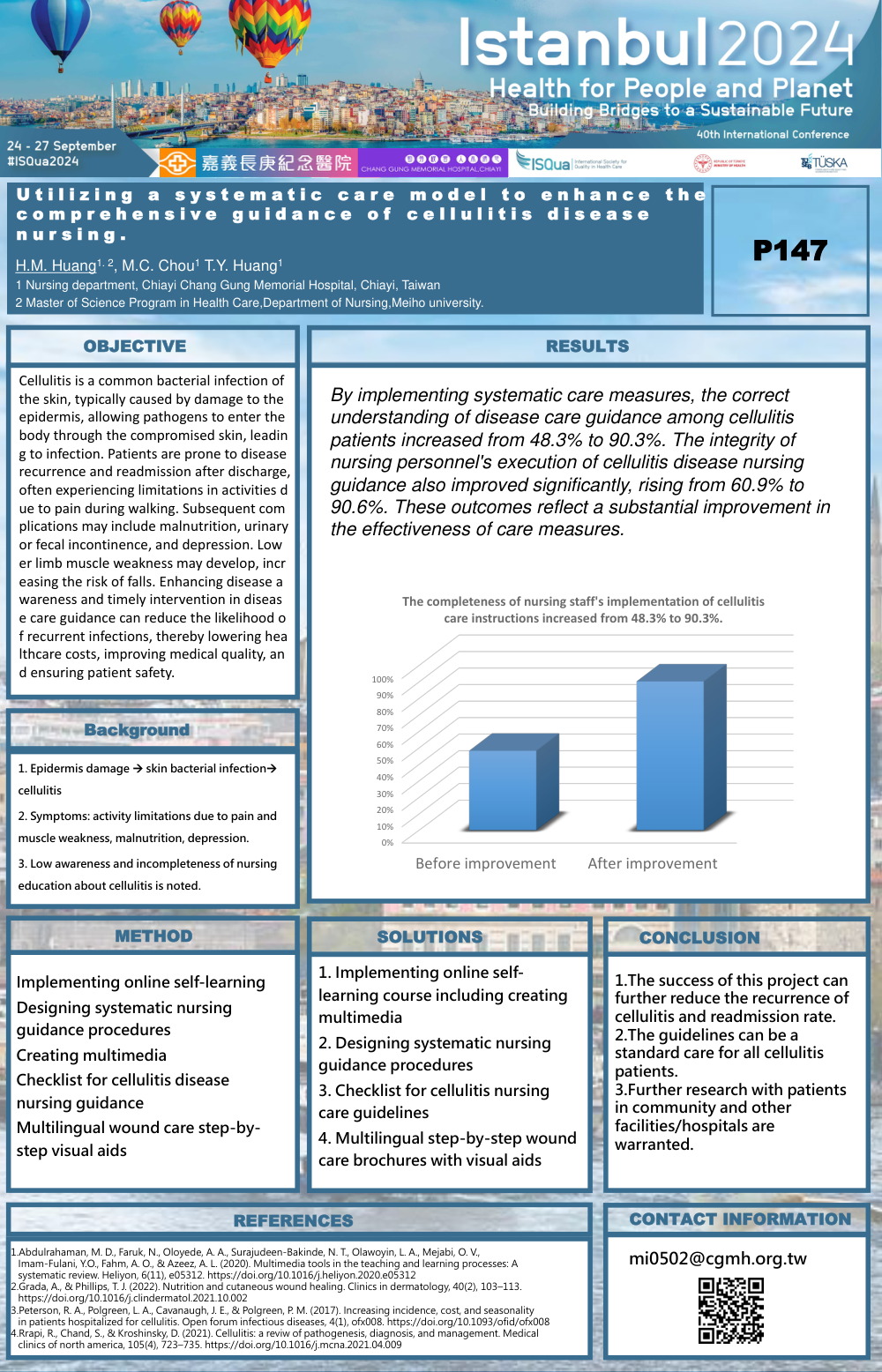
By implementing systematic care measures, the correct understanding of disease care guidance among cellulitis patients increased from 48.3% to 90.3%. The integrity of nursing personnel's execution of cellulitis disease nursing guidance also improved significantly, rising from 60.9% to 90.6%. These outcomes reflect a substantial improvement in the effectiveness of care measures.