586 posters, 8 topics, 23 sessions, 1,077 authors, 622 institutions
ePostersLive by SciGen Technologies S.A. All rights reserved.
ISQua's 40th International Conference 2024
24th - 27th September 2024 | Istanbul, Türkiye

P395
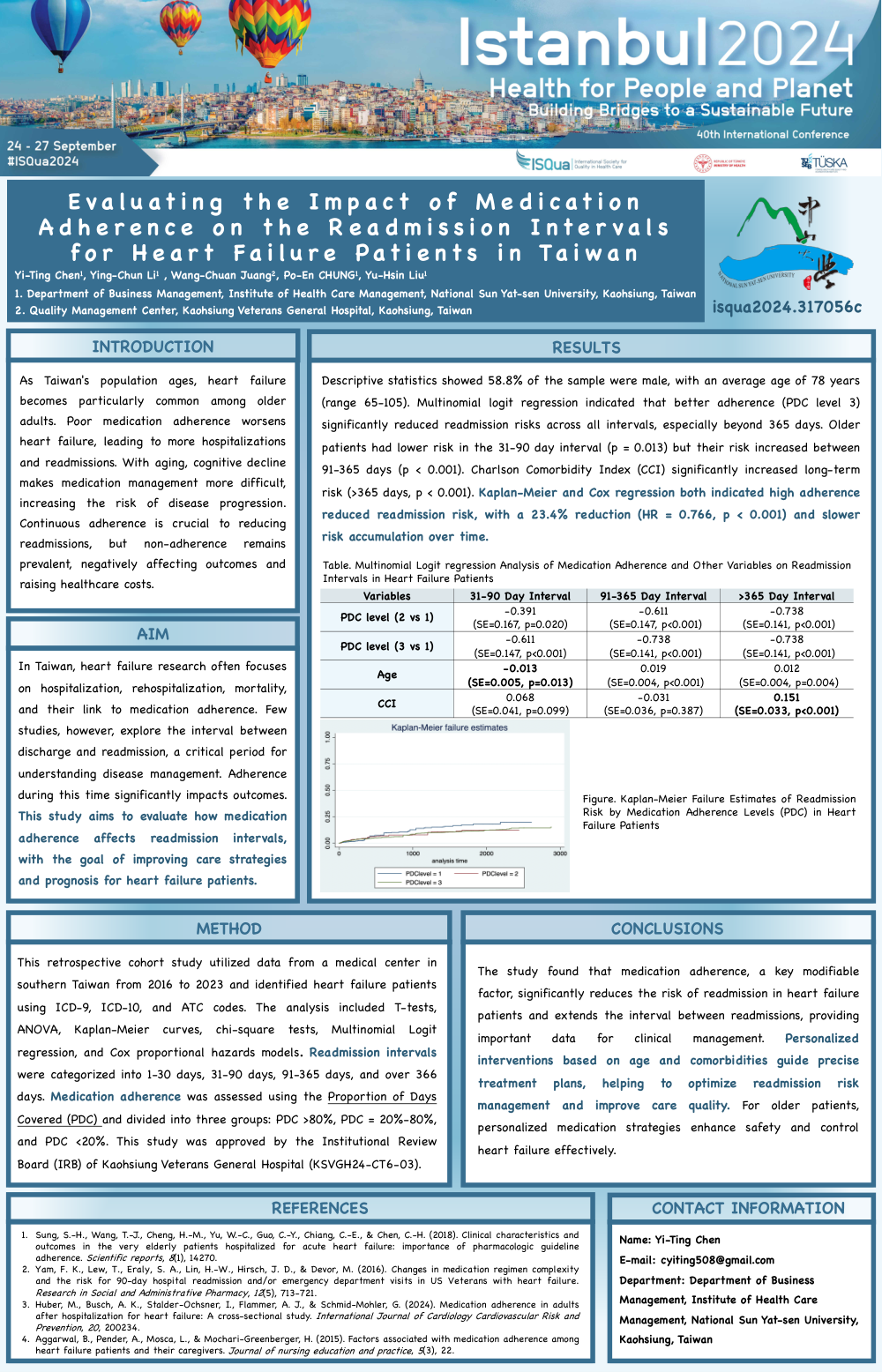
Evaluating the Impact of Medication Adherence on the Readmission Intervals for Heart Failure Patients in Taiwan
Poster Presenter
Authors
Affiliations
Part of Topic
Patient Safety & Quality Improvement
INTRODUCTION:
As Taiwan's population ages, heart failure becomes particularly common among older adults. Poor medication adherence worsens heart failure, leading to more hospitalizations and readmissions. With aging, cognitive decline makes medication management more difficult, increasing the risk of disease progression. Continuous adherence is crucial to reducing readmissions, but non-adherence remains prevalent, negatively affecting outcomes and raising healthcare costs.
AIM:
In Taiwan, heart failure research often focuses on hospitalization, rehospitalization, mortality, and their link to medication adherence. Few studies, however, explore the interval between discharge and readmission, a critical period for understanding disease management. Adherence during this time significantly impacts outcomes. This study aims to evaluate how medication adherence affects readmission intervals, with the goal of improving care strategies and prognosis for heart failure patients.
METHOD:
This retrospective cohort study utilized data from a medical center in southern Taiwan from 2016 to 2023 and identified heart failure patients using ICD-9, ICD-10, and ATC codes. The analysis included T-tests, ANOVA, Kaplan-Meier curves, chi-square tests, Multinomial Logit regression, and Cox proportional hazards models. Readmission intervals were categorized into 1-30 days, 31-90 days, 91-365 days, and over 366 days. Medication adherence was assessed using the Proportion of Days Covered (PDC) and divided into three groups: PDC >80%, PDC = 20%-80%, and PDC <20%. This study was approved by the Institutional Review Board (IRB) of Kaohsiung Veterans General Hospital (KSVGH24-CT6-03).
RESULTS:
Descriptive statistics showed 58.8% of the sample were male, with an average age of 78 years (range 65-105). Multinomial logit regression indicated that better adherence (PDC level 3) significantly reduced readmission risks across all intervals, especially beyond 365 days. Older patients had lower risk in the 31-90 day interval (p = 0.013) but their risk increased between 91-365 days (p < 0.001). Charlson Comorbidity Index (CCI) significantly increased long-term risk (>365 days, p < 0.001). Kaplan-Meier and Cox regression both indicated high adherence reduced readmission risk, with a 23.4% reduction (HR = 0.766, p < 0.001) and slower risk accumulation over time.
CONCLUSIONS:
The study found that medication adherence, a key modifiable factor, significantly reduces the risk of readmission in heart failure patients and extends the interval between readmissions, providing important data for clinical management. Personalized interventions based on age and comorbidities guide precise treatment plans, helping to optimize readmission risk management and improve care quality. For older patients, personalized medication strategies enhance safety and control heart failure effectively.