586 posters, 8 topics, 23 sessions, 1,077 authors, 622 institutions
ePostersLive by SciGen Technologies S.A. All rights reserved.
ISQua's 40th International Conference 2024
24th - 27th September 2024 | Istanbul, Türkiye

P232
Designed Strategies in Improving the Patient Bed Management Process without Encumbering Staff Workload, Creating a Dynamic Work Environment
Poster Presenter
Authors
Affiliations
Part of Topic
Patient Safety & Quality Improvement
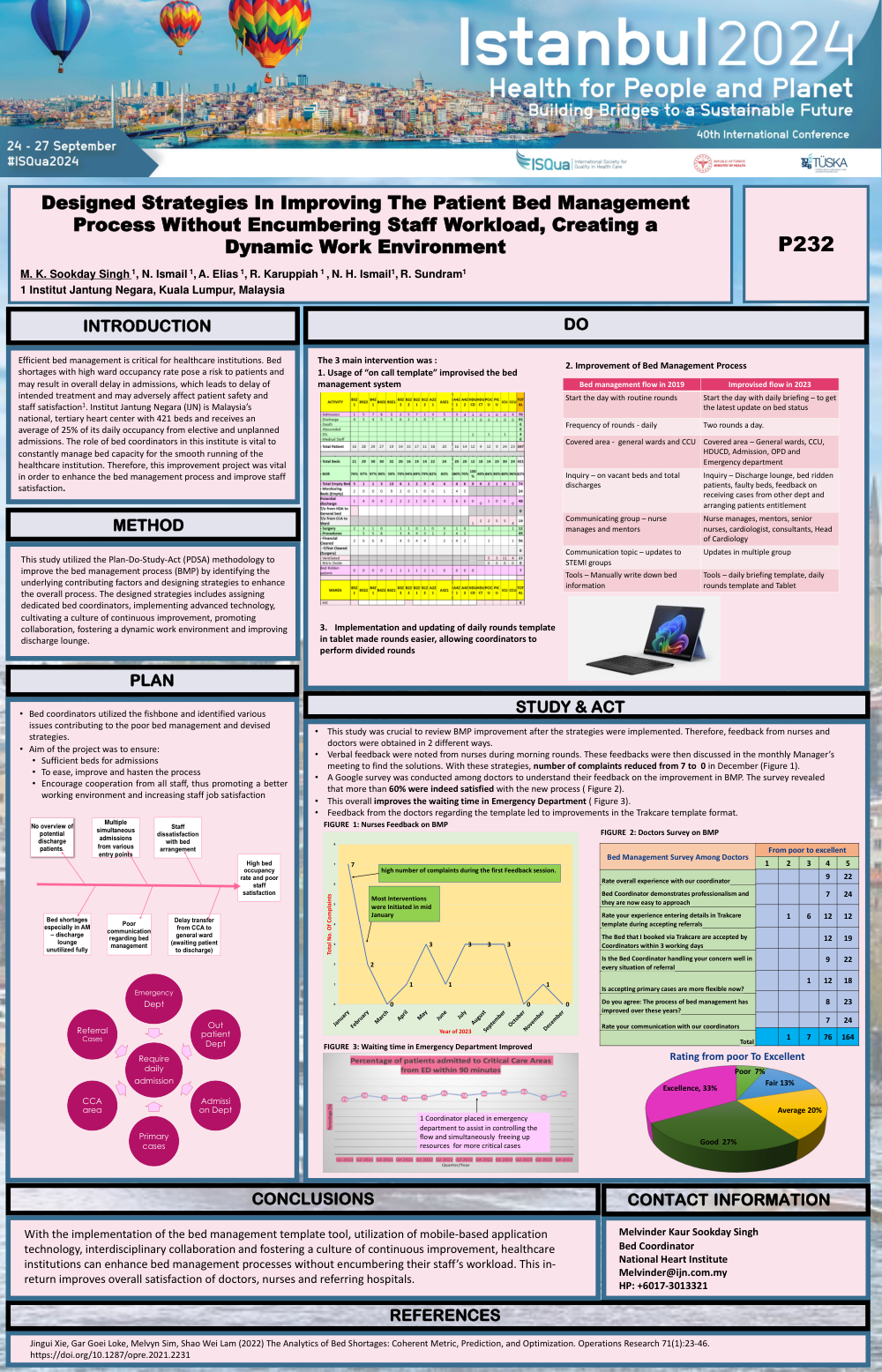
Title: Designed Strategies In Improving The Patient Bed Management Process Without Encumbering Staff Workload, Creating a Dynamic Work Environment
Authors: M. K. SookdaySingh1, N. Ismail 1, A. Elias 1, R. Karuppiah 1 , N. H. Ismail1, R. Sundram1
1 Institut Jantung Negara, Kuala Lumpur, Malaysia
Introduction: Efficient bed management is critical for healthcare institutions. Bed shortages with high ward occupancy rate pose a risk to patients and may result in overall delay in admissions, which leads to delay of intended treatment and may adversely affect patient safety and staff satisfaction1. Institut Jantung Negara (IJN) is Malaysia’s national, tertiary heart center with 421 beds and receives an average of 25% of its daily occupancy from elective and unplanned admissions. The role of bed coordinators in this institute is vital to constantly manage bed capacity for the smooth running of the healthcare institution. Therefore, this improvement project was vital in order to enhance the bed management process and improve staff satisfaction.
Method: This study utilized the Plan-Do-Study-Act (PDSA) methodology to improve the bed management process (BMP) by identifying the underlying contributing factors and designing strategies to enhance the overall process. The designed strategies includes assigning dedicated bed coordinators, implementing advanced technology, cultivating a culture of continuous improvement, promoting collaboration, fostering a dynamic work environment and improving discharge lounge.
Plan:
The 3 main intervention was :
1. Usage of “on call template” improvised the bed management system
2. Improvement of Bed Management Process
3. Implementation and updating of daily rounds template in tablet made rounds easier, allowing coordinators to perform divided rounds
Study:
With the implementation of the bed management template tool, utilization of mobile-based application technology, interdisciplinary collaboration and fostering a culture of continuous improvement, healthcare institutions can enhance bed management processes without encumbering their staff’s workload. This in-return improves overall satisfaction of doctors, nurses and referring hospitals.
References: Jingui Xie, Gar Goei Loke, Melvyn Sim, Shao Wei Lam (2022) The Analytics of Bed Shortages: Coherent Metric, Prediction, and Optimization. Operations Research 71(1):23-46. https://doi.org/10.1287/opre.2021.2231