586 posters, 8 topics, 23 sessions, 1,077 authors, 622 institutions
ePostersLive by SciGen Technologies S.A. All rights reserved.
ISQua's 40th International Conference 2024
24th - 27th September 2024 | Istanbul, Türkiye

P026
Effective & Efficient Surfactant Administration on Neonatal Outcome in Neonatal Intensive care unit (NICU) at Mehta Multi Speciality Hospitals India Pvt Ltd, ,India
Poster Presenter
Part of Topic
Patient Safety & Quality Improvement
Effective & Efficient Surfactant Therapy Management on Neonatal outcomes in Newborn Intensive care unit (NICU) at Mehta Multi Speciality Hospitals, a Tertiary care Centre, Chennai, Tamil Nadu, India.
Venkatesan Murugan1, Udhaya Rani B2
Mehta Multi Speciality Hospitals India Pvt Ltd, Chennai, Tamilnadu, India
INTRODUCTION
Respiratory distress syndrome (RDS) is primarily due to surfactant deficiency in preterm infants. Surfactant treatment is the standard of care in preterm neonates with RDS. Surfactant therapy has been shown to decrease pneumothorax, BPD, Pulmonary hemorrhage with clinical deterioration, improve oxygenation and reduce the need for extracorporeal membrane oxygenation (ECMO), thus improving newborn survival. Timing of surfactant administration is one of the important Criteria to be considered. Recent evidence still demonstrates that early rescue surfactant (first 2 hours of age) versus late rescue surfactant (After 2 hours of age) is associated with a reduction in BPD and/or death. Therefore, the American Academy of Pediatrics and the European guidelines on surfactant administration advise stabilization of preterm infants on CPAP and, if necessary, the administration of surfactant as early rescue therapy, preferably within 2- 3 hours of age
Aim
Effective & Efficient Surfactant Therapy Management to improve Neonatal outcomes in Newborn Intensive care unit (NICU)
Objectives
METHOD
Study Design - Quasi Experimental Study
Setting - Neonatal Intensive Care Unit
Sample size - 36 Pre term Neonates
Sampling technique - Purposive Sampling Technique
Data collection method
Interventions Impleme
People
Process
Physical Environment
Equipment
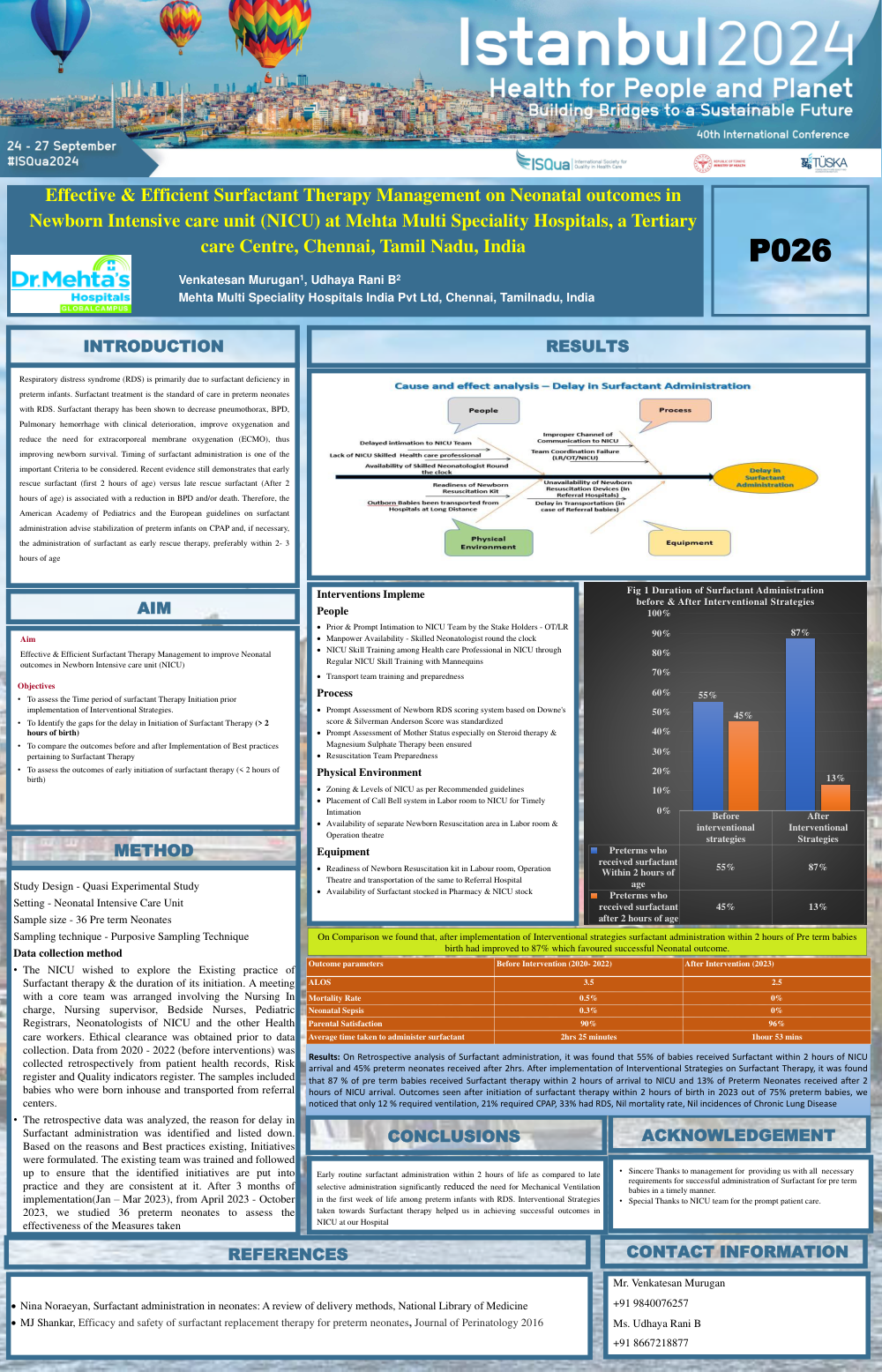
Results: On Retrospective analysis of Surfactant administration, it was found that 55% of babies received Surfactant within 2 hours of NICU arrival and 45% preterm neonates received after 2hrs. After implementation of Interventional Strategies on Surfactant Therapy, it was found that 87 % of pre term babies received Surfactant therapy within 2 hours of arrival to NICU and 13% of Preterm Neonates received after 2 hours of NICU arrival. Outcomes seen after initiation of surfactant therapy within 2 hours of birth in 2023 out of 75% preterm babies, we noticed that only 12 % required ventilation, 21% required CPAP, 33% had RDS, Nil mortality rate, Nil incidences of Chronic Lung Disease
CONCLUSIONS
Early routine surfactant administration within 2 hours of life as compared to late selective administration significantly reduced the need for Mechanical Ventilation in the first week of life among preterm infants with RDS. Interventional Strategies taken towards Surfactant therapy helped us in achieving successful outcomes in NICU at our Hospital