586 posters, 8 topics, 23 sessions, 1,077 authors, 622 institutions
ePostersLive by SciGen Technologies S.A. All rights reserved.
ISQua's 40th International Conference 2024
24th - 27th September 2024 | Istanbul, Türkiye

P218
Performance of hospitalized patient safety indicators in the COVID-19 peripandemic period
Poster Presenter
Authors
Affiliations
Part of Topic
Patient Safety & Quality Improvement
Performance of hospitalized patient safety indicators in the COVID-19 peripandemic period
Introduction: The severity of the scenario of the COVID-19 pandemic imposed unprecedented demands on healthcare systems and professionals. It is essential to investigate its impact on the quality of healthcare services and patient safety. For this study, we aimed to analyze the performance of hospitalized patient safety indicators in the COVID-19 peri-pandemic period.
Methods: This is correlational research with a quantitative approach and retrospective data collection, conducted at a Municipal Public Hospital in the city of São Paulo. The study involved the pre-pandemic period (Mar. 2019 to Feb. 2020), the pandemic period (Mar. 2020 to Feb. 2022), and the post-pandemic period (Mar. 2022 to Mar. 2023). Data were collected from management reports provided by the hospital's quality sector. A descriptive analysis of 36 indicators was
performed, and the Pearson correlation coefficient was calculated between the variables of interest. The research received approval from the Ethics Committees.
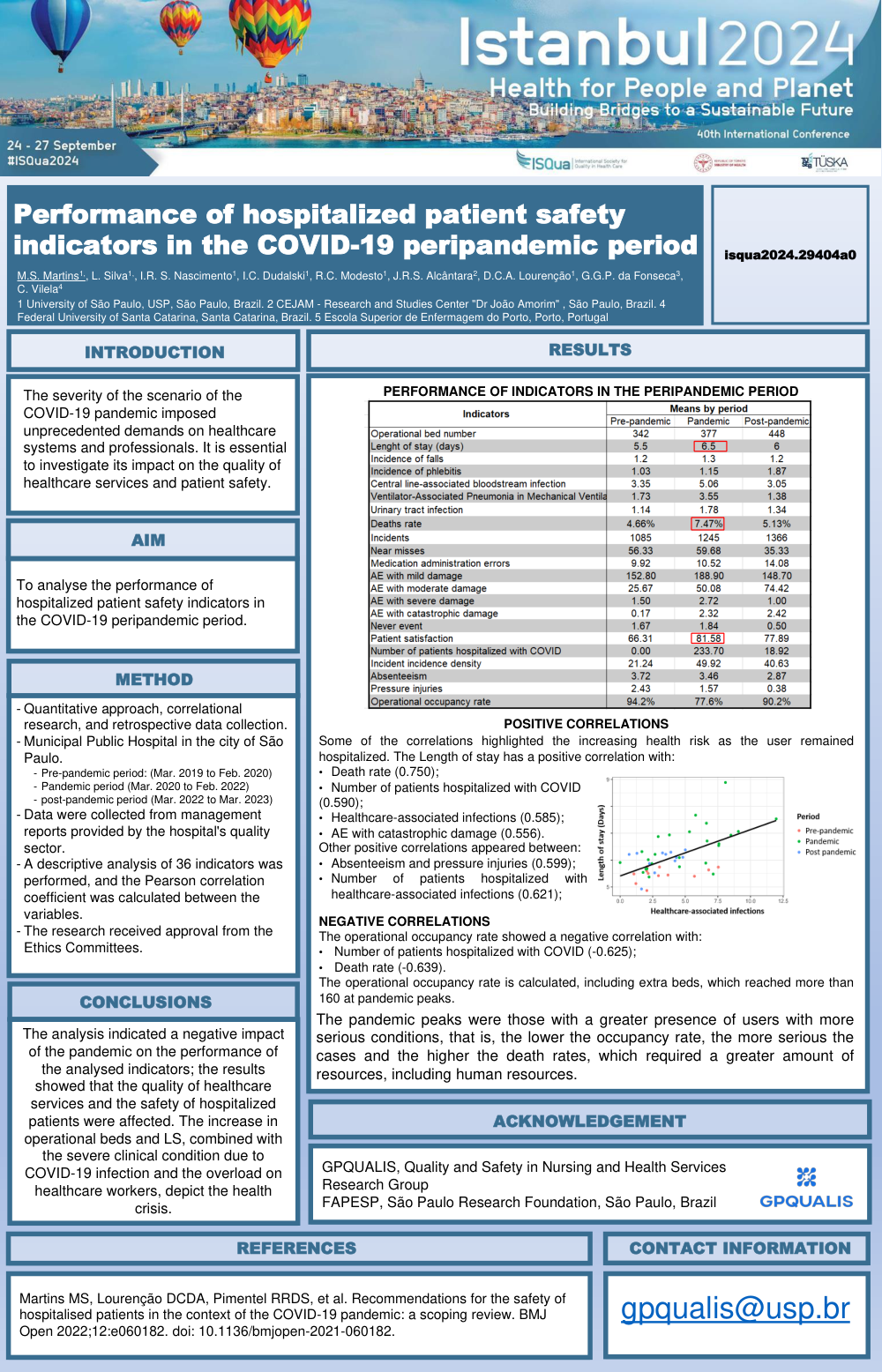
Results: The average operational bed number, LS, incidence of falls, incidence of phlebitis, rates of healthcare-associated infections, death rates, and all rates related to incidents and AE increased during the pandemic period, and some rose even more in the post-pandemic period (incidents, near misses, medication administration errors, AE with mild damage, AE with moderate damage, AE with severe damage, AE with catastrophic damage, never event, and phlebitis).
Patient satisfaction was higher during the pandemic. Some of the correlations highlighted the increasing health risk as the user remained hospitalized for longer. The LS has a positive correlation with: death rate (0.750); number of patients hospitalized with COVID (0.590); healthcare-associated infections (0.585); incident incidence density (0.749); AE with catastrophic damage (0.556). Other positive correlations appeared between absenteeism and pressure injuries (0.599)
and the number of patients hospitalized with healthcare-associated infections (0.621). The operational occupancy rate showed a negative correlation with the number of patients hospitalized with COVID (-0.625) and the death rate (-0.639). The operational occupancy rate is calculated, including extra beds, which reached more than 160 at pandemic peaks. Furthermore, the pandemic peaks were those with a greater presence of users with more serious conditions, that is, the
lower the occupancy rate, the more serious the cases and the higher the death rates, which required a greater amount of resources, including human resources.
Conclusion: The analysis indicated a negative impact of the pandemic on the performance of the analyzed indicators; the results showed that the quality of healthcare services and the safety of hospitalized patients were affected. The increase in operational beds and LS, combined with the severe clinical condition due to COVID-19 infection and the overload on healthcare workers, depict the health crisis.
LS - length of stay
AE - adverse events