586 posters, 8 topics, 23 sessions, 1,077 authors, 622 institutions
ePostersLive by SciGen Technologies S.A. All rights reserved.
ISQua's 40th International Conference 2024
24th - 27th September 2024 | Istanbul, Türkiye

P404
Optimizing Healthcare Safety: Applying The Human Factors Analysis and Classification System (HFACS) to Improve Blood Preparation Errors related to Patient Identification Mistakes
Poster Presenter
Authors
Affiliations
Part of Topic
Patient Safety & Quality Improvement
Optimizing Healthcare Safety: Applying The Human Factors Analysis and Classification System (HFACS) to Improve Blood Preparation Errors related to Patient Identification Mistakes
INTRODUCTION
Blood component preparation is pivotal in healthcare organizations as there could arise mistakes or improper procedures related to blood handling during medical interventions.
Its accuracy and safety are crucial for patient safety and treatment outcomes.
To improve medical procedures and enhance patient safety, we present a comprehensive analysis of a medical incident resulting from blood preparation.
AIM
preparation is equivalent to that of organ transplantation. It is one of the most important steps before blood transfusion. If you are not careful, it is likely to cause damage or even death to the patient. This report aims to improve the cause through root cause analysis.Patient identification of events leading to blood preparation errors improves patient safety and improves medical care.The importance and risk of correct blood.
METHOD
The goal of this article is to address healthcare safety by applying HFACS to analyze the root causes of blood preparation errors, especially patient identification mistakes.
RESULTS
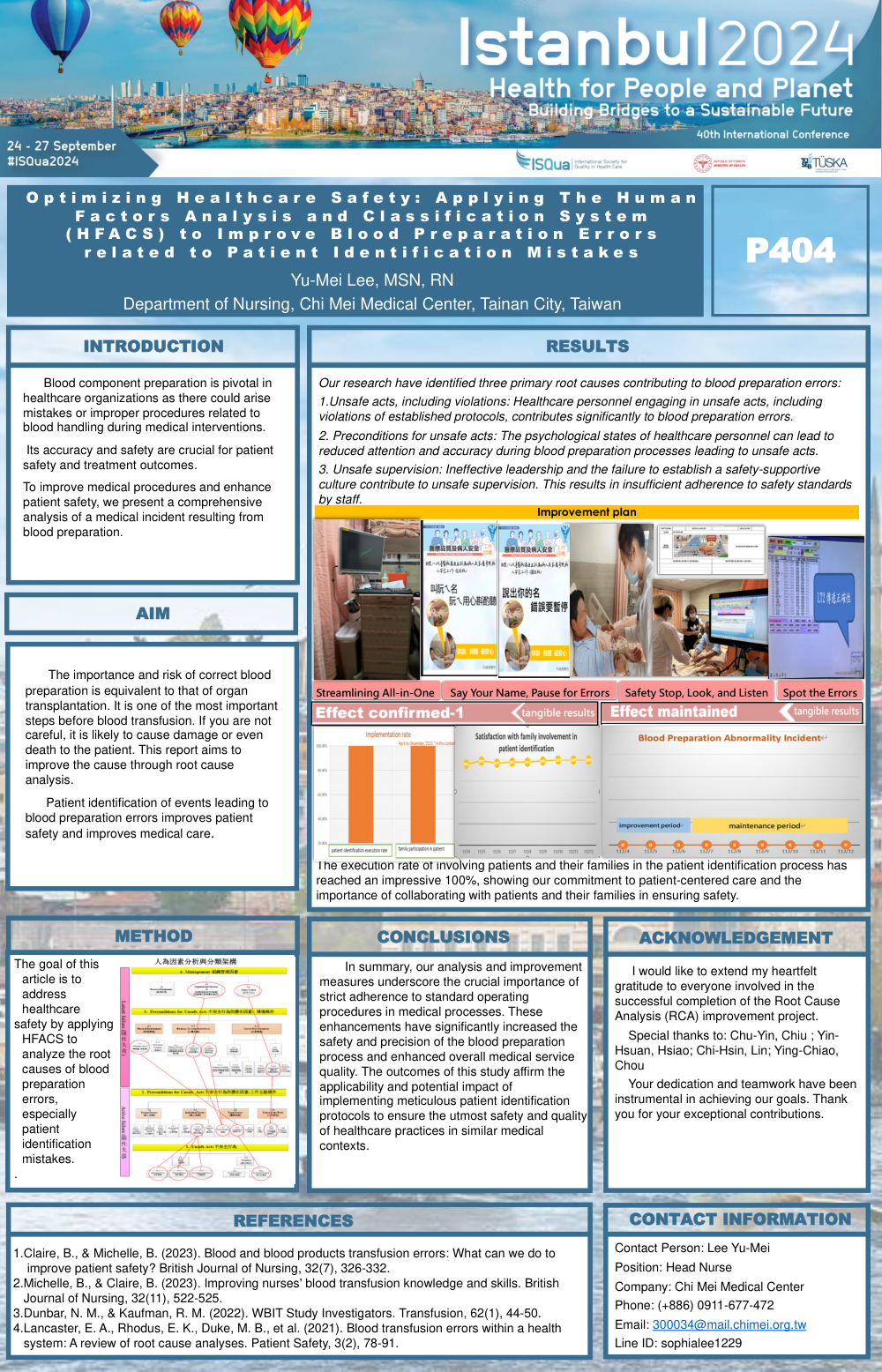
Our research have identified three primary root causes contributing to blood preparation errors:
1.Unsafe acts, including violations: Healthcare personnel engaging in unsafe acts, including violations of established protocols, contributes significantly to blood preparation errors.
2. Preconditions for unsafe acts: The psychological states of healthcare personnel can lead to reduced attention and accuracy during blood preparation processes leading to unsafe acts.
3. Unsafe supervision: Ineffective leadership and the failure to establish a safety-supportive culture contribute to unsafe supervision. This results in insufficient adherence to safety standards by staff.
CONCLUSIONS
In summary, our analysis and improvement measures underscore the crucial importance of strict adherence to standard operating procedures in medical processes. These enhancements have significantly increased the safety and precision of the blood preparation process and enhanced overall medical service quality. The outcomes of this study affirm the applicability and potential impact of implementing meticulous patient identification protocols to ensure the utmost safety and quality of healthcare practices in similar medical contexts.