586 posters, 8 topics, 23 sessions, 1,077 authors, 622 institutions
ePostersLive by SciGen Technologies S.A. All rights reserved.
ISQua's 40th International Conference 2024
24th - 27th September 2024 | Istanbul, Türkiye

P339
Investigation on Preoperative Use of Chinese Herbal Medicine and Adverse Events in Surgical Patients
Poster Presenter
Part of Topic
Patient Safety & Quality Improvement
Investigation on Preoperative Use of Chinese Herbal Medicine and Adverse Events in Surgical Patients
Introduction
The concurrent use of Chinese herbal medicine (CHM) and Western medicine is common in Taiwan, raising concerns about interactions. Research has shown increased bleeding risks when combining CHMs like Danggui and Ginseng with anticoagulants, but these studies often focus on Western contexts. Additionally, there is limited data on CHM use before and during surgery, particularly regarding bleeding risks.
We therefore conducted a survey to evaluate: (1) the prevalence of CHM use among surgical patients, (2) the frequency of surgeons inquiring about CHM use preoperatively, and (3) potential adverse events associated with CHM use during hospitalization for surgery.
Materials and Methods
Study Design and Participants
The survey was conducted at Tri-Service General Hospital, a medical center in Taiwan. Inclusion criteria for participants were patients over 18 years old, classified as American Society of Anesthesiologists (ASA) physical status I to III, and undergoing surgeries in the surgical, gynecology, or other departments. We conducted purposive sampling to select the departments with the highest surgical volume within the hospital as the focus of our study.
Data collection
Following Institutional Review Board approval, patients were surveyed regarding their CHM use and suspension. Pre-operative, intraoperative, and post-operative data were recorded. Figure 1 illustrates the study's objectives and questionnaire process. Anesthesia, nursing, and post-discharge records were reviewed to assess any adverse events related to CHM use.
Statistical analysis
All values were expressed as mean ± standard deviation or number (percentage). Chi-square tests and multivariate logistic regression were used for bivariate comparisons between groups with and without CHM.
Results and Findings
General characteristics
From March 25, 2023, to November 14, 2023, a total of 1,995 subjects were recruited for analysis, 58.4% of whom were women. Additional characteristics are detailed in Table 1.
Recommendations from surgeons and anesthesiologists
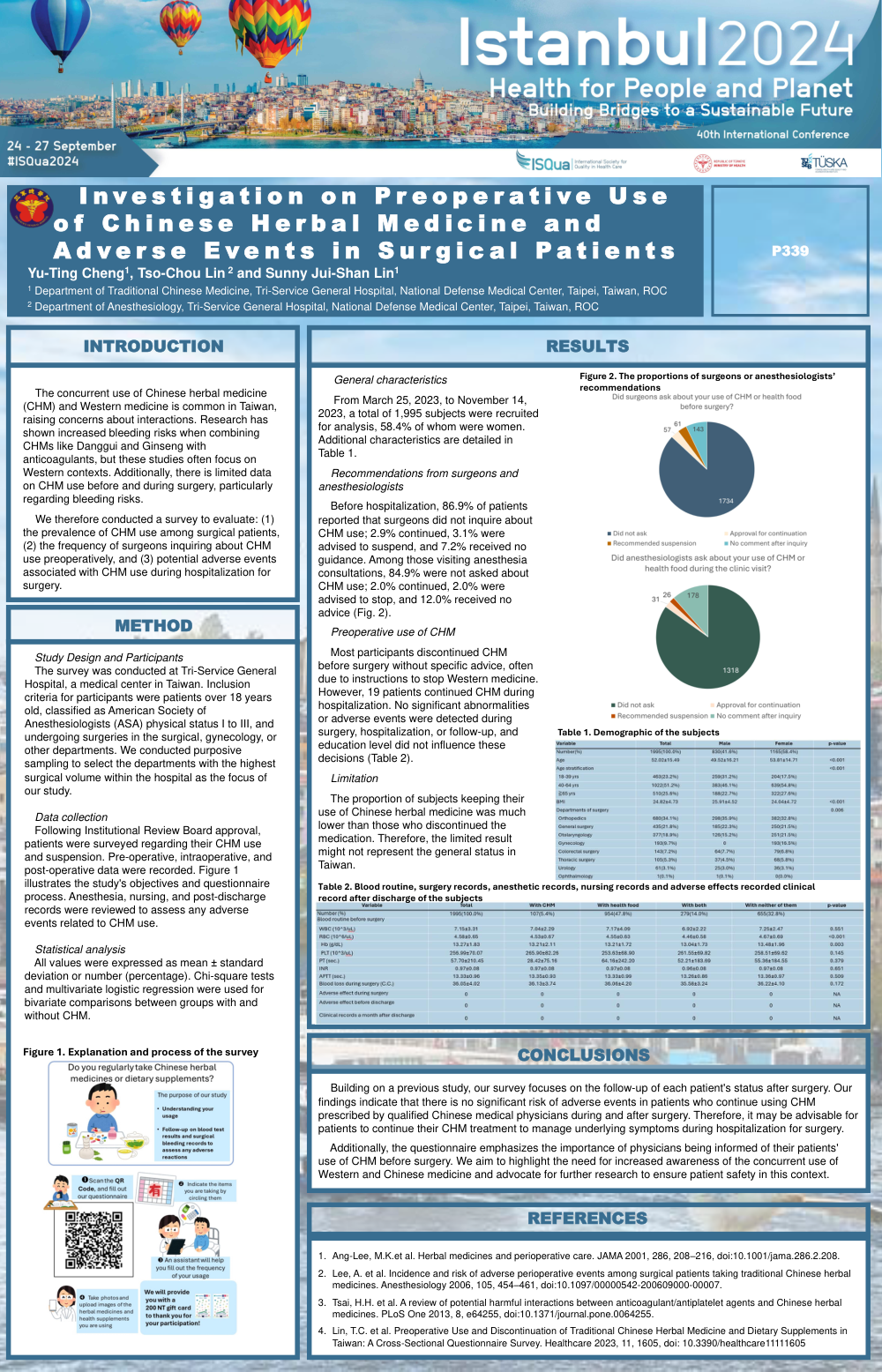
Before hospitalization, 86.9% of patients reported that surgeons did not inquire about CHM use; 2.9% continued, 3.1% were advised to suspend, and 7.2% received no guidance. Among those visiting anesthesia consultations, 84.9% were not asked about CHM use; 2.0% continued, 2.0% were advised to stop, and 12.0% received no advice (Fig. 2).
Preoperative use of CHM
Most participants discontinued CHM before surgery without specific advice, often due to instructions to stop Western medicine. However, 19 patients continued CHM during hospitalization. No significant abnormalities or adverse events were detected during surgery, hospitalization, or follow-up, and education level did not influence these decisions (Table 2).
Limitation
The proportion of subjects keeping their use of Chinese herbal medicine was much lower than those who discontinued the medication. Therefore, the limited result might not represent the general status in Taiwan.
Conclusion
Building on a previous study, our survey focuses on the follow-up of each patient's status after surgery. Our findings indicate that there is no significant risk of adverse events in patients who continue using CHM prescribed by qualified Chinese medical physicians during and after surgery. Therefore, it may be advisable for patients to continue their CHM treatment to manage underlying symptoms during hospitalization for surgery.
Additionally, the questionnaire emphasizes the importance of physicians being informed of their patients' use of CHM before surgery. We aim to highlight the need for increased awareness of the concurrent use of Western and Chinese medicine and advocate for further research to ensure patient safety in this context.