586 posters, 8 topics, 23 sessions, 1,077 authors, 622 institutions
ePostersLive by SciGen Technologies S.A. All rights reserved.
ISQua's 40th International Conference 2024
24th - 27th September 2024 | Istanbul, Türkiye

P414
Utilizing of HFMEA Quality Management Methodology for Improving the Quality of Chemotherapy Dispensing Operations
Poster Presenter
Authors
Affiliations
Part of Topic
Patient Safety & Quality Improvement
Title
Utilizing of HFMEA Quality Management Methodology for Improving the Quality of Chemotherapy Dispensing Operations
Introduction
In the process of chemotherapy for cancer treatment, each operational step, from the prescription by the physician, verification and dispensing by the pharmacist, to the delivery of medications to the nursing staff for administration, must consider safety factors to ensure the safety of patient medication. Particularly, any error in the administration of chemotherapy drugs may lead to irreversible harm to the patient.
The main purpose of this article is to track incidents of errors in chemotherapy dispensing processes and oral targeted drug administration that occurred from 2019 to 2022. The study aims to analyze the effectiveness of two quality improvement measures implemented by the pharmacy department in response to these errors.
Methods
Utilizing the HFMEA quality management method for two rounds of dispensing operation quality improvements were implemented: (1) The first initiative, conducted in 2019, focused on improving the bagging process for completed dispensing chemotherapy drugs. This was in response to incidents of manual bagging errors during the process. (2) The second initiative, carried out in 2022, aimed to address two incidents of errors in administering oral target therapy drugs.
The pharmacy examines the chemotherapy dispensing operation process and draws a flow chart, analyzes the possible hazards caused by the main and secondary processes and formulates action solutions, and finally reviews the effectiveness of improvement measures.
Results
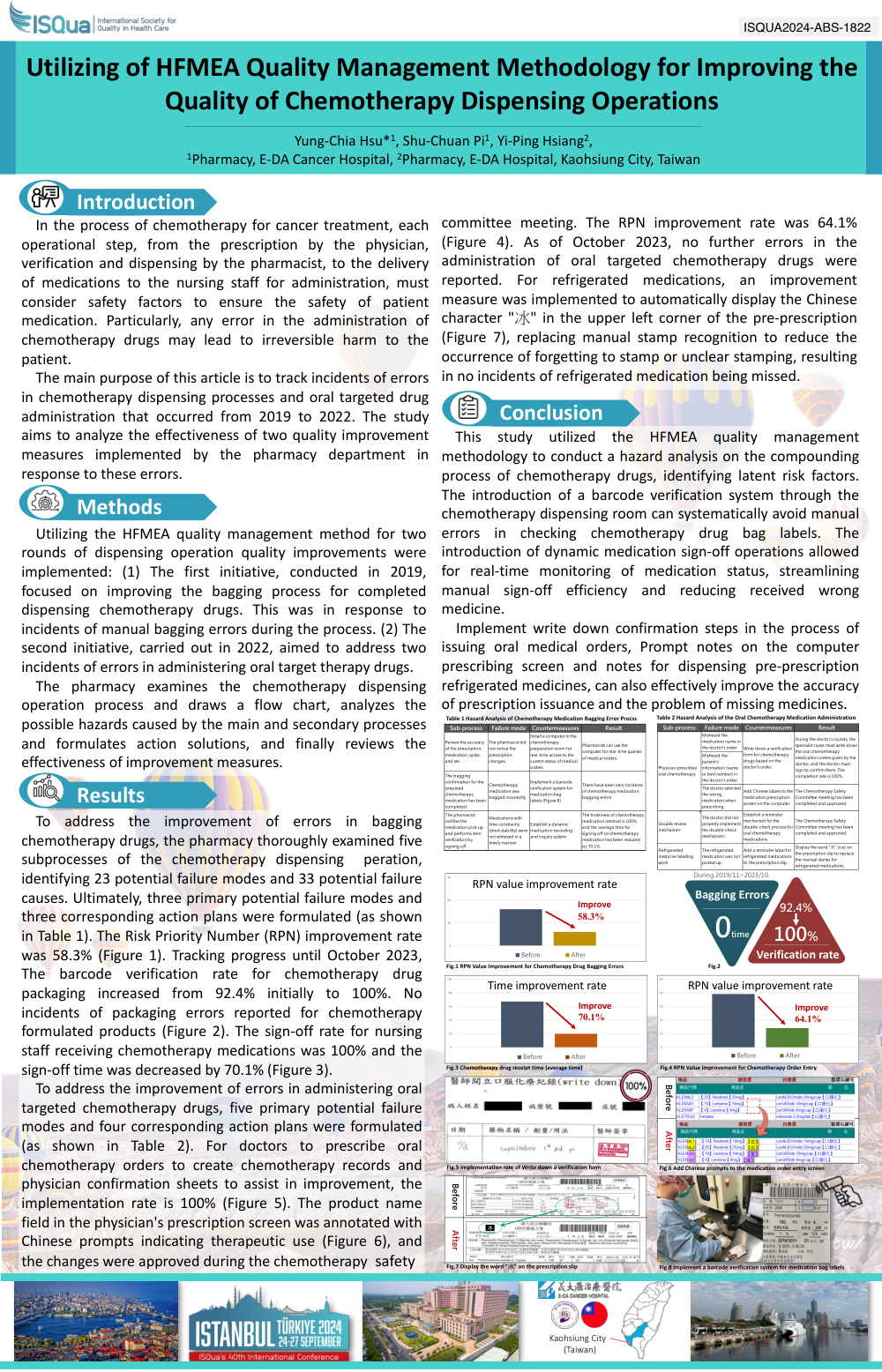
To address the improvement of errors in bagging chemotherapy drugs, the pharmacy thoroughly examined five subprocesses of the chemotherapy dispensing peration, identifying 23 potential failure modes and 33 potential failure causes. Ultimately, three primary potential failure modes and three corresponding action plans were formulated (as shown in Table 1). The Risk Priority Number (RPN) improvement rate was 58.3% (Figure 1). Tracking progress until October 2023, The barcode verification rate for chemotherapy drug packaging increased from 92.4% initially to 100%. No incidents of packaging errors reported for chemotherapy formulated products (Figure 2). The sign-off rate for nursing staff receiving chemotherapy medications was 100% and the sign-off time was decreased by 70.1% (Figure 3).
To address the improvement of errors in administering oral targeted chemotherapy drugs, five primary potential failure modes and four corresponding action plans were formulated (as shown in Table 2). For doctors to prescribe oral chemotherapy orders to create chemotherapy records and physician confirmation sheets to assist in improvement, the implementation rate is 100% (Figure 5). The product name field in the physician's prescription screen was annotated with Chinese prompts indicating therapeutic use (Figure 6), and the changes were approved during the chemotherapy safety committee meeting. The RPN improvement rate was 64.1% (Figure 4). As of October 2023, no further errors in the administration of oral targeted chemotherapy drugs were reported. For refrigerated medications, an improvement measure was implemented to automatically display the Chinese character "冰" in the upper left corner of the pre-prescription (Figure 7), replacing manual stamp recognition to reduce the occurrence of forgetting to stamp or unclear stamping, resulting in no incidents of refrigerated medication being missed.
Conclusion
This study utilized the HFMEA quality management methodology to conduct a hazard analysis on the compounding process of chemotherapy drugs, identifying latent risk factors. The introduction of a barcode verification system through the chemotherapy dispensing room can systematically avoid manual errors in checking chemotherapy drug bag labels. The introduction of dynamic medication sign-off operations allowed for real-time monitoring of medication status, streamlining manual sign-off efficiency and reducing received wrong medicine.
Implement write down confirmation steps in the process of issuing oral medical orders, Prompt notes on the computer prescribing screen and notes for dispensing pre-prescription refrigerated medicines , can also effectively improve the accuracy of prescription issuance and the problem of missing medicines.