586 posters, 8 topics, 23 sessions, 1,077 authors, 622 institutions
ePostersLive by SciGen Technologies S.A. All rights reserved.
ISQua's 40th International Conference 2024
24th - 27th September 2024 | Istanbul, Türkiye

P386
Reducing the risk of intra-operative hypothermia: comparing two normothermia system
Poster Presenter
Part of Topic
Patient Safety & Quality Improvement
Introduction
Intraoperative hypothermia, defined as a core body temperature less than 36°C in 30 minutes before the end of the operation, is a common issue. Previous studies report that intra-operative hypothermia will increase the risks of surgical site infection by 15%, the risks of infection with complications, cardiovascular adverse events, delayed anesthetic recovery, operative blood loss, impaired immune function, and prolong PACU and hospital stay; it will also increase the mortality rate and the medical cost. This study aims to reduce the rates of intra-operative hypothermia, adverse effects, and enhance the quality of patient care.
Methods
The incidence of intraoperative hypothermia was 8.5% (644 patients). The department of operation, the anesthetic technique, and the intra-operative operation was listed . The patients receiving orthopedic surgery under general anesthesia in semi-sitting position had the highest incidence of hypothermia. Most of these patients received endoscopic repairment of shoulder joint. Since it is difficult to set up warming system and the exposure area is large under semi-sitting position, and since arthroscope required large amount of irrigation fluids, the incidence of intraoperative hypothermia remains high even under usage of forced air warmer and warm intravenous fluids in 100% and 92.5% of cases. In this study, we adopted Mistral-air premium warming suit with designs of aluminum foil surface to reduce heat loss and Velcro to expose surgical regions more easily since 2019 Jul. in all patients receiving arthroscopic shoulder surgery. After entering the operating room, standard monitors were applied as usual. The patients were asked to wear the Mistral-air premium warming suit after full explanation, then anesthesia induction was performed as routine. The core temperature was recorded immediately after intubation, to record baseline body temperature (before warming system started). Then the patient will be moved to operating table, and a thorough examination will be made to ensure that the Mistral-air warming suit covers the patient completely without interfering heat air convection by external forces such as patient restraints. To facilitate pre-operative preparation, the warming system was started after sterile area being set up with aseptic drapes. The warming system was ceased as long as the operation ended.
Results
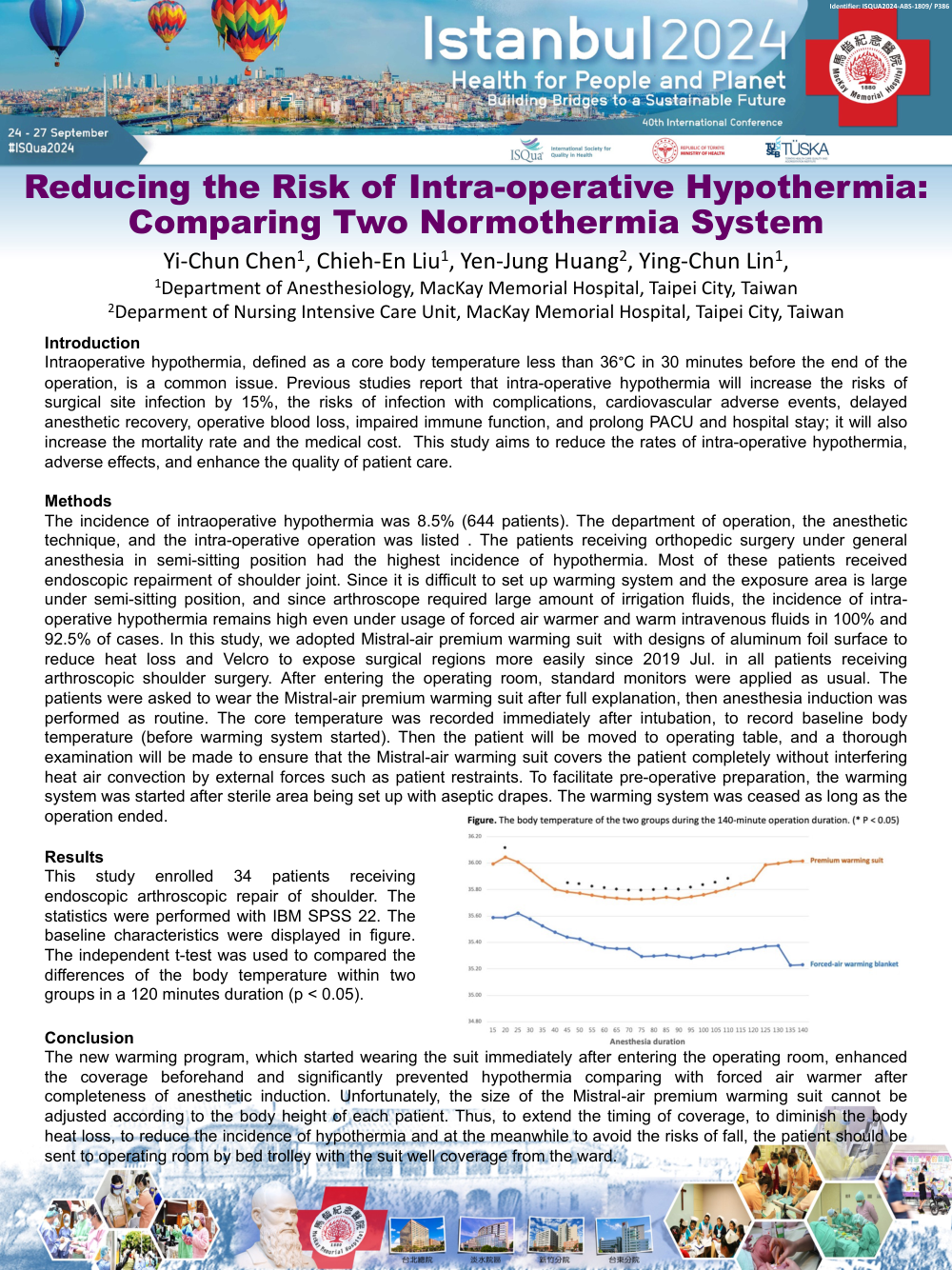
This study enrolled 34 patients receiving endoscopic arthroscopic repair of shoulder. The statistics were performed with IBM SPSS 22. The baseline characteristics were displayed in figure. The independent t-test was used to compared the differences of the body temperature within two groups in a 120 minutes duration (p < 0.05).
Conclusion
The new warming program, which started wearing the suit immediately after entering the operating room, enhanced the coverage beforehand and significantly prevented hypothermia comparing with forced air warmer after completeness of anesthetic induction. Unfortunately, the size of the Mistral-air premium warming suit cannot be adjusted according to the body height of each patient. Thus, to extend the timing of coverage, to diminish the body heat loss, to reduce the incidence of hypothermia and at the meanwhile to avoid the risks of fall, the patient should be sent to operating room by bed trolley with the suit well coverage from the ward.