586 posters, 8 topics, 23 sessions, 1,077 authors, 622 institutions
ePostersLive by SciGen Technologies S.A. All rights reserved.
ISQua's 40th International Conference 2024
24th - 27th September 2024 | Istanbul, Türkiye

P348
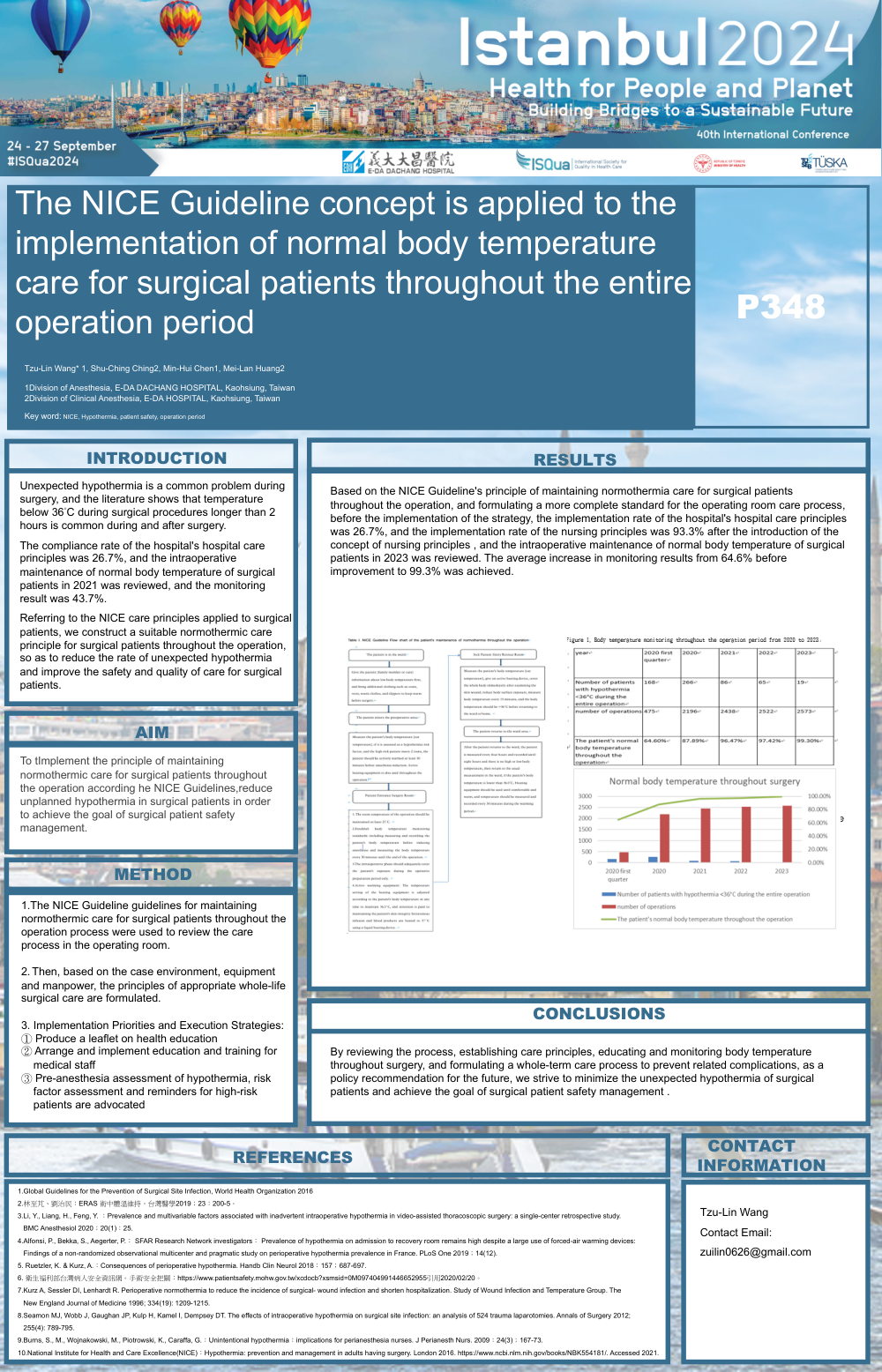
The NICE Guideline concept is applied to the implementation of normal body temperature care for surgical patients throughout the entire operation period.
Poster Presenter
Authors
Affiliations
Part of Topic
Patient Safety & Quality Improvement
The NICE Guideline concept is applied to the implementation of normal body temperature care for surgical patients throughout the entire operation period.
Introduction: Unexpected hypothermia in surgical patients is a common problem. Among 52 medical centers surveyed in Germany, even if 90.4% used thermal insulation measures, there was still a 53.5% incidence of hypothermia . In Taiwan, the quality of body temperature care has not yet been determined. In the hospital where the author serves, the incidence rate of hypothermia among patients during the entire operation period is 35.4%. In order to effectively reduce related complications and protect surgical patients from normal body temperature throughout the operation period, the NICE care principles are applied to surgical patients to construct a suitable maintenance system for surgical patients throughout the operation period. The principle of normal body temperature care reduces the rate of unexpected hypothermia and improves patient safety and quality of care.
Methods: To examine the current status of care principles by observation method, introduce the NICE Guideline principle of maintaining normothermia care for surgical patients throughout the operation, educate the concept of care principles, and formulate standard procedures in accordance with the NICE care principles
Results: Based on the NICE principles of care, the implementation rate of the nursing principles in our hospital was 26.7%, and after the introduction of the concept, the implementation rate of the nursing principles was 93.3%, and the patients maintained normal body temperature throughout the operation, and the monitoring results increased from 64.6% before the improvement by an average of 99.3%.