586 posters, 8 topics, 23 sessions, 1,077 authors, 622 institutions
ePostersLive by SciGen Technologies S.A. All rights reserved.
ISQua's 40th International Conference 2024
24th - 27th September 2024 | Istanbul, Türkiye

P294
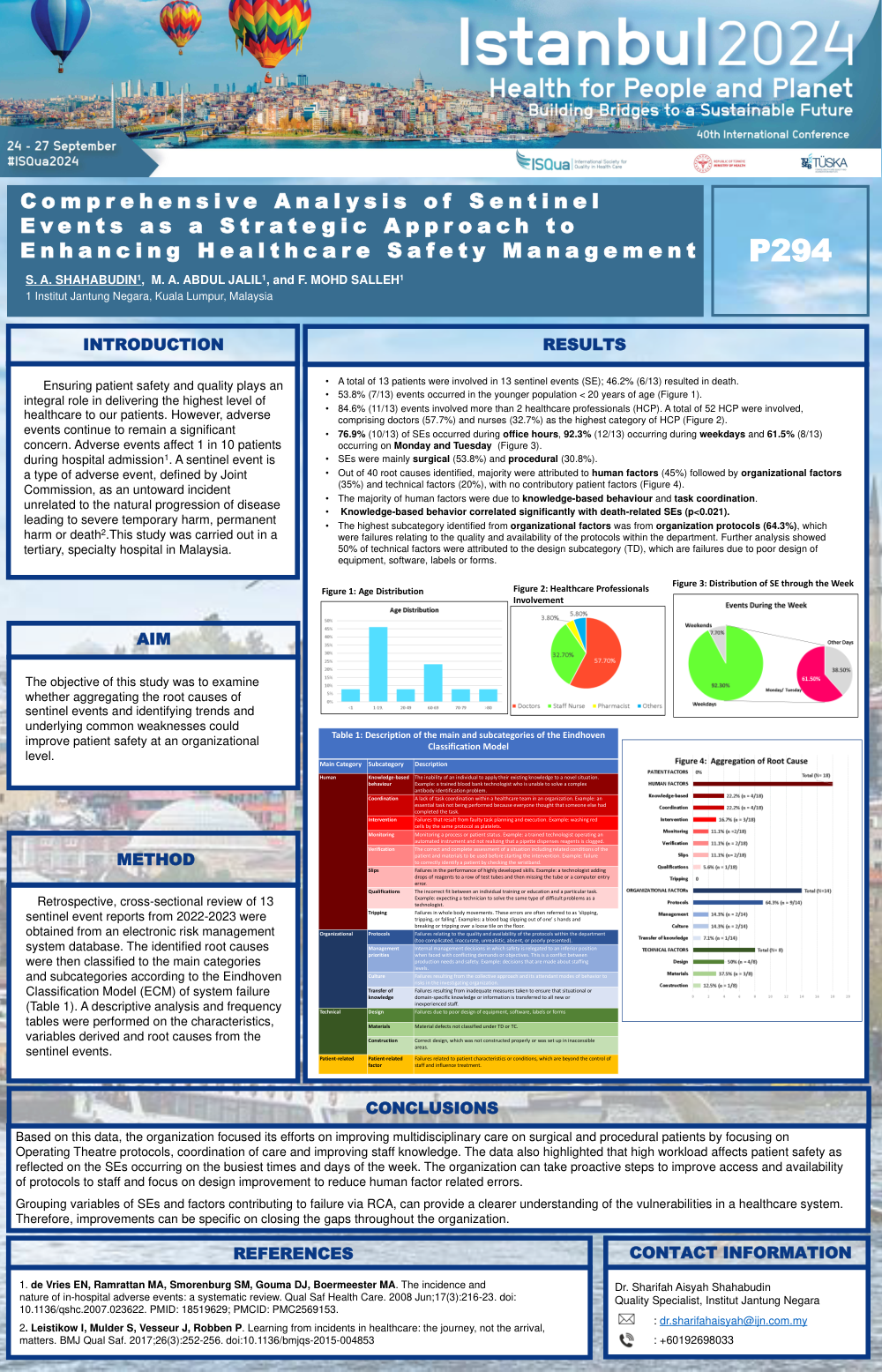
Comprehensive Analysis of Sentinel Events as a Strategic Approach to Enhancing Healthcare Safety Management
Poster Presenter
Authors
Affiliations
Part of Topic
Patient Safety & Quality Improvement
Title: Comprehensive Analysis of Sentinel Events as a Strategic Approach to Enhancing Healthcare Safety Management
Authors: S. A. SHAHABUDIN1, M. A. ABDUL JALIL1, and F. MOHD SALLEH1
1 Institut Jantung Negara, Kuala Lumpur, Malaysia
Introduction:
Ensuring patient safety and quality plays an integral role in delivering the highest level of healthcare to our patients. However, adverse events continue to remain a significant concern. Adverse events affect 1 in 10 patients during hospital admission1. A sentinel event is a type of adverse event, defined by Joint Commission, as an untoward incident unrelated to the natural progression of disease leading to severe temporary harm, permanent harm or death2.This study was carried out in a tertiary, specialty hospital in Malaysia.
Aim:
The objective of this study was to examine whether aggregating the root causes of sentinel events and identifying trends and underlying common weaknesses could improve patient safety at an organizational level.
Method:
Retrospective, cross-sectional review of 13 sentinel event reports from 2022-2023 were obtained from an electronic risk management system database. The identified root causes were then classified to the main categories and subcategories according to the Eindhoven Classification Model (ECM) of system failure (Table 1). A descriptive analysis and frequency tables were performed on the characteristics, variables derived and root causes from the sentinel events.
Results:
Based on this data, the organization focused its efforts on improving multidisciplinary care on surgical and procedural patients by focusing on Operating Theatre protocols, coordination of care and improving staff knowledge. The data also highlighted that high workload affects patient safety as reflected on the SEs occurring on the busiest times and days of the week. The organization can take proactive steps to improve access and availability of protocols to staff and focus on design improvement to reduce human factor related errors.
Grouping variables of SEs and factors contributing to failure via RCA, can provide a clearer understanding of the vulnerabilities in a healthcare system. Therefore, improvements can be specific on closing the gaps throughout the organization.
References:
1. de Vries EN, Ramrattan MA, Smorenburg SM, Gouma DJ, Boermeester MA. The incidence and nature of in-hospital adverse events: a systematic review. Qual Saf Health Care. 2008 Jun;17(3):216-23. doi:10.1136/qshc.2007.023622. PMID: 18519629; PMCID: PMC2569153.
2. Leistikow I, Mulder S, Vesseur J, Robben P. Learning from incidents in healthcare: the journey, not the arrival, matters. BMJ Qual Saf. 2017;26(3):252-256. doi:10.1136/bmjqs-2015-004853