586 posters, 8 topics, 23 sessions, 1,077 authors, 622 institutions
ePostersLive by SciGen Technologies S.A. All rights reserved.
ISQua's 40th International Conference 2024
24th - 27th September 2024 | Istanbul, Türkiye

P354
Investigating Risk Factors in Hospital Patient Transfer Processes
Part of Topic
Patient Safety & Quality Improvement
INTRODUCTION
The hospital has established comprehensive standards for patient transfers within the facility, covering pre-transfer preparations, the transfer process, and post-transfer activities. These guidelines ensure that nursing staff confirm the patient's transfer level and prepare relevant equipment accordingly. Any discrepancies or changes in the patient's condition require consultation with a physician to reassess the transfer level, ensuring appropriate preparation by transfer personnel.
AIM
This study aims to investigate the risk factors associated with hospital patient transfer processes and to develop strategies to mitigate these risks, enhancing patient safety and the overall quality of care.
METHOD
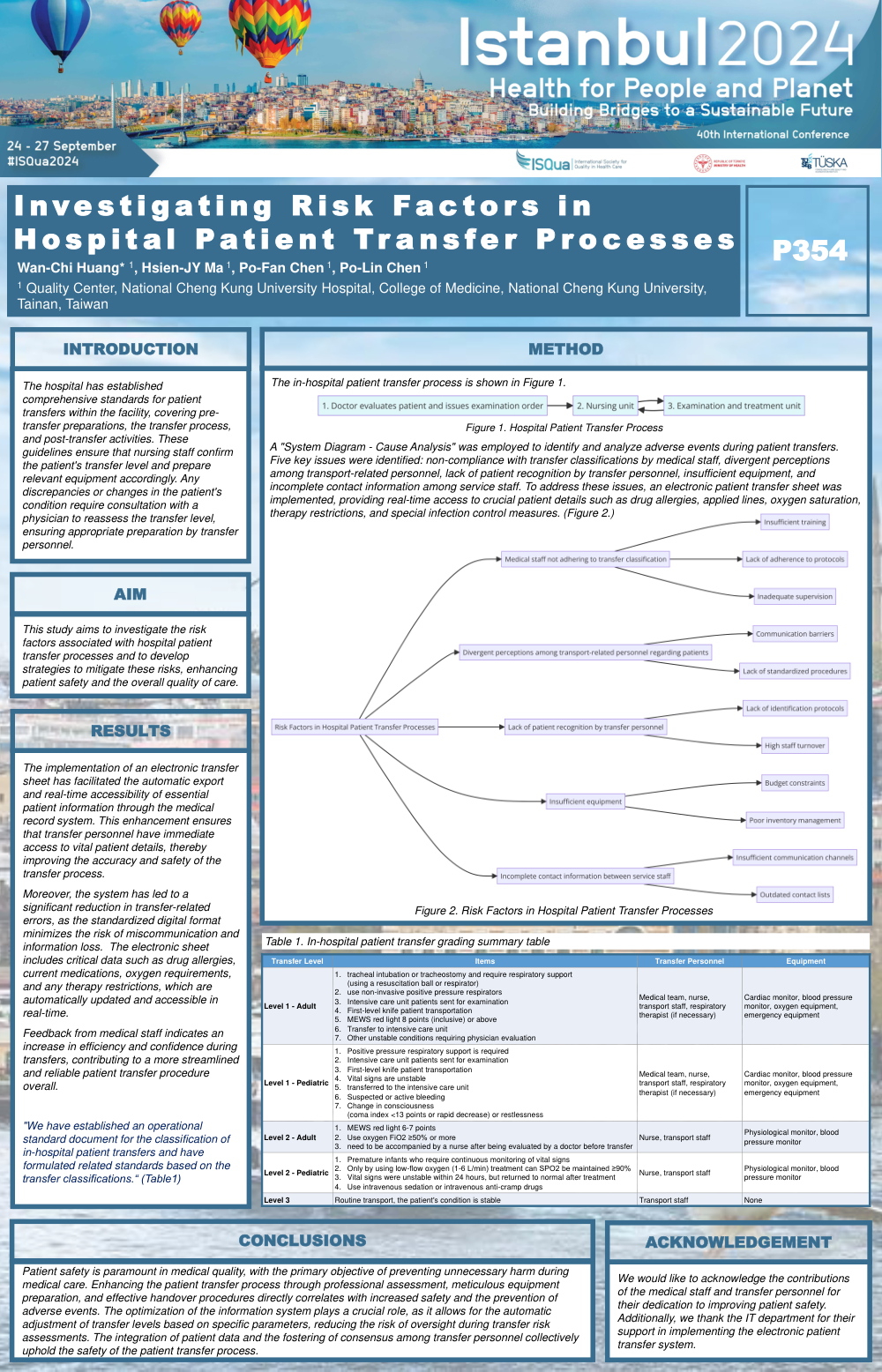
The in-hospital patient transfer process is shown in Figure 1.
A "System Diagram - Cause Analysis" was employed to identify and analyze adverse events during patient transfers. Five key issues were identified: non-compliance with transfer classifications by medical staff, divergent perceptions among transport-related personnel, lack of patient recognition by transfer personnel, insufficient equipment, and incomplete contact information among service staff. To address these issues, an electronic patient transfer sheet was implemented, providing real-time access to crucial patient details such as drug allergies, applied lines, oxygen saturation, therapy restrictions, and special infection control measures. (Figure 2.)
RESULTS
The implementation of an electronic transfer sheet has facilitated the automatic export and real-time accessibility of essential patient information through the medical record system. This enhancement ensures that transfer personnel have immediate access to vital patient details, thereby improving the accuracy and safety of the transfer process. Moreover, the system has led to a significant reduction in transfer-related errors, as the standardized digital format minimizes the risk of miscommunication and information loss. Specifically, there has been a noticeable decrease in reported incidents related to incomplete patient information during transfers. The electronic sheet includes critical data such as drug allergies, current medications, oxygen requirements, and any therapy restrictions, which are automatically updated and accessible in real-time.
Feedback from medical staff indicates an increase in efficiency and confidence during transfers, contributing to a more streamlined and reliable patient transfer procedure overall. Nurses and transfer personnel have reported improved transfer times due to quicker access to necessary information. Additionally, the system's ability to flag high-risk patients and prompt necessary precautions has further enhanced patient safety, reducing the incidence of adverse events during transfers.
Overall, the integration of the electronic transfer sheet into the medical record system has not only improved the operational efficiency of patient transfers but also significantly bolstered the safety and quality of patient care.
CONCLUSIONS
Patient safety is paramount in medical quality, with the primary objective of preventing unnecessary harm during medical care. Enhancing the patient transfer process through professional assessment, meticulous equipment preparation, and effective handover procedures directly correlates with increased safety and the prevention of adverse events. The optimization of the information system plays a crucial role, as it allows for the automatic adjustment of transfer levels based on specific parameters, reducing the risk of oversight during transfer risk assessments. The integration of patient data and the fostering of consensus among transfer personnel collectively uphold the safety of the patient transfer process.