586 posters, 8 topics, 23 sessions, 1,077 authors, 622 institutions
ePostersLive by SciGen Technologies S.A. All rights reserved.
ISQua's 40th International Conference 2024
24th - 27th September 2024 | Istanbul, Türkiye

P245
Critical Thinking: Addressing Wrong Blood in Tube
Part of Topic
Patient Safety & Quality Improvement
TITLE
Critical Thinking: Addressing Wrong Blood in Tube
INTRODUCTION
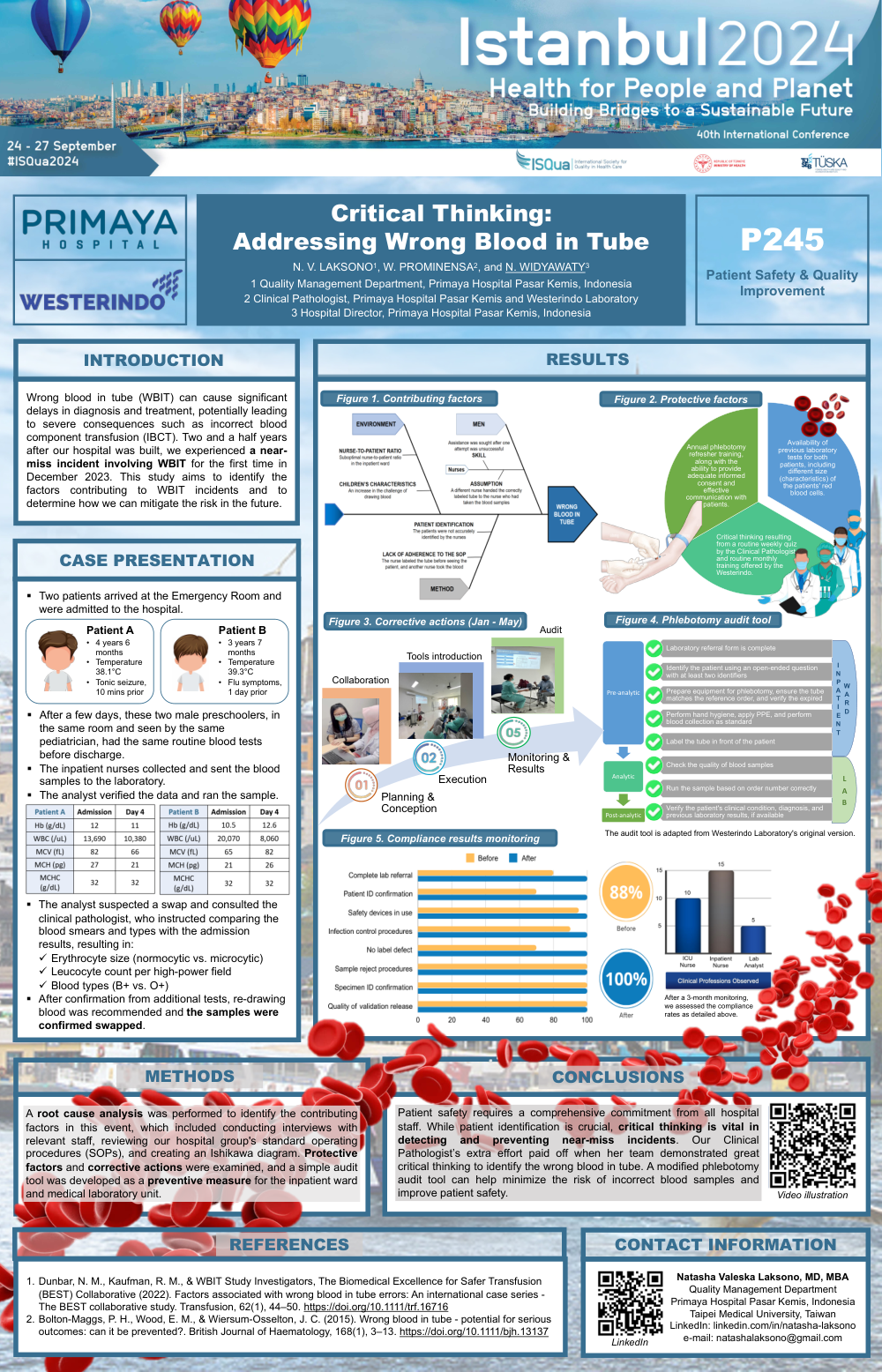
Wrong blood in tube (WBIT) can cause significant delays in diagnosis and treatment, potentially leading to severe consequences such as incorrect blood component transfusion (IBCT). Two and a half years after our hospital was built, we experienced a near-miss incident involving WBIT for the first time in December 2023. This study aims to identify the factors contributing to WBIT incidents and to determine how we can mitigate the risk in the future.
CASE PRESENTATION
Two patients arrived at the Emergency Room and were admitted to the hospital. Patient A: 4 years and 6 months old, temperature 38.1°C, tonic seizure 10 minutes prior. Patient B: 3 years 7 months old, temperature 39.3°C, flu-like syndrome 1 day prior. After a few days, these two male preschoolers, in the same room and seen by the same pediatrician, had the same routine blood tests before discharge. The inpatient nurses collected and sent the blood samples to the laboratory. The analyst verified the data and ran the sample. The analyst suspected a swap and consulted the clinical pathologist, who instructed comparing the blood smears and types with the admission results, resulting in: Erythrocyte size (normocytic vs. microcytic), leucocyte count per high-power field, blood types (B+ vs. O+). After confirmation from additional tests, re-drawing blood was recommended and the samples were confirmed swapped.
METHODS
A root cause analysis was performed to identify the contributing factors in this event, which included conducting interviews with relevant staff, reviewing our hospital group's standard operating procedures (SOPs), and creating an Ishikawa diagram. Protective factors and corrective actions were examined, and a simple audit tool was developed as a preventive measure for the inpatient ward and medical laboratory unit.
RESULTS
We identified the contributing and protective factors to wrong blood in tube. Contributing factors are shown in the Ishikawa diagram. Protective factors are influenced by inpatient nurses, laboratory analysts, and patients themselves. Factors associated with inpatient nurses include annual phlebotomy refresher training as well as ability to provide adequate informed consent and effective communication with patients. Whereas for laboratory analysts, critical thinking to detect wrong blood in tube resulting from a routine weekly quiz by the clinical pathologist and routine monthly training offered by the laboratory vendor and confirmation of the quality of the laboratory materials and equipment are performed. On the other hand, patients related factors are availability of previous laboratory tests of both patients and different features of the patient's red blood cells (seen from MCV, MCH, and MCHC). After analyzing those factors, we executed actions to correct those error, such as promoting staff understanding of the standard procedure for patient identification and raise the compliance level, providing hospital staffs with weekly routine SOP refreshment, eliminating assumptions by challenging assumption practices and improving effective communication among nurses, and performing the workload analysis and adjusting the nurse's schedule accordingly. To prevent these incidents from reoccurring, we develop a simple phlebotomy audit tool by adopting the phlebotomy checklist from the medical laboratory unit.
CONCLUSIONS
Patient safety requires a comprehensive commitment from all hospital staff. While patient identification is crucial, critical thinking is vital in detecting and preventing near-miss incidents. Our Clinical Pathologist’s extra effort paid off when her team demonstrated great critical thinking to identify the wrong blood in tube. A modified phlebotomy audit tool can help minimize the risk of incorrect blood samples and improve patient safety.
REFERENCES
1. Dunbar, N. M., Kaufman, R. M., & WBIT Study Investigators, The Biomedical Excellence for Safer Transfusion (BEST) Collaborative (2022). Factors associated with wrong blood in tube errors: An international case series - The BEST collaborative study. Transfusion, 62(1), 44–50. https://doi.org/10.1111/trf.16716
2. Bolton-Maggs, P. H., Wood, E. M., & Wiersum-Osselton, J. C. (2015). Wrong blood in tube - potential for serious outcomes: can it be prevented?. British Journal of Haematology, 168(1), 3–13. https://doi.org/10.1111/bjh.13137