586 posters, 8 topics, 23 sessions, 1,077 authors, 622 institutions
ePostersLive by SciGen Technologies S.A. All rights reserved.
ISQua's 40th International Conference 2024
24th - 27th September 2024 | Istanbul, Türkiye

P494
Effects of Using Shared Decicion Making (SDM) in Breastfeeding
Poster Presenter
Authors
Affiliations
Part of Topic
Integrated Care Communities
Effects of Using Shared Decicion Making (SDM) in Breastfeeding
【Purpose】
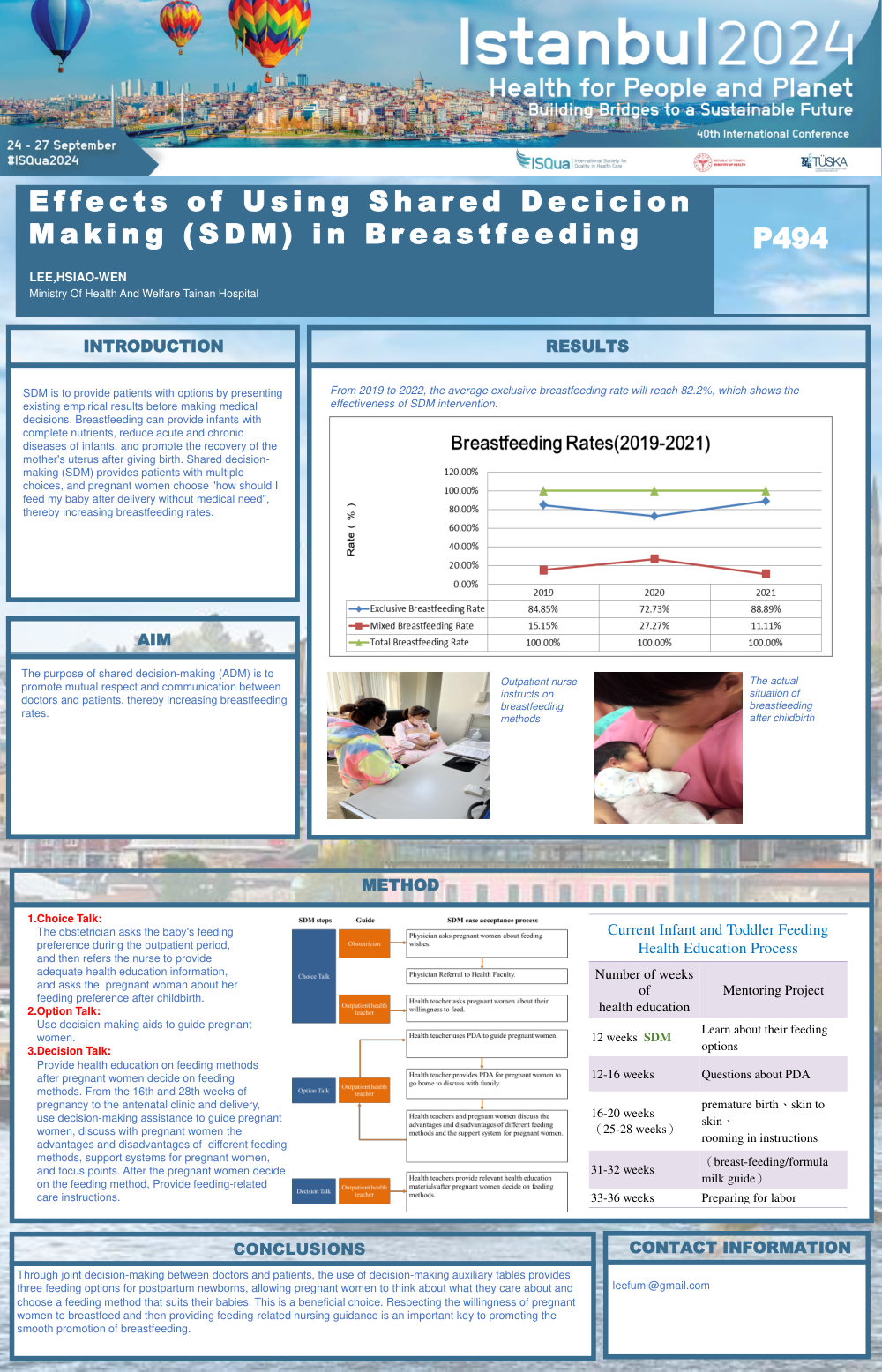
The purpose of Shared Decicion Making (SDM) is to promote mutual respect and communication between doctors and patients. The method is to provide patients with options by presenting existing empirical results before making medical decisions. Breastfeeding can provide infants with complete nutrients, reduce acute and chronic diseases of infants, and promote the recovery of the mother's uterus after giving birth. Shared decision-making (SDM) provides patients with multiple choices, and pregnant women choose "how should I feed my baby after delivery without medical need", thereby increasing breastfeeding rates.
【method】
1. Choice Talk: The obstetrician asks the baby's feeding preference during the outpatient period, and then refers the nurse to provide adequate health education information, and asks the pregnant woman about her feeding preference after childbirth. 2. Option Talk: Use decision-making aids to guide pregnant women. 3. Decision Talk: Provide health education on feeding methods after pregnant women decide on feeding methods. From the 16th and 28th weeks of pregnancy to the antenatal clinic and delivery, use decision-making assistance to guide pregnant women, discuss with pregnant women the advantages and disadvantages of different feeding methods, support systems for pregnant women, and focus points. After the pregnant women decide on the feeding method, Provide feeding-related care instructions.
【result】
From 2019 to 2022, the average exclusive breastfeeding rate will reach 83.5%, which shows the effectiveness of SDM intervention.
【conclusion】
Through joint decision-making between doctors and patients, the use of decision-making auxiliary tables provides three feeding options for postpartum newborns, allowing pregnant women to think about what they care about and choose a feeding method that suits their babies. This is a beneficial choice. Respecting the willingness of pregnant women to breastfeed and then providing feeding-related nursing guidance is an important key to promoting the smooth promotion of breastfeeding.
Key words: Shared Decicion Making (SDM), Breastfeeding