586 posters, 8 topics, 23 sessions, 1,077 authors, 622 institutions
ePostersLive by SciGen Technologies S.A. All rights reserved.
ISQua's 40th International Conference 2024
24th - 27th September 2024 | Istanbul, Türkiye

ISQUA2024-ABS-2397
Establish a Diversified Palliative Care Network in Long-term Care Institutions
Poster Presenter
Authors
Part of Topic
Integrated Care Communities
Title: Establishing a Diversified Palliative Care Network in Long-term Care Institutions
Introduction
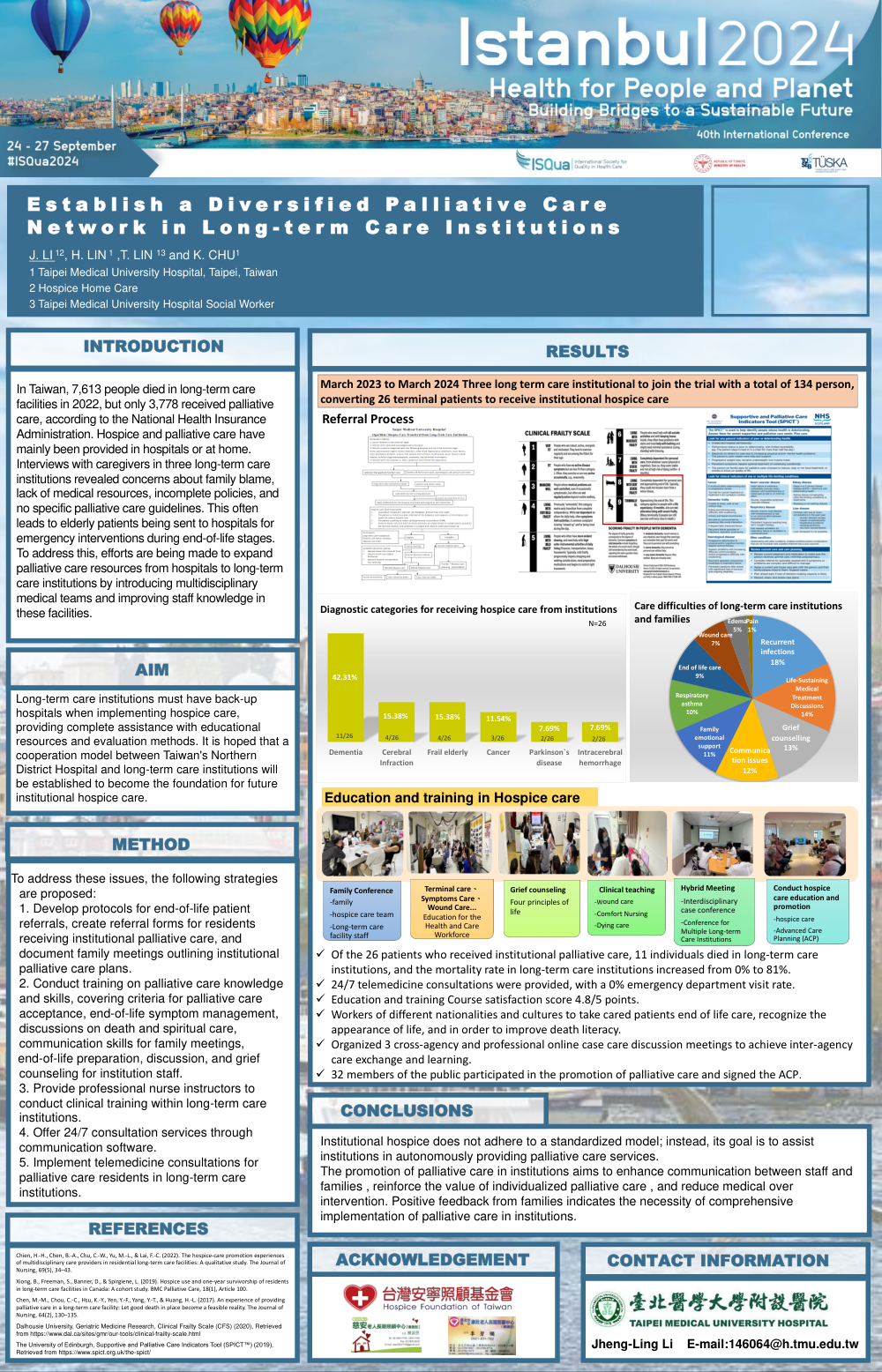
The global population is aging rapidly, creating significant challenges for long-term care institutions. In 2022, 7,613 elderly individuals passed away in Taiwanese long-term care facilities, yet only 3,778 received palliative care. Many residents were transferred to hospitals during the final stages of life for emergency interventions due to inadequate resources, lack of clear policies, and insufficient palliative care guidelines in these facilities. These issues highlight the urgent need to extend medical resources from hospitals to long-term care institutions and enhance the palliative care competencies of staff.
Methods
To address these challenges, we propose the following strategies:
Developing a Transition Process: We created a systematic transition process for end-of-life palliative care within long-term care institutions. This includes essential documents like referral forms, family meeting records, and end-of-life care wishes forms.
Training and Education: We implemented comprehensive training programs for staff, focusing on palliative care knowledge and skills. This training is supported by professional nursing instructors and university professors who provide clinical guidance.
24/7 Online Consultation Platform: We established a 24-hour online consultation platform to support immediate needs and introduced telemedicine consultations to ensure that residents receive timely palliative care.
Results and Analysis
Based on satisfaction surveys, descriptive analyses, and interviews, the following results are presented. First, a referral process was established. Since many residents in long-term care institutions suffer from dementia, neurological conditions, or frailty, their frailty was assessed using the Clinical Frailty Scale, with most residents progressing to stage 8 (very severe frailty) or stage 9 (terminal illness). This indicated poor prognosis and a short life expectancy, with death being inevitable in the near future. Further assessment was conducted using the SPICT (Supportive and Palliative Care Indicators Tool). If residents met the general indicators of the first stage and the "frailty/dementia" indicators of the second stage, it signified a poor prognosis, requiring referral to the palliative care team for appropriate care.
From March 2023 to March 2024, 26 residents in long-term care facilities received palliative care. Among them, 42% had dementia, followed by cerebrovascular diseases and frailty, each accounting for 15%. The main referral issues included physical symptom management, decisions on life-sustaining treatments, and grief counseling.
The implementation of these strategies resulted in significant outcomes:
End-of-life Care Rate: Among those receiving institutional palliative care, the rate of dignified death within the institution under predictable conditions significantly increased from 0% to 81%.
Emergency Visit Rate: The integration of telemedicine and immediate support reduced emergency visit rates to 0%, underscoring the effectiveness of these interventions.
Staff Training and Development:Our training programs catered to staff members from various countries, including Taiwan, Vietnam, Indonesia, and the Philippines. Through field observations and interviews, we customized the training content to address their specific needs. Topics included end-of-life wound care, comfort care, and grief counseling. The training received a high satisfaction score of 4.8.
Participants reported a significant shift in their attitudes toward death—from initial fear to a more positive and compassionate approach—demonstrating an increase in their death literacy.
Case Discussions and Palliative Care Promotion
To foster collaboration and learning, we organized three online case discussion meetings involving cross-institutional and interdisciplinary participants. Additionally, we promoted palliative care awareness within the institutions, which led to 32 residents and their families signing advance directives and advance care planning (ACP) documents.
Conclusion
Establishing a diversified palliative care network in long-term care institutions enables more effective collaboration between these facilities and palliative care teams. This approach allows residents to experience a dignified end of life in a familiar environment, enhances the staff's ability to provide end-of-life care, and builds trust between institutions and families. It also reduces unnecessary medical interventions at the end of life, highlighting the essential role of palliative care in long-term care settings.