708 posters, 8 topics, 16 sessions, 1,190 authors, 600 institutions
ePostersLive by SciGen Technologies S.A. All rights reserved.
ISQua's 39th International Conference 2023
August 27 - 30, 2023 | Seoul, Republic of Korea

P568
A PROJECT FOR IMPROVING THE JOB SATISFACTION OF NURSES IN THE COVID-19 SPECIAL WARD
Poster Presenter
Authors
Affiliations
Part of Topic
Workforce, Policy, and Governance
Title:A PROJECT FOR IMPROVING THE JOB SATISFACTION OF NURSES IN THE COVID-19 SPECIAL WARD
Introduction:
The COVID-19 special ward relies on a dynamic workforce composed of volunteers from various units, ensuring flexible manpower allocation and effective training. However, concerns emerged regarding the dissatisfaction and complaints expressed by the special care staff during patient care, leading to a tense working atmosphere and impacting the overall quality of medical team performance and patient care.
Objectives:
This project aims to improve the job satisfaction of nursing staff in the COVID-19 special ward.
Methods:
In this project, we implemented a comprehensive set of interventions to address job satisfaction among nursing staff. Firstly, COVID-19 education and training courses were conducted using a clinical simulation approach, featuring case studies and interactive discussions. These courses, led by doctors, respiratory therapists, and infection control specialists, aimed to foster effective learning and communication between instructors and trainees. The study sample consisted of 23 nursing staff members responsible for COVID-19 patients.
Secondly, a specialized ward clinical practice training and audit program was introduced, emphasizing infection prevention and control measures, proper usage of personal protective equipment, isolation protocols, and environmental hygiene practices. Proficiency in these areas was assessed through a standardized scale, and nurses who demonstrated competency were authorized to care for COVID-19 patients.
To measure job satisfaction, a validated survey scale was administered before and after the interventions. The scale assessed various aspects of job satisfaction, including work environment, teamwork, and overall job contentment.
Results:
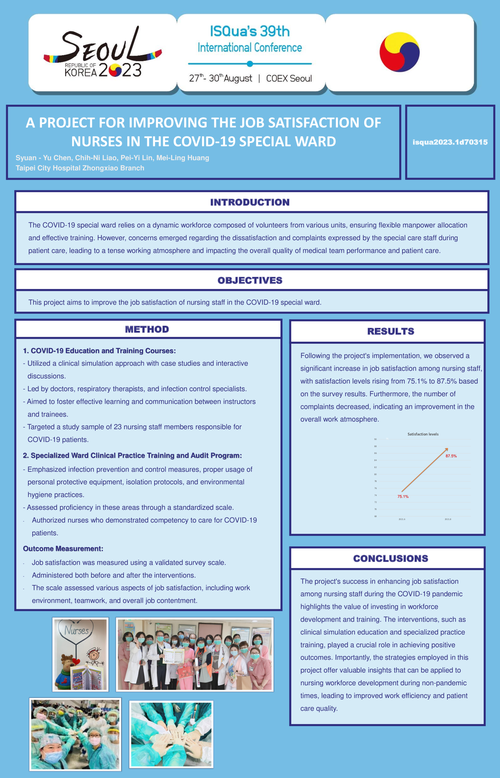
Following the project's implementation, we observed a significant increase in job satisfaction among nursing staff, with satisfaction levels rising from 75.1% to 87.5% based on the survey results. Furthermore, the number of complaints decreased, indicating an improvement in the overall work atmosphere.
Conclusion:
The project's success in enhancing job satisfaction among nursing staff during the COVID-19 pandemic highlights the value of investing in workforce development and training. The interventions, such as clinical simulation education and specialized practice training, played a crucial role in achieving positive outcomes. Importantly, the strategies employed in this project offer valuable insights that can be applied to nursing workforce development during non-pandemic times, leading to improved work efficiency and patient care quality.