167 posters, 28 videos, 9 topics, 12 sessions, 337 authors, 160 institutions
ePostersLive by SciGen Technologies S.A. All rights reserved.
ISMICS 2023 Annual Meeting
31 May - 3 June, 2023 | Boston, MA

PC31
Inexpensive & Easy To Setup Robotic Cardiac Simulator Offers “Unlimited” Endoscopic Coronary Artery Bypass Grafting Experience Proof Of Concept
Poster Presenter
Authors
Yazan AlJamal, Robert Burgin, Hiroto Kitahara, Gabriela Gonzalez, Husam Balkhy
Affiliations
Part of Topic
Education, Imaging and Facilitating Technologies
Inexpensive & Easy To Setup Robotic Cardiac Simulator Offers "Unlimited" Endoscopic Coronary Artery Bypass Grafting Experience _ Proof Of Concept
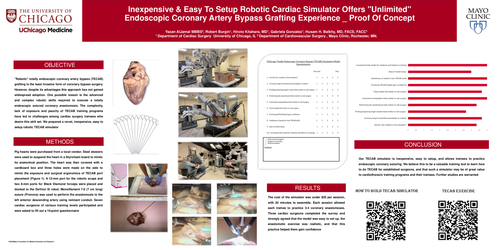
"Robotic" totally endoscopic coronary artery bypass (TECAB) grafting is the least invasive form of coronary bypass surgery. However, despite its advantages this approach has not gained widespread adoption. One possible reason is the advanced and complex robotic skills required to execute a totally endoscopic sutured coronary anastomosis. The complexity, lack of exposure and paucity of TECAB training programs have led to challenges among cardiac surgery trainees who desire this skill set. We prepared a novel, inexpensive, easy to setup robotic TECAB simulator
Pig hearts were purchased from a local vendor. Steel skewers were used to suspend the heart in a Styrofoam board to mimic its anatomical position. The heart was then covered with a cardboard box and three holes were made on the side to mimic the exposure and surgical ergonomics of TECAB port placement (Figure 1). A 12-mm port for the robotic scope and two 8-mm ports for Black Diamond forceps were placed and docked to the DaVinci Si robot. Monofilament 7:0 (7 cm long) suture (Pronova) was used to perform the anastomosis to the left anterior descending artery using remnant conduit. Seven cardiac surgeons of various training levels participated and were asked to fill out a 10-point questionnaire
The cost of the simulator was under $20 per session, with 20 minutes to assemble. Each session allowed each trainee to practice 3-4 coronary anastomoses. Three cardiac surgeons completed the survey and strongly agreed that the model was easy to set up, the anastomotic exercise was realistic, and that this practice helped them gain confidence
Our TECAB simulator is inexpensive, easy to setup, and allows trainees to practice endoscopic coronary suturing. We believe this to be a valuable training tool to learn how to do TECAB for established surgeons, and that such a simulator may be of great value to cardiothoracic training programs and their trainees. Further studies are warranted