457 posters, 2 videos, 2 audios, 8 topics, 45 sessions, 401 authors, 265 institutions
ePostersLive by SciGen Technologies S.A. All rights reserved.
49th Annual Regional Anesthesiology and Acute Pain Medicine Meeting
March 21-23, 2024 | The Hilton Bayfront San Diego | San Diego, California

5135
ASSESSMENT OF THE PHARMACOKINETICS AND SAFETY OF OTENAPROXESUL , A NON-ABUSABLE, NOVEL ANTI-INFLAMMATORY/ANALGESIC COMPOUND
Poster Presenter
Authors
Affiliations
Part of Topic
Scientific Abstracts > Acute Pain
5135
ASSESSMENT OF THE PHARMACOKINETICS AND SAFETY OF OTENAPROXESUL, A NON-ABUSABLE,
NOVEL, ANTI-INFLAMMATORY/ANALGESIC COMPOUND
Joseph W. Stauffer, DO, MBA1; Ana Stegic, MD1; Alica Fuchs, BS1; Svetlana Kurklinsky, PhD1; David Vaughan, PhD1
1Antibe Therapeutics Inc., Toronto, Canada
INTRODUCTION
• Non-steroidal anti-inflammatory drugs (NSAIDs), although widely used in the acute pain setting for their ability to reduce pain, fever, and inflammation, are known to cause gastrointestinal (GI) damage and bleeding
• Hydrogen sulfide (H2S), a gaseous molecule produced in the body and by GI-colonizing bacteria, has been shown to reduce inflammation and accelerate healing of the GI tract1-3
• Otenaproxesul is a novel chemical entity comprising an H2S-releasing moiety coupled to a naproxen-derivative intended to enhance the analgesic effects of naproxen while minimizing the GI ulcerating effects typical of NSAIDs3-5
• In this study, a newly designed otenaproxesul amorphous dispersion formulation was administered to healthy participants to determine its pharmacokinetic (PK) properties, safety, and tolerability
METHODS
Study Design
• This open-label, phase 1b study recruited 36 healthy participants aged 18-59 years who were randomly assigned to 1 of 3 treatment groups, each comprised of 4 males and 8 females
• The treatment schedule is shown for Groups A-C in Table 1
– Participants in each group fasted 10 hours before and 4 hours after the first dose administration and, in Groups B and C, 2 hours before and after each subsequent treatment administration
• The primary objectives were:
– To measure blood levels of H2S and the naproxen-like metabolite of otenaproxesul (M25) during treatment
– To evaluate hepatic function via clinical laboratory testing at 72 hours post-dose and at Day 11±1 follow-up (FU)/end-of-study (EOS) for Group A, and at 120 hours post-dose for Groups B and C after first administration of otenaproxesul and at Day 13±1 FU/EOS
• The secondary objective was to evaluate the safety and tolerability of otenaproxesul in each group by monitoring treatment emergent adverse events (TEAEs)
Pharmacokinetics
• Blood sampling schedules for each treatment group are shown in Figures 1A and 1B for M25 and Figures 2A and 2B for H2S
• M25 plasma samples were prepared by centrifugation in 3- or 4-mL anticoagulant/sodium heparin tubes within 30 minutes of whole blood collection
– Plasma samples were stored at -25 °C (-80 °C was acceptable) in 2 aliquots within 40 minutes from the start of centrifugation
• For H2S determination, whole blood samples in 3.5 mL clot-activator/gel, serum separator tubes were allowed to stand for 30 minutes after collection to allow clotting
– Serum samples were prepared by centrifugation and stored at -80 °C in 2 aliquots within 30 minutes from the start of centrifugation
• In Groups B and C, all samples starting at 12 hours post-dose administration were collected prior to receiving the next dose
• Descriptive pharmacokinetic parameters were estimated with WinNonlin (Cetera)
RESULTS
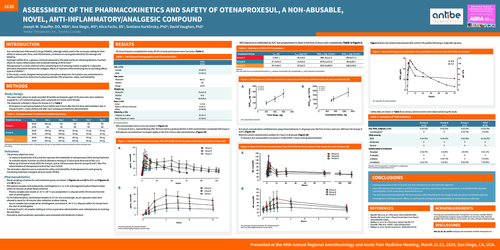
• All 36 participants completed the study; 80.6% of study participants were Caucasian (Table 2)
• M25 concentration-time curves are shown in Figure 1A
– In Groups B and C, tapered dosing after 48 hours led to a gradual decline in M25 concentration compared with Group A
• M25 plasma concentrations increased rapidly in the first 4 hours after administration (Figure 1B)
• M25 exposure as estimated by AUC was proportional to dose in the first 12 hours and cumulatively (Table 3; Figure 2)
• H2S serum concentrations exhibited dose-proportional behavior in all groups over the first 12 hours and over 288 hours for Groups B and C (Figure 3A)
• Mean H2S serum concentrations peaked at 2 hours in all groups (Figure 3B)
– In Group A, H2S concentration increased 2.6-fold within 2 hours of drug administration
• Figure 4 shows the relationship between M25 and H2S PK profiles following a single 600 mg dose
• Safety data are shown in Table 4; no serious adverse events were observed during the study
CONCLUSIONS
• Otenaproxesul was shown to be safe and well-tolerated across all treatment regimens
• Mean M25 plasma concentrations and AUC plasma exposures were linear, dose-proportional, and exhibited the expected characteristics of the amorphous dispersion formula
• The well-behaved and predictable PK characteristics afford flexibility for the design of safe, acute pain treatment regimens
• Investigation of otenaproxesul’s efficacy in participants undergoing abdominoplasty or bunionectomy is planned
REFERENCES
1. Blackler RW, et al. Br J Pharmacol. 2015;172(4):992-1004.
2. Blackler RW, et al. Amer J Physiol Gastrointest Liver Physiol. 2015;308:G994-G1003.
3. Wallace JL, et al. Br J Pharmacol. 2020;177(4):769-777.
4. Glanville JRW, et al. FASEB J. 2021;35(10):e21913.
5. Wallace JL, et al. Nat Rev Drug Discov. 2015;14(5):329-45.
ACKNOWLEDGMENTS
The study was sponsored by Antibe Therapeutics, Inc (Toronto, Canada). Medical writing and editorial assistance were provided by Eric Scocchera, PhD, and Scott Bergfeld, PhD, of PharmaWrite, LLC (Princeton, NJ, USA), and were funded by Antibe.
DISCLOSURES
JWS, AS, AF, SK, and DV: Employee and shareholder of Antibe Therapeutics Inc.
Presented at the 49th Annual Regional Anesthesiology and Acute Pain Medicine Meeting, March 21-23, 2024, San Diego, CA, USA.